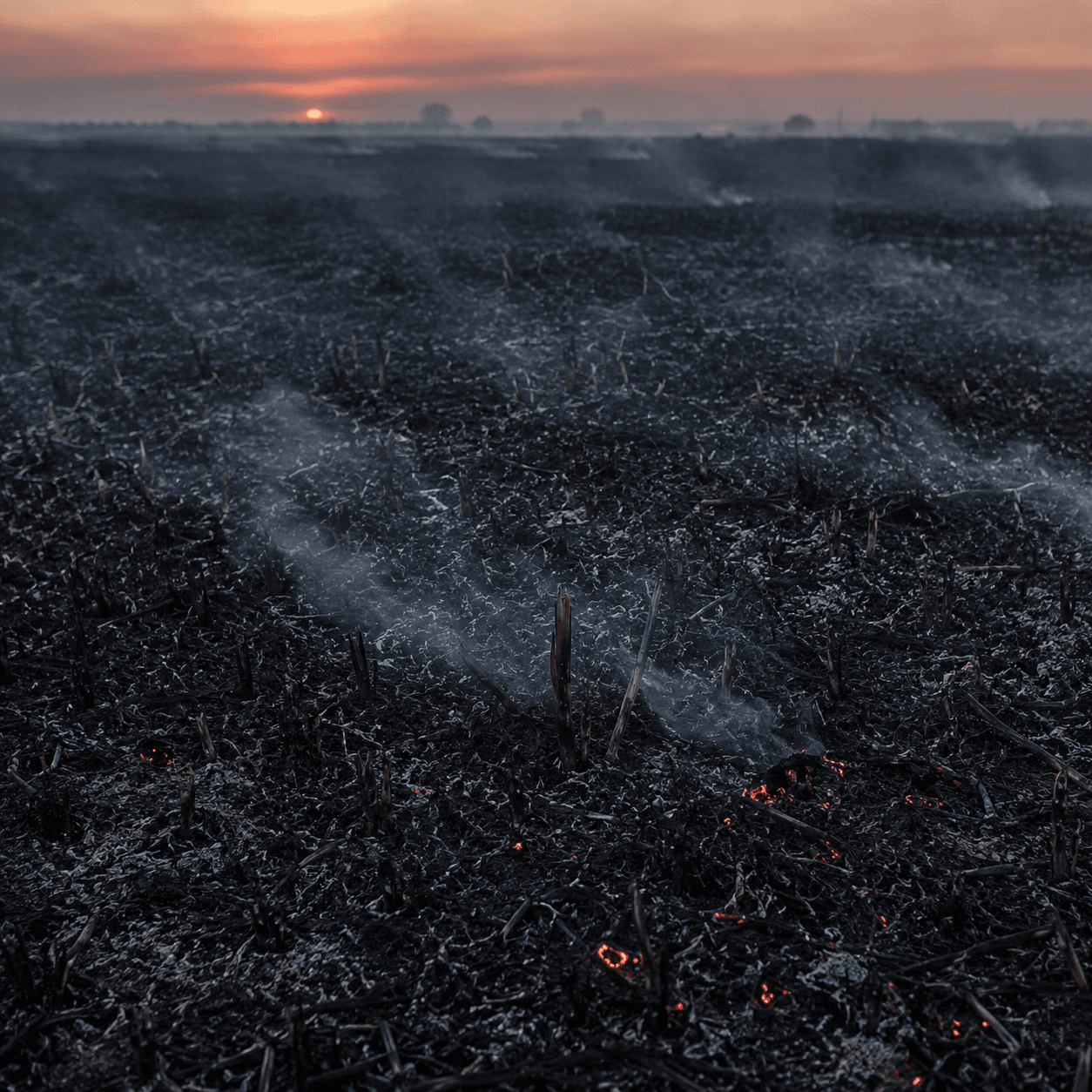

Bible · The State of the Dead · ~30 min read
The sleep of death.
What really happens when a person dies, where the dead are now, and whether hell burns forever — answered not by tradition or feeling, but by letting the Book say plainly what it says.
By George Hinestrosa · Personal study & research

The evidence at a glance
Before a single argument is made, here is the weight of the biblical witness laid out plainly — the verses this study rests on, grouped by what they show. Every one of them is opened in its place below.
What man is
- Genesis 2:7Dust + the breath of life = a living soul. Man does not receive a soul; he becomes one.
- Ezekiel 18:4, 20“The soul that sinneth, it shall die.” Souls can die — so the soul is not immortal.
- 1 Timothy 6:16God “only hath immortality.” It is His alone to give.
- 1 Corinthians 15:53-54We “put on” immortality — at the resurrection, not at birth.
What death is
- Ecclesiastes 9:5-6, 10The dead know nothing; no work, device, knowledge, or wisdom in the grave.
- Psalm 146:4When his breath goes, “in that very day his thoughts perish.”
- Ecclesiastes 12:7Dust returns to earth; the breath returns to God Who gave it.
- Psalm 115:17“The dead praise not the LORD” — silence, not bliss or torment.
Death is called sleep
- John 11:11-14Jesus: “Lazarus sleepeth” — and then plainly, “Lazarus is dead.”
- Daniel 12:2Those who “sleep in the dust” awake — some to life, some to shame.
- 1 Thessalonians 4:13-17The dead in Christ “sleep” and rise at His coming, not before.
- Acts 2:29, 34David is dead, buried, and “not ascended into the heavens.”
When the reward is given
- John 5:28-29All in the graves hear His voice and come forth — the resurrection, future.
- Revelation 22:12“My reward is with me” — brought at His return, not handed out at death.
- Job 14:12-14Man lies down and “rises not till the heavens be no more” — waiting for his change.
- 2 Timothy 4:8The crown is given “at that day,” to all who love His appearing.
Whether hell burns forever
- Romans 6:23The wages of sin is death — not eternal life in torment.
- Malachi 4:1-3The wicked burn up, root and branch, and become “ashes” underfoot.
- Matthew 10:28God is able to “destroy both soul and body” in hell.
- Jude 7; 2 Peter 2:6Sodom's “eternal fire” turned it to ashes — eternal in result, not still burning.
- Revelation 20:14; 21:8The lake of fire is “the second death” — final, not unending life in pain.
The hope that answers it
- John 11:23-25“Thy brother shall rise again… I am the resurrection, and the life.”
- Job 19:25-27“In my flesh shall I see God” — a bodily resurrection hope.
- 1 Corinthians 15:51-54At the last trump the dead are raised incorruptible and death is swallowed up.
What happens when we die? It is the question every human being eventually asks, and the answers on offer could not be further apart. Some imagine the soul floating up to heaven the instant breath leaves the body; some fear a fire that torments without end; some suspect death is simply the end of everything. The confusion is ancient, and it is costly — because what a person believes about death shapes how they grieve, how they live, and how easily they can be deceived. The good news is that the Bible does not leave us guessing. From Genesis to Revelation it speaks with one steady voice, and that voice is very different from what most of the world has been taught.
We will take it in order. First, what man actually is. Then, what death actually is, and where the dead are now. Then the question that frightens people most — whether hell is an endless torture. And only at the end, once the foundation is laid, the matter of near-death and “after-death” experiences, which can only be judged rightly once you know what Scripture has already settled.
What man is: a soul, not a body with one inside
Almost every error about death traces back to one assumption — that a human being is an immortal soul temporarily wearing a body, so that when the body dies the “real you” simply moves on. Scripture builds man the opposite way. It does not put a soul into a body; it brings a body to life with breath:
“And the LORD God formed man of the dust of the ground, and breathed into his nostrils the breath of life; and man became a living soul.”
— Genesis 2:7, KJV
Read it carefully, because the whole subject turns on it. Dust, plus the breath of life, equals a living soul. Man does not receive a soul — man becomes one. The soul is not a separate, deathless passenger inside you; it is you, the living person, the union of body and breath. The same Hebrew word translated “soul” here (nephesh) is used of the animals too, called “living creatures” — literally living souls (Genesis 1:20-21, 24, margin). A soul, in the Bible, is simply a living being. So literally does Scripture mean this that it can speak of the “souls” of the martyrs as having been beheaded (Revelation 20:4) and of “every living soul” that died in the sea (Revelation 16:3) — language that is nonsense if a soul is an immortal ghost, and plain sense if a soul is a living creature.
And if a soul is a living being, then a soul can die — and Scripture says outright that it does:
“The soul that sinneth, it shall die.”
— Ezekiel 18:20, KJV
That single sentence dismantles the doctrine of the immortal soul by itself. An immortal thing cannot die; the soul, says God, can. In fact the Bible reserves immortality to God alone until He chooses to share it. Of God it says He “only hath immortality” (1 Timothy 6:16). Of us it says we seek for immortality (Romans 2:7), and that we put it on — not at birth, but at the resurrection:
“For this corruptible must put on incorruption, and this mortal must put on immortality… then shall be brought to pass the saying that is written, Death is swallowed up in victory.”
— 1 Corinthians 15:53-54, KJV
You do not put on what you already have. Immortality is a gift, given to the redeemed at the last trumpet — which means it is not something every person already carries inside them. It is worth noting that the King James Bible uses the word “soul” some 1,600 times and never once joins it to the word “immortal” — the phrase “immortal soul,” so familiar from pulpits, is simply not in the Book. Keep that in hand; it decides the hell question later almost by itself.
The first lie ever told
Where did the idea of a never-dying soul come from, if not from the text? From the oldest source of religious error there is. God had warned Adam that disobedience would bring death — “thou shalt surely die” (Genesis 2:17). The serpent answered with the first recorded lie, and it was a lie about death:
“And the serpent said unto the woman, Ye shall not surely die.”
— Genesis 3:4, KJV
“Ye shall not surely die.” That you do not really die — that some part of you lives on no matter what God said — is not the testimony of Scripture; it is the contradiction of it, spoken by the serpent in the garden. Every system that has man surviving his own death in full consciousness is, at bottom, a variation on that first sentence — from the reincarnation of the East to the “you never really die” of the modern medium. It is worth being sober about how early, and how deep, this particular deception runs.
What death is: the breath returns, the thoughts perish
If life is dust plus breath, death is simply that process reversed. Solomon states it in the exact language of Genesis:
“Then shall the dust return to the earth as it was: and the spirit shall return unto God who gave it.”
— Ecclesiastes 12:7, KJV
Notice what returns to God: the spirit — in Hebrew ruach, the same word used for the breath of life God breathed in at the start. It is not a conscious ghost flying home; it is the breath of life going back to its Giver, exactly as it came. Job says the same in different words: “All the while my breath is in me, and the spirit of God is in my nostrils” (Job 27:3) — breath and spirit named side by side as the one thing that keeps him alive. We know this is breath, not a separate soul, because Scripture uses the very same word for the breath in animals, who die the same death: “they have all one breath… all go unto one place; all are of the dust, and all turn to dust again” (Ecclesiastes 3:19-20). And when the breath departs, the person does not carry on thinking somewhere else:
“His breath goeth forth, he returneth to his earth; in that very day his thoughts perish.”
— Psalm 146:4, KJV
In that very day his thoughts perish. Not relocate — perish. There is no thinking, no awareness, no ongoing inner life apart from the living body. Solomon could not have been plainer about the condition of the dead:
“For the living know that they shall die: but the dead know not any thing… Also their love, and their hatred, and their envy, is now perished…”
— Ecclesiastes 9:5-6, KJV
The dead “know not any thing.” And a few lines on, Solomon shuts the door on any activity at all beyond the grave: “there is no work, nor device, nor knowledge, nor wisdom, in the grave, whither thou goest” (Ecclesiastes 9:10). No work, no planning, no knowledge, no wisdom — nothing. This is why the dead are described again and again as silent, neither praising God in bliss nor crying out in torment: “The dead praise not the LORD, neither any that go down into silence” (Psalm 115:17); “in death there is no remembrance of thee: in the grave who shall give thee thanks?” (Psalm 6:5); “the grave cannot praise thee… the living, the living, he shall praise thee” (Isaiah 38:18-19). If the righteous dead were already enjoying heaven, these verses make no sense. They make perfect sense if the dead are simply resting, unconscious, awaiting something still to come.
Why the Bible calls death a sleep
That “something still to come” is the key to the Bible’s favorite word for death. Over and over — more than fifty times — Scripture calls death a sleep. It is the perfect picture: the sleeper is not gone, not conscious, not aware of the passing of time, and will certainly wake. When Jesus’ friend Lazarus died, He used exactly this language, and then made sure no one mistook it:
“Our friend Lazarus sleepeth; but I go, that I may awake him out of sleep… Howbeit Jesus spake of his death… Then said Jesus unto them plainly, Lazarus is dead.”
— John 11:11-14, KJV
Death is the sleep; the resurrection is the waking. And here is a detail people rush past: Lazarus had been dead four days (John 11:39). If the saved go straight to heaven at death, Lazarus had been there four days — yet when Jesus called him back, he reported nothing of it, and Jesus, Who loved him, would hardly have summoned him back from heavenly bliss to the troubles of this life without a word. The silence is itself the testimony: there was no experience to report, because he slept. The same word runs through the whole Bible. David “slept with his fathers” (1 Kings 2:10). Job longed for it as rest: man “lieth down, and riseth not: till the heavens be no more, they shall not awake, nor be raised out of their sleep” (Job 14:12). Daniel was told that “many of them that sleep in the dust of the earth shall awake” (Daniel 12:2). Stephen, stoned to death, “fell asleep” (Acts 7:60). And Paul builds the entire resurrection chapter on it, calling the dead believers “them which are asleep” and warning that if there is no resurrection, “then they also which are fallen asleep in Christ are perished” (1 Corinthians 15:18-20).
There is a homely picture that captures it. When you put a computer to sleep, the screen goes black and every program stops; the document you were working on is not gone, not running, not aware of the hours passing — it is held, intact, on the drive, and the moment you wake the machine it returns exactly where you left it. So with the dead in God’s keeping: the person is not annihilated and not awake, but held in perfect safety — God has the full record of who they were — until He breathes life back and wakes them. To the sleeper, no time passes at all between the closing of the eyes and the opening of them.
Where, then, is man when he dies?
The answer Scripture gives is almost startlingly simple: he is in the grave, asleep, and his next conscious moment will be the resurrection. He has not gone to his reward yet — and the Bible proves it with the most unlikely example it could choose: King David, “a man after God’s own heart.” If anyone went straight to heaven, surely David did. Peter, preaching at Pentecost, says otherwise:
“Men and brethren, let me freely speak unto you of the patriarch David, that he is both dead and buried, and his sepulchre is with us unto this day… For David is not ascended into the heavens.”
— Acts 2:29, 34, KJV
Dead, buried, and not ascended into the heavens — spoken a thousand years after David died. He was still in his grave, waiting. And that is the consistent biblical picture: the faithful dead are not in heaven now; they are resting, and the reward comes to them at a fixed future moment — the return of Christ and the resurrection. This is why every promise of reward in Scripture points forward to that day, never to the moment of death:
“the hour is coming, in the which all that are in the graves shall hear his voice, and shall come forth; they that have done good, unto the resurrection of life; and they that have done evil, unto the resurrection of damnation.”
— John 5:28-29, KJV
All who are in the graves — not in heaven, not in torment — hear His voice and come forth. Jesus told His disciples He would come again and only then receive them to Himself (John 14:3). Paul says the dead in Christ rise at the second coming, and the living are caught up with them, together — not one group already in heaven for centuries:
“the Lord himself shall descend from heaven with a shout… and the dead in Christ shall rise first: then we which are alive and remain shall be caught up together with them in the clouds, to meet the Lord in the air.”
— 1 Thessalonians 4:16-17, KJV
The whole comfort Paul offers the grieving is not “your loved ones are already with the Lord,” but “they sleep, and they will rise” (1 Thessalonians 4:13-15). The crown is laid up and given “at that day” (2 Timothy 4:8); the reward is brought when He comes — “Behold, I come quickly; and my reward is with me” (Revelation 22:12). Job, in his suffering, fixed his hope on exactly this and nothing earlier: “I know that my redeemer liveth, and that he shall stand at the latter day upon the earth… in my flesh shall I see God” (Job 19:25-26). Not a disembodied survival — a bodily resurrection, in the flesh, at the latter day.
Scripture does note a few exceptions, and honesty requires naming them: Enoch was “translated that he should not see death” (Hebrews 11:5; Genesis 5:24), Elijah was taken up by a whirlwind (2 Kings 2:11), and at Christ’s own resurrection certain graves opened and “many bodies of the saints which slept arose” and came out (Matthew 27:52-53). These are the marked, named exceptions that prove the rule — and the rule, stated for the whole human family from David to the last believer, is that the dead sleep, and wait, until the resurrection at the last day.
“Today shalt thou be with me” and other hard sayings
A few texts are often raised against all this, and they deserve honest answers rather than avoidance. The thief on the cross is the most common: “Verily I say unto thee, To day shalt thou be with me in paradise” (Luke 23:43). But the original has no punctuation; the comma was added by translators. Read it “Verily I say unto thee to day, shalt thou be with me in paradise” — a solemn promise made that day about a future paradise — and the contradiction vanishes. And it must read that way, because Christ Himself did not go to paradise that day: three days later He told Mary, “I am not yet ascended to my Father” (John 20:17). He could not have met the thief in paradise on Friday and still not have ascended on Sunday. The promise was sure; the timing is the resurrection.
Paul’s “absent from the body… present with the Lord” (2 Corinthians 5:8) is the same hope read through the sleeper’s eyes: to the unconscious dead, no time passes — the closing of the eyes in death and the opening of them at the resurrection are, in experience, the same instant. The next thing the believer knows is the face of Christ. Paul’s longing to depart and “be with Christ” (Philippians 1:23) is real and right; it simply collapses, for the sleeper, into the moment of waking. None of these texts teaches a conscious life between death and the resurrection; each fits perfectly with the sleep the rest of Scripture describes.
Does hell burn forever?
Now to the fear that has done more to misrepresent the character of God than perhaps any other: the idea that the lost are kept alive to be tortured, consciously, for all eternity. Set beside everything we have just seen, the problem is immediate — eternal torment would require the wicked to be immortal, and we have seen that immortality belongs to God alone and is given only to the redeemed. You cannot torment forever a being that does not live forever. So what does Scripture actually say the lost receive? In a word: death.
“For the wages of sin is death; but the gift of God is eternal life through Jesus Christ our Lord.”
— Romans 6:23, KJV
The contrast is the whole argument. The wages of sin is not eternal life in misery — it is death. Eternal life is the gift God gives the saved; it is not the possession of the lost in any form. The most famous verse in the Bible draws the same line: God gave His Son so that whoever believes “should not perish, but have everlasting life” (John 3:16). The two destinies are perishing or living — not living in joy or living in agony. And the language for the fate of the wicked is relentlessly the language of destruction, not preservation: they shall be “destroyed for ever” (Psalm 92:7); “the wicked… shall consume; into smoke shall they consume away” (Psalm 37:20); “yet a little while, and the wicked shall not be… thou shalt diligently consider his place, and it shall not be” (Psalm 37:10). Malachi gives the clearest picture of all:
“the day cometh, that shall burn as an oven; and all the proud, yea, and all that do wickedly, shall be stubble… it shall leave them neither root nor branch… And ye shall tread down the wicked; for they shall be ashes under the soles of your feet.”
— Malachi 4:1-3, KJV
Neither root nor branch — nothing left over to go on burning. The end of the wicked is ashes, not everlasting writhing. Jesus said the same: do not fear men, but fear God, “which is able to destroy both soul and body in hell” (Matthew 10:28). Not keep alive in hell — destroy in hell, body and soul together. The fire of the last day is real, and it is terrible; but its work is to consume, and then it is finished.
“Everlasting fire” — what the word means
But what about the texts that speak of “everlasting fire,” “eternal fire,” fire that is “not quenched,” and smoke that ascends “for ever and ever”? These are real, and the answer is to let the Bible define its own terms instead of importing our assumptions. Take “eternal fire” first. Jude tells us exactly what it does — and points to a place we can go look at:
“Even as Sodom and Gomorrha… are set forth for an example, suffering the vengeance of eternal fire.”
— Jude 7, KJV
Sodom suffered eternal fire — and Sodom is not burning today. Peter says that fire turned the cities “into ashes,” making them “an ensample unto those that after should live ungodly” (2 Peter 2:6). So “eternal fire” in the Bible’s own usage means a fire whose results are eternal — total, irreversible destruction — not a fire that burns without ever consuming. The same goes for fire that is “not quenched” (Mark 9:43-48): an unquenchable fire is one no one can put out before it finishes its work, not one that never goes out. Jeremiah warned Jerusalem that God would “kindle a fire… and it shall not be quenched” (Jeremiah 17:27) — that fire fell, consumed the city (2 Chronicles 36:19), and went out long ago. And the smoke that “ascendeth up for ever and ever” (Revelation 14:11) speaks the same way: of Edom, Isaiah said “the smoke thereof shall go up for ever… none shall pass through it for ever and ever” (Isaiah 34:10) — yet Edom does not smoke today. The smoke ascends until the burning is done; what is “for ever” is the permanence of the outcome.
This is worth pinning down, because the word translated “for ever” (Hebrew olam; Greek aionios) means an age, or duration fitted to its subject — “as long as it lasts.” Jonah was in the fish “for ever,” then names it: three days (Jonah 2:6). A Hebrew servant served his master “for ever” — that is, for life (Exodus 21:6). Samuel would stay at the temple “for ever” — “as long as he liveth” (1 Samuel 1:22, 28). When applied to beings who can die, “for ever” lasts as long as they do. So “everlasting punishment” (Matthew 25:46) is not everlasting punishing — it is a punishment whose effect is everlasting: the second death, from which there is no return.
The hardest verse for this view — and the one most often raised — is the scene of the devil’s end: “the devil… was cast into the lake of fire and brimstone… and shall be tormented day and night for ever and ever” (Revelation 20:10). But read by the rule already established, even this yields. The phrase rendered “for ever and ever” is, literally, “unto the ages of the ages” — a duration fitted to its subject, not a guarantee of unending consciousness; and the rest of Scripture states the devil’s end plainly — brought to “ashes” and made to “never… be any more” (Ezekiel 28:18-19). Paul gives the plain word for what the lost finally receive: not everlasting torturing, but “everlasting destruction” — “punished with everlasting destruction from the presence of the Lord” (2 Thessalonians 1:9). It is the destruction that lasts forever, not the dying.
“And death and hell were cast into the lake of fire. This is the second death… the lake which burneth with fire and brimstone: which is the second death.”
— Revelation 20:14; 21:8, KJV
That is the Bible’s own definition of the lake of fire: it is the second death. A death — not unending life in pain. The first death is the sleep we all face; the second death is the final, eternal end of the unrepentant, from which there is no resurrection. It is sober and it is real. But it is not a torture chamber God keeps stoked forever; it is the extinction of evil, after which God promises “there shall be no more death, neither sorrow, nor crying” (Revelation 21:4) — a promise that could not be kept if multitudes were screaming in flames somewhere in His creation for eternity.
There is also a quiet matter of justice here that the eternal-torment view cannot answer. Scripture is clear that the lost are not all judged alike: the servant who knew his master’s will and disobeyed is “beaten with many stripes,” and the one who did not know “with few” (Luke 12:47-48); Christ comes to give “every man according as his work shall be” (Revelation 22:12). But if every lost soul simply burns on without end, all receive the same infinite sentence — the child who never knew Christ punished exactly as long as the worst tyrant in history. The Bible’s picture is otherwise: a real and dreadful fire, measured out in justice, that does its work and is then finished — the wicked “shall be as though they had not been” (Obadiah 16).
And what of the rich man and Lazarus (Luke 16:19-31), so often quoted to prove conscious torment? It is a parable — one of a series Jesus was telling — and its details defeat the literal reading: the saved are in “Abraham’s bosom,” close enough to converse across the gulf, with the lost begging for a drop of water on the tongue. No one teaches heaven and hell are within speaking distance, or that a finger’s drop of water eases hell. Jesus was using a story the people already knew to make a moral point: if men will not hear Moses and the prophets, neither will they be persuaded though one rose from the dead — which is precisely the note the parable ends on, and precisely what happened when a different Lazarus did rise.
Near-death and “after-death” experiences
Only now, with the foundation laid, can we weigh the experiences that fill so many books and interviews — the tunnel of light, the deceased relative, the voice, the visit to heaven or hell and back. These accounts are sincere, often vivid, and sometimes life-changing for those who have them. The question is not whether something was experienced; it is whether such experiences can tell us the truth about death. And the Bible’s answer, once the groundwork above is in place, is clear: they cannot — and we must be careful with them.
Begin with the obvious. A near-death experience is, by definition, not death; the brain is still living, often under extraordinary stress and chemistry. Scripture has already told us that the actually dead “know not any thing” and that their “thoughts perish” — so whatever a person perceives while their body still lives, it is not a report from beyond the grave. No one in these accounts has truly died the death the Bible describes and come back to narrate it; the one category of people who have actually been dead and raised — Lazarus, the widow’s son, Jairus’ daughter — report nothing at all. That silence is deafening, and it is consistent.
The experiences also fail their own test. Set side by side, they do not agree — they flatly contradict one another. One person is shown a hell that is real and unending and sent back to warn others; the next is told there is no hell to fear, that no one is ever truly lost, that we simply “sort ourselves out” and rise higher. A large collection of such accounts, gathered and catalogued over decades, shows the pattern plainly: again and again people return no longer believing in judgment, in sin, or in the Bible — turning to reincarnation, to paganism, even to witchcraft, persuaded by a being of light that “there are no sins” and all will be well regardless. Whatever else these encounters are, they cannot be a reliable window onto truth, for they cancel one another out — and they lead, with remarkable consistency, away from the plain Word of God. Even some of the most famous have collapsed: the boy whose best-selling book described dying and visiting heaven later publicly recanted — “I did not die. I did not go to heaven… people should read the Bible, which is enough.”
But there is a graver concern, and Scripture raises it directly. If the dead are asleep and unconscious, then any “spirit” that presents itself as a departed loved one cannot actually be that person. So what is it? The Bible does not flinch from the answer: there are deceiving spirits, and they impersonate.
“Now the Spirit speaketh expressly, that in the latter times some shall depart from the faith, giving heed to seducing spirits, and doctrines of devils.”
— 1 Timothy 4:1, KJV
Paul warns that “Satan himself is transformed into an angel of light” (2 Corinthians 11:14), and John that there are “spirits of devils, working miracles” that go out to deceive the world (Revelation 16:14). This is why God, in the law, forbade His people so strictly to seek the dead or consult mediums — not because nothing answers, but because something does, and it lies:
“And when they shall say unto you, Seek unto them that have familiar spirits… should not a people seek unto their God? for the living to the dead? To the law and to the testimony: if they speak not according to this word, it is because there is no light in them.”
— Isaiah 8:19-20, KJV
“For the living to the dead?” — the question is almost incredulous: why would the living go seeking answers from the dead at all? The command is the same all through the law: “Regard not them that have familiar spirits, neither seek after wizards” (Leviticus 19:31); “there shall not be found among you… a consulter with familiar spirits… or a necromancer” (Deuteronomy 18:10-11). Even when a “Samuel” seemed to appear to King Saul through the medium at Endor (1 Samuel 28), it was a forbidden act through a forbidden channel, producing a figure that drew Saul to his death the next day — not the true prophet of God answering from his rest. The principle Isaiah gives is the only safe ground: to the law and to the testimony. Measure every experience, however moving, against the written Word. If it speaks against the steady voice of Scripture — if it says the dead are alive and conscious, that there is no need to fear sin, that all paths lead home regardless — then “there is no light in it,” whatever the glow around it.
But if the dead know nothing, how do people sometimes come back from these experiences knowing things they could not possibly have learned — a child who returns speaking of a sibling who died in the womb before she was born, details no one had told her? Here the Bible’s answer is sobering rather than comforting: the knowledge can be real, but its source is not the departed. A spirit that has watched a family for generations can counterfeit a lost loved one to the life — voice, manner, private memories — and use exactly such intimate knowledge to win trust before it teaches its lies. This is not new. Modern spiritualism traces its public beginning to 1848 and the rapping “spirits” of the Fox sisters, whose own monument bears the motto “There is no death, there are no dead” — which is simply the serpent’s first sermon, “ye shall not surely die,” carved in stone. The same phenomenon wears many modern names — mediums, channeling, even the out-of-body and “astral” travel some report — but its root is one, and Scripture has already named it.
This is not said to wound anyone who has had such an experience, or lost someone and felt them near. It is said because the Bible tells us the closing deception of this world will lean heavily on exactly this — supernatural manifestations, impersonations of the dead and of holy ones, signs and wonders designed to unseat the plain Word (Matthew 24:24). The single best protection against being deceived by a counterfeit of the dead is to know, from Scripture, where the dead actually are. That is why this study put the doctrine first and the experiences last: get the foundation right, and the experiences sort themselves out.
A note on what is being critiqued
None of this is aimed at the millions of sincere Christians who have been taught that the soul is immortal and that hell burns forever. They received those ideas in good faith, from people they trusted, and most have never had reason to test them against the text. The quarrel here is with the teaching, never with the people — and the news this study brings is, in the end, good news: your lost loved ones are not in flames; no one you grieve is being tortured; God is not the eternal jailer tradition has made Him. He is just, and the second death is real, but He “hath no pleasure in the death of him that dieth” (Ezekiel 18:32), and the destruction of the wicked is called His “strange act” (Isaiah 28:21) — something foreign to His heart. If anything here reads as cold argument rather than the comfort it is meant to be, the fault is in the writing, not in the truth.
The hope that answers the grave
The Bible’s teaching on death is not a bleak one; it is the very ground of the only hope worth having. Precisely because the dead are not already gone — not in heaven, not in hell, but asleep — there is something real and future to look forward to: the resurrection, when the Life-giver Himself calls the sleepers awake. That is the hope Martha reached for at her brother’s tomb, and the hope Jesus answered by anchoring it in Himself:
“Jesus saith unto her, Thy brother shall rise again… I am the resurrection, and the life: he that believeth in me, though he were dead, yet shall he live.”
— John 11:23-25, KJV
There is the answer to the question we began with. When a person dies, where is he? He is in the grave, asleep, knowing nothing, feeling nothing, waiting — and his next conscious moment, for those who are Christ’s, will be the sound of a trumpet and the face of the One Who conquered death. “O death, where is thy sting? O grave, where is thy victory?” (1 Corinthians 15:55). The sting is drawn, the victory is sure, and the dead in Christ have not perished — they only sleep, until He wakes them.
Sources & further reading
What man is
- Genesis 2:7; 1:20-21, 24 — man (and beast) becomes a living soul; dust plus the breath of life.
- Ezekiel 18:4, 20 — the soul that sinneth shall die; souls are mortal.
- Revelation 16:3; 20:4 — souls die in the sea, souls are beheaded; a soul is a living being.
- 1 Timothy 6:16; Romans 2:7; 1 Corinthians 15:53-54 — God only has immortality; we seek it and put it on at the resurrection.
- Genesis 2:17; 3:4 — God's warning 'thou shalt surely die' and the serpent's first lie, 'Ye shall not surely die.'
What death is, and where the dead are
- Ecclesiastes 12:7; 3:19-20; Job 27:3 — the breath returns to God; man and beast share one breath and turn to dust.
- Psalm 146:4; Ecclesiastes 9:5-6, 10 — thoughts perish; the dead know nothing; no work or wisdom in the grave.
- Psalm 115:17; 6:5; Isaiah 38:18-19 — the dead are silent, neither praising nor suffering.
- John 11:11-14, 39; Job 14:12; Daniel 12:2; Acts 7:60; 1 Corinthians 15:18-20 — death described as sleep.
- Acts 2:29, 34 — even David is dead, buried, and 'not ascended into the heavens.'
- Hebrews 11:5; 2 Kings 2:11; Matthew 27:52-53 — the named exceptions (Enoch, Elijah, the first-fruits saints).
When the reward is given
- John 5:28-29; 14:3 — all in the graves come forth at the resurrection; Christ receives His own when He returns.
- 1 Thessalonians 4:13-17 — the dead in Christ rise at His coming; the living are caught up together with them.
- 2 Timothy 4:8; Revelation 22:12; Job 19:25-27 — the crown and reward are given 'at that day,' brought when He comes.
- Luke 23:43 (with John 20:17); 2 Corinthians 5:8; Philippians 1:23 — the 'hard sayings' read in harmony with the sleep of death.
Whether hell burns forever
- Romans 6:23; John 3:16 — the wages of sin is death; the lost perish, the saved receive eternal life as a gift.
- Psalm 37:10, 20; 92:7; Malachi 4:1-3; Matthew 10:28 — the wicked are consumed, become ashes, are destroyed body and soul.
- Jude 7; 2 Peter 2:6; Mark 9:43-48; Jeremiah 17:27 / 2 Chronicles 36:19 — 'eternal' and 'unquenchable' fire: eternal in result, not still burning.
- Revelation 14:11; Isaiah 34:10 — smoke ascending 'for ever' (Edom no longer smokes).
- Jonah 2:6; Exodus 21:6; 1 Samuel 1:22, 28 — 'for ever' (olam / aionios) means 'as long as it lasts.'
- Matthew 25:46; Revelation 20:14; 21:8 — everlasting punishment is the second death; the lake of fire defined as 'the second death.'
- Revelation 20:10; 2 Thessalonians 1:9 — 'for ever and ever' (to the ages of the ages) and 'everlasting destruction.'
- Luke 12:47-48; Revelation 22:12; Obadiah 16 — degrees of punishment, reward according to works, the wicked 'as though they had not been.'
- Luke 16:19-31 — the rich man and Lazarus read as a parable, not a map of the afterlife.
Near-death and after-death experiences
- 1 Timothy 4:1; 2 Corinthians 11:14; Revelation 16:14 — seducing spirits, Satan as an angel of light, spirits of devils working miracles.
- Isaiah 8:19-20 — 'for the living to the dead?' and the test: 'to the law and to the testimony.'
- Leviticus 19:31; Deuteronomy 18:10-11; 1 Samuel 28 — the forbidding of mediums and the figure at Endor.
- Matthew 24:24 — the end-time deception of signs and wonders designed to unseat the Word.
- The internal contradictions among near-death accounts, and their consistent fruit of leading people away from Scripture.
- Modern spiritualism and the Fox sisters (1848) — 'There is no death, there are no dead' as the serpent's lie restated.
The hope that answers it
- John 11:23-25 — 'I am the resurrection, and the life.'
- 1 Corinthians 15:51-55 — the dead raised incorruptible; death swallowed up in victory.
- Ezekiel 18:32; Isaiah 28:21 — God has no pleasure in death; destruction is His 'strange act.'