
Bible · Prophecy · ~22 min read
The final events.
History repeating.
The close of the world is not a script no one has ever seen. Every scene in the last act has been rehearsed already — in a flood, in Sodom, in a furnace, in a lions’ den, in the fall of Babylon. To read the end rightly, read it through the patterns Scripture already gave.
By George Hinestrosa · Personal study & research
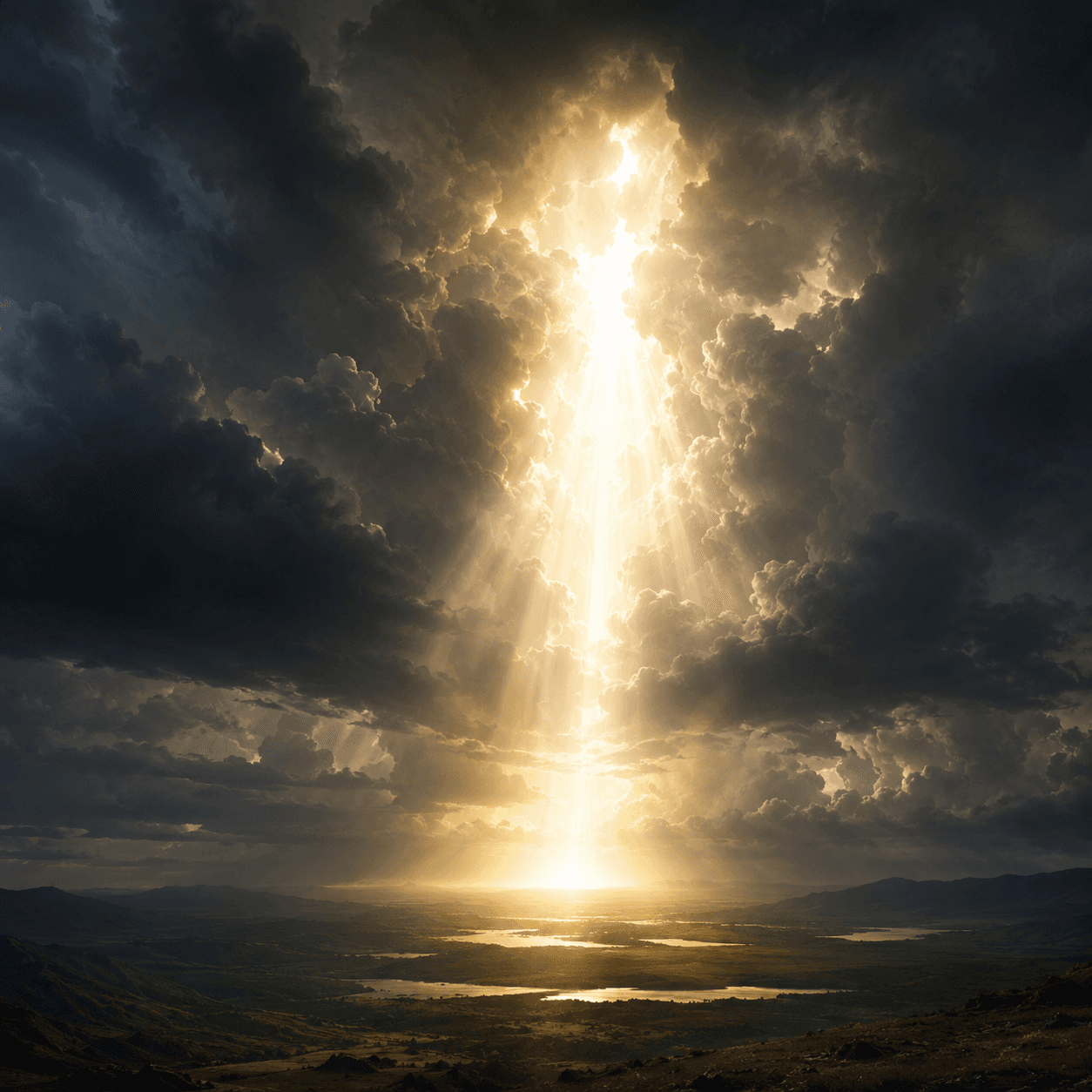
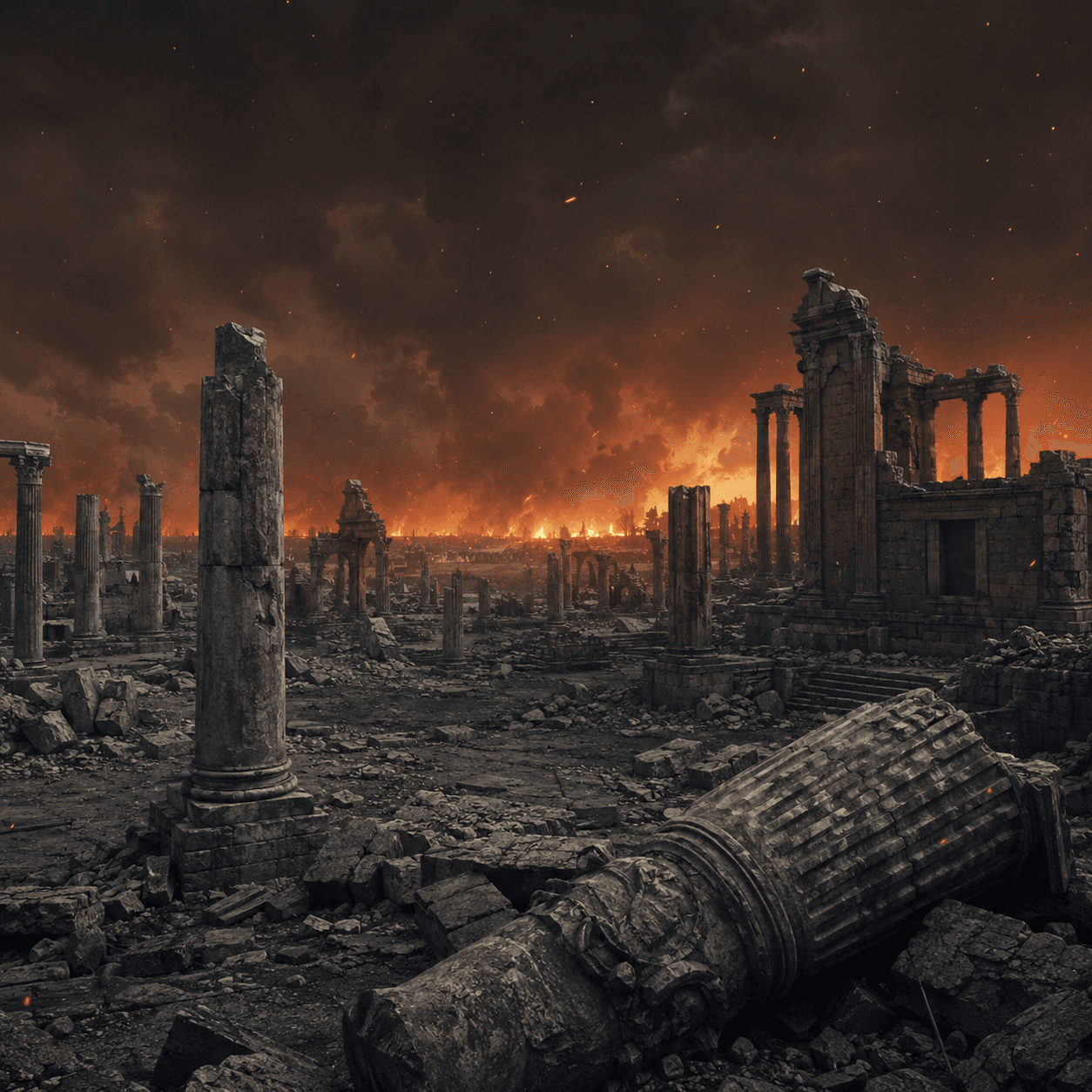
Almost everyone senses it — a feeling that the world is running toward some edge. The word for it has entered ordinary speech: Armageddon, borrowed for films and headlines and dread, though it appears exactly once in all of Scripture (Revelation 16:16). And the common assumption is that whatever the end holds, it is unknowable — a sealed mystery, a cipher no one can crack. The Bible says the opposite. To Daniel, who carried the longest view of the end, the instruction was that the book would be shut until a certain era, and then opened:
“But thou, O Daniel, shut up the words, and seal the book, even to the time of the end: many shall run to and fro, and knowledge shall be increased.”
— Daniel 12:4, KJV
We live in the era when that book opens. And the key to reading it is not novelty but memory. God does nothing in the last days that He has not already shown in miniature somewhere earlier in the record. The flood, the fire on Sodom, the plagues on Egypt, the furnace on the plain of Dura, the den of lions, the decree of Esther’s day, the night Babylon fell — each is a small, finished rehearsal of something the Revelation then plays out at full scale. The final events are old events, brought to their consummation. Hold the old pattern in one hand and the prophecy in the other, and the end stops being a fog and becomes a map.
The signs are old signs
When the disciples asked Jesus for the sign of His coming and of the end of the age, He gave a list that has been misread for two thousand years as a countdown. It is not.
“And ye shall hear of wars and rumours of wars… but the end is not yet. For nation shall rise against nation… and there shall be famines, and pestilences, and earthquakes, in divers places. All these are the beginning of sorrows.”
— Matthew 24:6-8, KJV
The beginning of sorrows — not the end, the labour pains before it. Wars, famine, pestilence, the slow moral landslide Paul described to Timothy (“in the last days perilous times shall come; for men shall be lovers of their own selves,” 2 Timothy 3:1-2), the documented return of spiritualism and the occult (“in the latter times some shall depart from the faith, giving heed to seducing spirits, and doctrines of devils,” 1 Timothy 4:1) — these are not the climax. They are the atmosphere the climax arrives in, and they are as old as human trouble. The one genuinely forward-moving sign Jesus named is brighter: “this gospel of the kingdom shall be preached in all the world for a witness unto all nations; and then shall the end come” (Matthew 24:14). When the truth has reached everyone, the harvest is ripe. That, and the re-opening of the prophetic books themselves, are the signs that actually mark the hour.
The test is the old test: worship
Strip the end of its scenery and one question stands at the centre, the same question that has run under the whole controversy from the beginning: whom will you worship, and on whose authority? And the way that question gets forced has a fixed, repeating shape in Scripture — a human power passes a law commanding an act of worship that violates the law of God, and enforces it on pain of death.
It happened on the plain of Dura: bow to the golden image when the music plays, or burn (Daniel 3). It happened in Persia: pray to no god or man but the king for thirty days, or the lions (Daniel 6). It happened in the decree of Haman: a date set for the destruction of all God’s people in the empire (Esther 3). Three times the machinery is identical — a worship law, a death penalty, and a faithful remnant who will not comply — and three times God either delivers them through the fire or overturns the decree. The Revelation says the last crisis is cut from exactly this cloth, only now it is global:
“…and cause that as many as would not worship the image of the beast should be killed. And he causeth all… to receive a mark… that no man might buy or sell, save he that had the mark…”
— Revelation 13:15-17, KJV
A worldwide law about worship, backed by economic strangulation and finally by death — Dura and Persia and Esther’s decree, written across the whole earth at once. The line falls where it always fell: between those sealed as God’s and those who take the mark (Revelation 7:2-3; 14:9-12), between obeying God and obeying men. What the seal and the mark are, and why the contest narrows to worship and a day, is the subject of its own study; the point here is older and simpler — this is the test God’s people have always faced, now come to its final form. (The prophetic identification of the powers behind it is laid out in Daniel and Revelation.)
The counterfeit comes before the real
Here is the deception the whole drama turns on, and it too is old. Before the true Christ returns, a false one is staged. Jesus warned of it plainly:
“For there shall arise false Christs, and false prophets, and shall shew great signs and wonders; insomuch that, if it were possible, they shall deceive the very elect.”
— Matthew 24:24, KJV
Paul described the same figure — one whose coming is “after the working of Satan with all power and signs and lying wonders” (2 Thessalonians 2:9) — and named the method: “Satan himself is transformed into an angel of light” (2 Corinthians 11:14). A brilliant, benevolent, miracle-working presence, claiming to be the Christ and gathering the world’s religions under one banner of unity; alongside it, a flood of supernatural manifestation that counterfeits the voices of the dead and the saints of old — possible only because the dead are not in fact conscious to appear, so what speaks is something else entirely (a matter for its own study). The rehearsal of all of it is in the wilderness: Satan came to Christ as a glorious messenger and was unmasked by three words — “It is written” (Matthew 4). The Word was the only thing that could tell the counterfeit from the real then, and it is the only thing that can now. A dazzling experience is not self-authenticating; “to the law and to the testimony” (Isaiah 8:20).
The last mercy, then the shut door
Mercy always precedes judgment in Scripture, and the end is no exception. Before the final trouble breaks, the Revelation shows one more flood of light over the world: “I saw another angel come down from heaven, having great power; and the earth was lightened with his glory” (Revelation 18:1). A last call goes out — the three angels’ messages of Revelation 14, the summons to fear God, give Him glory, and worship the Creator — and multitudes still answer it. And then the call closes. Probation ends; every case is decided:
“He that is unjust, let him be unjust still… and he that is righteous, let him be righteous still: and he that is holy, let him be holy still.”
— Revelation 22:11, KJV
The oldest rehearsal of that shut door is Noah’s: for a hundred and twenty years the invitation stood open, the people mocked it, and then — before a drop fell — “the LORD shut him in” (Genesis 7:16). The door of the ark closed seven days before the rain, and no hand opened it again. So with the end: a moment comes when mercy’s long-open door is quietly shut, and the world divides, finally, into the two companies the whole Bible has been sorting — those who bear the seal of God and those who bear the mark.
The seven last plagues — Egypt at world scale
With probation closed, the seven last plagues fall (Revelation 16) — sores, sea and rivers to blood, scorching heat, darkness over the seat of the beast, the drying of the Euphrates, and the voice that says “It is done.” And the whole sequence is the Egyptian plagues written large. The old pattern is precise: when the plagues fell on Egypt, God drew a line through the land — “I will put a division between my people and thy people” (Exodus 8:23) — and in Goshen the flies, the hail, the darkness, the death did not come. The final plagues fall the same way: on those who carry the mark, while the faithful are shielded as Israel was shielded (Revelation 16:2).
Even the sixth plague is an old story. The drying of the great river Euphrates (Revelation 16:12) replays the night literal Babylon fell: the river that ran through the city was turned aside, the army walked in under the gates, and the captives were set free (compare Isaiah 44:27–45:1; Jeremiah 50–51; Daniel 5). The drying of Babylon’s river was a harbinger of deliverance then, and it is the same signal now — the supports are pulled out from under the final Babylon. Around this point the kings of the earth are gathered to “the battle of that great day” at the place called Armageddon (Revelation 16:14-16): not a geopolitical clash in a valley in Israel, but the whole world mustered around the one question of worship, with a death decree against the commandment-keepers — Esther’s decree and Dura’s furnace, universal at last.
The second coming — no secret, every eye
At the darkest hour the deliverance comes, and it comes the way the prophets always said it would — not quietly, not invisibly, not in stages, but as the most public event in the history of the world:
“Behold, he cometh with clouds; and every eye shall see him, and they also which pierced him: and all kindreds of the earth shall wail because of him.”
— Revelation 1:7, KJV
“As the lightning cometh out of the east, and shineth even unto the west; so shall also the coming of the Son of man be” (Matthew 24:27). There is no secret rapture in this — no silent removal that leaves the world to wonder where everyone went. Every eye sees Him. The dead in Christ rise first and the living faithful are changed in a moment, “caught up together… to meet the Lord in the air” (1 Thessalonians 4:16-17); the resurrection of the just that Jesus promised (John 5:28-29) empties the graves of the sleeping saints of every age. And the same brightness that is life to the redeemed is death to the power that withstood Him — the lawless one “whom the Lord shall consume… with the brightness of his coming” (2 Thessalonians 2:8).
The thousand years — the seventh-day rest of the world
What follows is the millennium of Revelation 20, and it fits a frame this section has drawn before: the great week of time. A day is with the Lord as a thousand years (2 Peter 3:8); six millennial days of the world’s long labour under sin, and then a seventh-millennium Sabbath of rest. The thousand years are that rest — and the earth itself keeps it, emptied and still.
With the living wicked slain at the coming and the righteous taken to be with Christ, the earth is left desolate — Jeremiah’s vision of the end speaks the language of Genesis in reverse: “I beheld the earth, and, lo, it was without form, and void… there was no man” (Jeremiah 4:23-25). Satan is “bound” a thousand years (Revelation 20:1-3) — bound not with a literal chain but by circumstance, confined to a ruined and empty world with no one left to deceive, forced at last to sit still among the wreckage of his rebellion. Meanwhile the redeemed are with Christ, and they are given something startling to do: they judge.
“…and judgment was given unto them… and they lived and reigned with Christ a thousand years.”
— Revelation 20:4, KJV
“Do ye not know that the saints shall judge the world? … that we shall judge angels?” (1 Corinthians 6:2-3). This is the open-book vindication of God: before any final sentence is carried out, the records of the lost are laid open and reviewed by the redeemed themselves — ordinary people who know the weight of temptation — so that every question of why this one was lost and that one saved is answered, and the justice of God is seen and owned by all. The seventh-millennium rest is, among other things, the millennium in which the universe reads the evidence.
The last act of the old war
At the end of the thousand years the controversy is closed out. The holy city, the New Jerusalem, descends (Revelation 21:2); the second resurrection raises the wicked dead of every age (John 5:29); and Satan, loosed for “a little season,” rallies them in one final, hopeless assault — “Gog and Magog… the number of whom is as the sand of the sea … and they… compassed the camp of the saints about, and the beloved city” (Revelation 20:7-9). The armies of every age, the great captains of history, mustered against the city of God — and the war is lost before it begins. The great white throne is set; the books are opened; the dead are judged (Revelation 20:11-12). And in that hour even the lost concede the verdict — “every knee shall bow… and every tongue shall confess” (Philippians 2:10-11); “just and true are thy ways, thou King of saints” (Revelation 15:3). Then the fire:
“…and fire came down from God out of heaven, and devoured them.”
— Revelation 20:9, KJV
This is the lake of fire, the second death (Revelation 20:14-15) — and its oldest rehearsal is Sodom, set forth “for an example, suffering the vengeance of eternal fire” (Jude 7). Note what that example actually shows: Sodom is not burning still. The fire was eternal in its result, not its duration — the cities were turned “into ashes” (2 Peter 2:6). So Malachi describes the end of the wicked: “the day cometh, that shall burn as an oven… and it shall leave them neither root nor branch… they shall be ashes under the soles of your feet” (Malachi 4:1-3). The wages of sin is death, not deathless torment — a point worth its own careful study, and one this section gives elsewhere. The penalty Christ already bore on the cross for everyone willing to receive it, the finally unwilling bear for themselves; and then it is over.
All things new
The story does not end in ashes. The fire that ends the old order is also the fire that cleanses the ground for the new, and the last scene is not escape from the earth but the earth itself remade:
“And I saw a new heaven and a new earth… And God shall wipe away all tears from their eyes; and there shall be no more death, neither sorrow, nor crying… And he that sat upon the throne said, Behold, I make all things new.”
— Revelation 21:1, 4-5, KJV
The meek inherit the earth (Matthew 5:5; Psalm 37:11, 29) — restored to its first beauty, Eden given back, the tree of life standing again by the river (Revelation 22:2; Genesis 2-3). The redeemed see His face (Revelation 22:4). And of all the old things, only one scar is carried into the new world: the marks in the hands of Christ, the single permanent memorial of what sin cost and what love paid. The long controversy that began over worship ends with the whole loyal creation at peace and the question forever settled. The end of the Bible answers the dread at the beginning of this study: the world does end — and for those who know its God, the ending is the point of everything.
A note on what is being critiqued
This study describes a false system of worship and the deception that crowns it — not the people swept up in it. Most who will be carried along by the great deception are sincere, kind, God-seeking souls who trusted the wrong authority in good faith; and the prophecy is written precisely so they can recognize it in time and come out. The last message before the plagues is, by its own description, a message of mercy — the earth lightened with glory, the invitation still open — not a gloating over the lost. Note too the temper of God Himself at the end: the destruction of the wicked is called “his strange act” (Isaiah 28:21), nothing He delights in. The quarrel here is with a counterfeit and the power behind it, never with neighbours, and the aim is never fear for its own sake but readiness. If anything here reads as relish for judgment rather than longing for people to be ready, it is written badly, and the fault is mine.
Look up
It is striking that when Jesus laid out the very things that terrify the world — the distress of nations, the roaring sea, men’s hearts failing them for fear (Luke 21:25-26) — He told His own people to respond in the opposite direction entirely:
“And when these things begin to come to pass, then look up, and lift up your heads; for your redemption draweth nigh.”
— Luke 21:28, KJV
That is the difference the whole study comes down to. To the person who does not know the God of these events, the final scenes are pure terror. To the person who does, the same scenes are the approach of a long-promised deliverance — the old patterns reaching the one outcome they were always rehearsing. The flood had its ark; the furnace had its fourth man; Babylon had its dried river and its open gate. The end has a returning King, and a city coming down, and an earth made new. The only question the prophecy presses on any reader is the one Nebuchadnezzar’s furnace pressed first: which side of the line will you be found on — and is your trust in the One Who has never yet failed to deliver His own?
Sources & further reading
The signs and the test
- Daniel 12:4 — the book sealed until the time of the end, when knowledge increases.
- Matthew 24:6-8, 14, 24, 27 — the beginning of sorrows, the gospel to all nations, the false christs, the visible coming.
- 2 Timothy 3:1-5; 1 Timothy 4:1 — the moral decline and the return of spiritualism.
- Revelation 13:15-17; 14:9-12; 7:2-3 — the worship law, the mark, and the seal.
The old rehearsals
- Daniel 3 and Daniel 6; Esther 3 — worship laws enforced by death, and the faithful who would not comply.
- Genesis 7:16 — the door of the ark shut before the flood (the close of probation).
- Exodus 8:23 — God's division between His people and Egypt during the plagues.
- Isaiah 44:27–45:1; Jeremiah 50–51; Daniel 5 — the drying of the Euphrates and the fall of Babylon.
- Matthew 4 — Satan as a messenger of light, unmasked by 'It is written.'
- Jude 7; 2 Peter 2:6 — Sodom's 'eternal fire' that left only ashes.
The coming, the thousand years, and the end
- Revelation 1:7; 1 Thessalonians 4:16-17; 2 Thessalonians 2:8 — the visible second coming and the consuming brightness.
- John 5:28-29 — the two resurrections, of the just and the unjust.
- Revelation 20 — Satan bound, the saints reigning and judging, Gog and Magog, the great white throne, the lake of fire.
- Jeremiah 4:23-25; 2 Peter 3:8 — the desolate earth and the millennial week.
- 1 Corinthians 6:2-3 — the redeemed share in the judgment of the lost and of angels.
The new earth
- Revelation 21:1-5; 22:1-4 — the new heaven and new earth, no more death, the tree of life, the face of God.
- Matthew 5:5; Psalm 37:11, 29 — the meek inherit the earth.
- Malachi 4:1-3 — the wicked become ashes; Isaiah 28:21 — judgment as God's 'strange act.'
- Luke 21:25-28 — the world's terror, and the believer's call to look up.