
Bible · Prophecy & the Controversy · ~30 min read
The cup the whole world drank.
Scripture commands, “Come out of her, my people.” But no one can leave what they cannot see. So the Bible names the system — Babylon — and history lets us trace one ancient counterfeit religion from a tower on the plain of Shinar into the heart of the church.
By George Hinestrosa · Personal study & research
Near the very end of the Bible, a voice from heaven gives one of the most urgent commands in all of Scripture — not “avoid” or “reform,” but leave:
“Come out of her, my people, that ye be not partakers of her sins, and that ye receive not of her plagues.”
— Revelation 18:4, KJV
Two things in that one sentence should stop us. First, God calls them my people — they are inside this system, and He loves them, and He wants them out. Second, the command is useless unless we can identify what we are being told to come out of. If God says “come out of Babylon” and we have no idea what Babylon is, the warning saves no one. So Scripture must — and does — define it. This study is simply an attempt to follow that definition honestly, from the Bible and from the historical record, to see what the cup contained and why the whole world drank it.
Why “Babylon”?
The Bible does not pick the name at random. It reaches back to a literal city to teach us about a spiritual one. The name traces to Babel, and Genesis tells us exactly what it means and where it began:
“Therefore is the name of it called Babel; because the LORD did there confound the language of all the earth.”
— Genesis 11:9, KJV
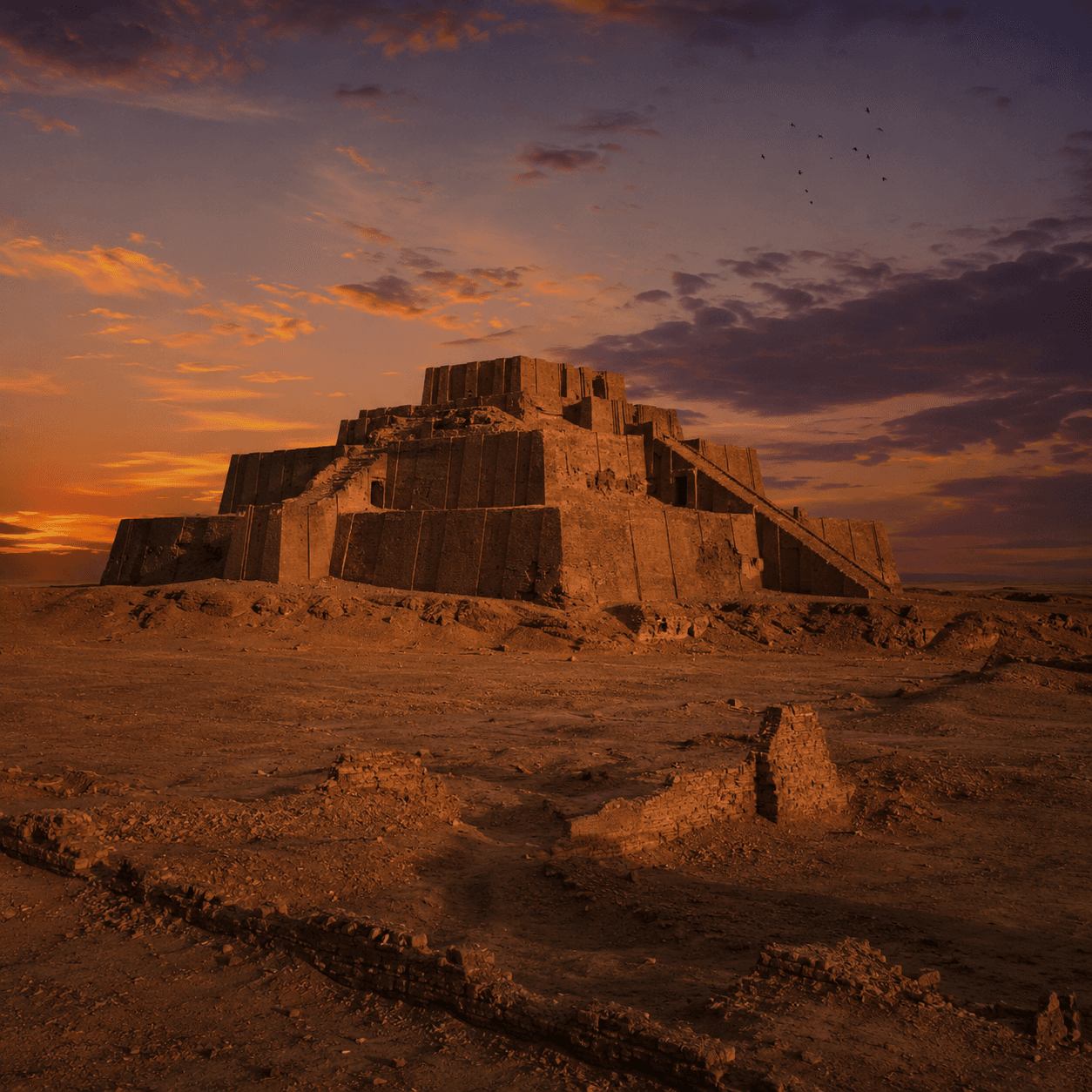
Babel means confusion. It began with a tower built to keep humanity united in one project apart from God (Genesis 11:4). That is the seed of the whole thing: a religion of human devising, gathering everyone into one system, in defiance of the Creator. And when the prophets describe the spiritual Babylon of the last days, they reach for one repeated image — a golden cup full of wine, and a drunken world:
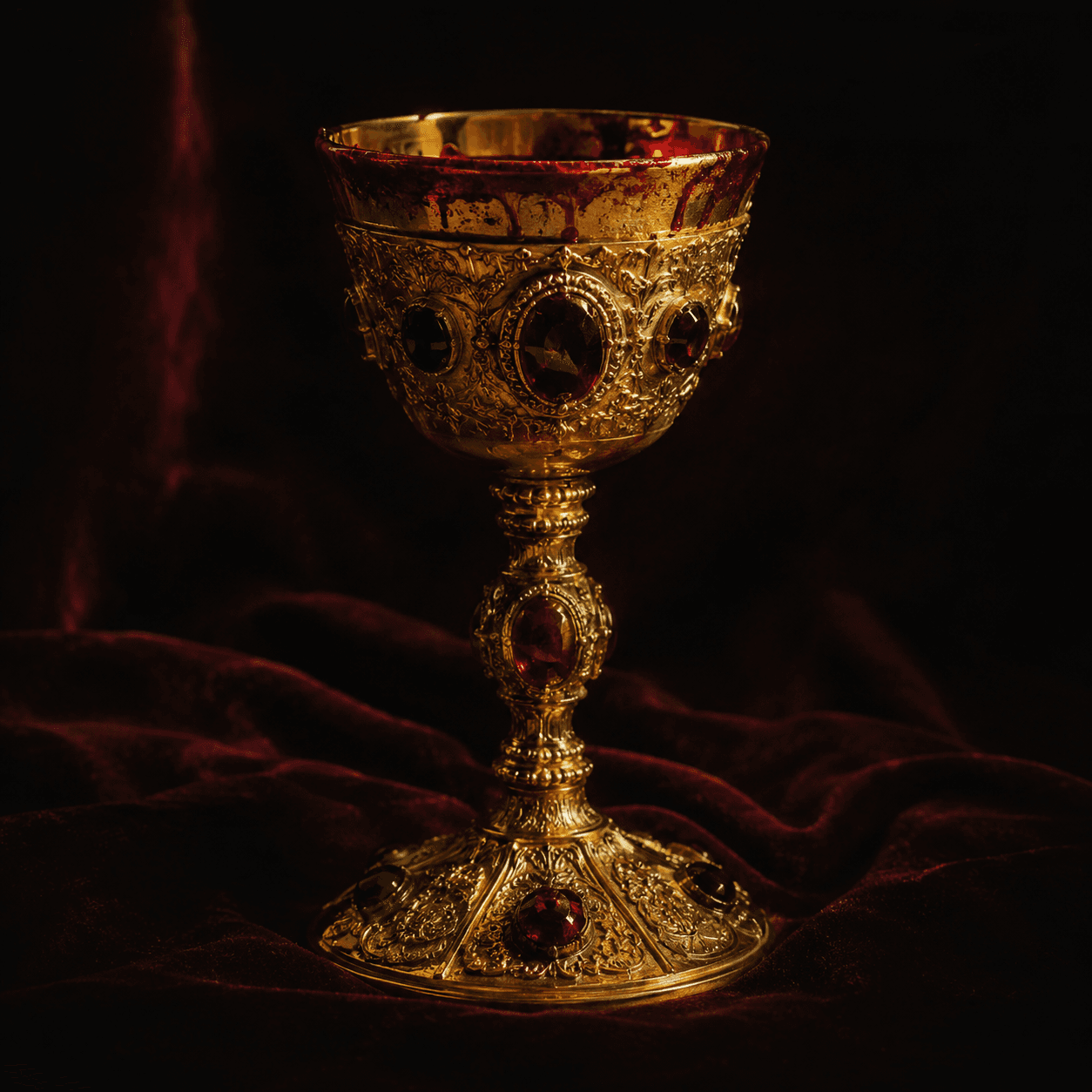
“Babylon hath been a golden cup in the LORD’s hand, that made all the earth drunken: the nations have drunken of her wine; therefore the nations are mad.”
— Jeremiah 51:7, KJV
Wine, in this picture, is doctrine. Jesus is the true vine (John 15:1), and the wine that comes from Him is His teaching. So Babylon’s wine is her doctrine — and the tragedy is that it has made “all the earth” drunk. The Revelation gathers it into a single picture of a woman — a fallen church — holding that very cup:
“…having a golden cup in her hand full of abominations… And upon her forehead was a name written, MYSTERY, BABYLON THE GREAT, THE MOTHER OF HARLOTS AND ABOMINATIONS OF THE EARTH.”
— Revelation 17:4-5, KJV
The mother of harlots. A mother has daughters; a system with a source has descendants. To understand the wine, then, we have to go back to the mother — to the one ancient religion that every later counterfeit is a version of.
One religion, a hundred masks
The striking thing a person discovers when they study the old pagan religions side by side is that they are not really different religions at all. They are one religion wearing different names. The historian Alexander Hislop traced the pattern in detail in The Two Babylons, and the outline is consistent across the ancient world: a mighty man (the Babylonian Nimrod, “a mighty one… before the LORD,” Genesis 10:8-9) who dies; a widowed mother who claims he was reborn as a divine child; and a cult of the mother and her child that spreads everywhere under local names. In Babylon it was the mother and Tammuz. In Egypt, Isis and the child Horus. In other lands the same pair appears under other names — always a divine mother cradling a divine son.
This matters because the Bible itself names that exact cult as the apostasy that corrupted ancient Israel. When Ezekiel is shown the “greater abominations” defiling the very temple of God, here is what he sees:
“…and, behold, there sat women weeping for Tammuz.”
— Ezekiel 8:14, KJV
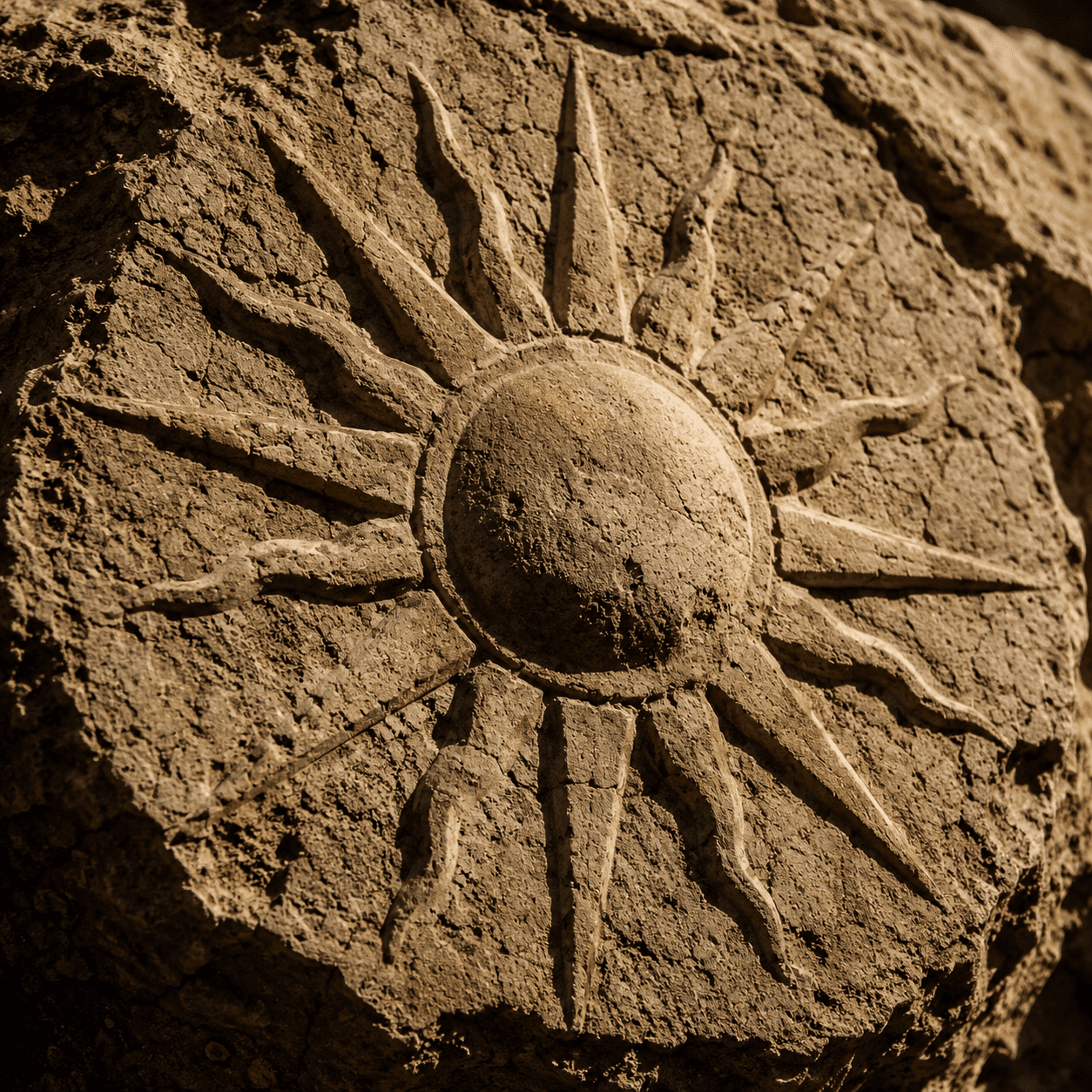
Tammuz — the counterfeit child-savior of Babylon — being mourned by the women of Israel inside the Lord’s own house. And a few verses later Ezekiel sees the deeper root of it all: men “with their backs toward the temple of the LORD… and they worshipped the sun toward the east” (Ezekiel 8:16). Under every mask, the religion of Babylon is, at bottom, sun worship — the created light put in the place of the Creator. That single substitution is the engine of the whole system, because the sun is the perfect counterfeit of the true Light of the world: dress the sun-god in the right robes, give him the right titles, and you have a religion that feels like worship of God while pointing the heart somewhere else entirely.
And the counterfeit was deliberately early. The titles later given to the pagan saviors — the branch, the sin-bearer, the savior, king of kings — are titles that belong to Jesus Christ. Satan, who knew the promise of a coming Redeemer from Eden (Genesis 3:15), had a false messiah staged and worshipped before the true One arrived, so that when the real Christ came, the world would already be committed to the imitation.
The three-in-one godhead
One feature of that ancient system deserves its own paragraph, because it is the quietest and most far-reaching of all the inheritances. The pagan world did not merely worship many gods; it characteristically worshipped its high gods in threes— a three-in-one godhead. Babylon had its supreme triad (Anu, Bel, and Ea, dividing the heavens, earth, and deep between them). Egypt had its triads. The pattern of father, mother, and son — three who are one — runs through the old religions so consistently that even secular students of myth have remarked on it.
This is worth seeing clearly, and without overstatement. The point is not the number three; the Father, the Son, and the Spirit are all named in Scripture, and this section affirms every one of them as the Bible presents them. The point is the architecture — the specific three-in-one, co-equal construction — which is a recurring shape of pagan worship that long predates the Christian centuries, and which was carried into the church in the post-apostolic period and read back over the plain text. The apostolic writings return a simpler confession: one God, the Father, and one Lord Jesus Christ (1 Corinthians 8:6), with the Spirit as the shared presence of both. How the three-in-one formulation actually entered Christianity — the road from the pagan triads to the great councils — is a study of its own, and this section gives it elsewhere (see How the trinity Crept Into Christianity and The God of the Bible). Here it is enough to mark it as one ingredient in the cup: the three-in-one godhead is older than the church, and it came from Babylon.
The queen of heaven
Follow the mother of that ancient pair forward and you arrive at one of the most startling continuities in all of religious history. The Babylonian mother-goddess was worshipped as the queen of heaven — and the Bible records God’s anger at Israel for adopting exactly that worship, by exactly that title:
“…the women knead their dough, to make cakes to the queen of heaven, and to pour out drink offerings unto other gods, that they may provoke me to anger.”
— Jeremiah 7:18, KJV
The ancient goddess was the “wrath-subduer” — the one you approached so that the stern deity would be merciful. Set that beside the role assigned to Mary in the system that came to dominate Christendom: queen of heaven, mediatrix, the gentle one through whom the worshipper reaches the Son. The Scripture leaves no room for it:
“For there is one God, and one mediator between God and men, the man Christ Jesus.”
— 1 Timothy 2:5, KJV
One mediator — not a mother, not a saint, not a queen of heaven. None of this is to demean Mary, who was a blessed and faithful woman; it is to say that her name and image were taken and reshaped to fill the shoes of a goddess the Bible explicitly condemns. The mother-and-child of Babylon, mourned in Ezekiel’s temple, simply changed clothes and walked into the cathedral.
The day of the sun
If the religion of Babylon is sun worship at its root, then its fingerprint will be a day — and it is. The very name of the first day of the week confesses its origin. Webster’s records it plainly: Sunday is “so called because this day was anciently dedicated to the sun, or to its worship.” The historical record of how the Christian world came to keep it is candid about the motive. An early account of the change explains that the Gentiles “solemnly adored” the day of the sun, and that the church “thought fit” to keep the same day and the same name — so as not to obstruct the conversion of the heathen by appearing needlessly contrary. The pagan day of the sun, in other words, was kept and re-labeled.
The festivals followed the same path. The mid-winter feast of the sun’s rebirth at the December solstice, and the spring fertility feast of the goddess — with its eggs and its cakes — were absorbed and given Christian names. None of this is hidden history; it is documented by Catholic and Protestant historians alike, and the prophet had already named the offense:
“…they have hid their eyes from my sabbaths, and I am profaned among them.”
— Ezekiel 22:26, KJV
The substitution of the day of the sun for the Sabbath of the Creator is its own large subject, taken up in The Day the Church Set Aside. Here it stands as one more thing in the cup — the day itself, drunk down by the whole world without a second thought.
The feasts, the saints, and the hidden names
Once you know the pattern, you begin to see it everywhere — and the two festivals nearly the whole world keeps are the clearest examples. The mid-winter celebration sits on the old December solstice, the precise day the pagan world celebrated the rebirth of the sun-god — the unconquered sun climbing back from its lowest point. The evergreen tree decked with round globes and lights, the yule log, the mistletoe of the fertility rite: each was a fixture of solstice worship long before it was given a Christian veneer. The spring festival is worse still — it is named outright for a goddess. Easter is Eostre, the dawn-goddess, a form of the same Babylonian Ishtar/Astarte, and it still carries her fertility emblems, the egg and the hare, along with the cakes the ancients baked for “the queen of heaven” (Jeremiah 7:18), now stamped with a cross. These are not Christian feasts with a few pagan decorations clinging to them. They are pagan feasts — the dates, the symbols, the customs all intact — with the names of Christ and His resurrection pasted over the top. The world did not baptize its sun-worship into Christianity; it kept its sun-worship and called it Christianity.
The same absorption produced the saints. In the early centuries the pagan gods were not destroyed; they were renamed. The shrine was kept, the festival was kept, the worship was kept — only the label changed. Santa Claus is the plainest case of all. The genial gift-bringer who flies the night sky carries the attributes of the old solstice sky-gods, and the powers children are taught to ascribe to him are, set down plainly, the attributes of God Himself: he sees all, he knows every child’s deeds, he judges good from bad and rewards accordingly, and he never dies. A counterfeit deity has been handed to our children and seated on the throne of the Christ-child’s own feast. Note also that the letters of Santa are the letters of Satan, and that the Lord twice declares in Revelation that He hates “the deeds of the Nicolaitanes” (Revelation 2:6, 15) — the followers of Nicholas — using a name now worn by the very saint the figure was built from.
And the old names were not even fully hidden. The monogram IHS, blazoned across altars and vestments, is told to the faithful as the Latin Iesus Hominum Salvator, “Jesus, Saviour of men.” To the initiated it is Isis, Horus, Seb — the Egyptian triad — and that is what it meant long before a Latin gloss was supplied to cover it. The priests of Dagon, the fish-god of Babylon, wore a mitre cut in the shape of a fish’s head with its mouth gaping open over the brow; it is the identical shape of the mitre the pope and his bishops wear today. Even the name of the papal hill, Vaticanus, carries the sense of the hill of divination — the place of the divining serpent. The Bible says the dragon, that old serpent, gave this power its seat (Revelation 13:2); the very ground it sits on bears the serpent’s name.
The forgeries piled up alongside the symbols. Rome displays a staircase it claims is the one Christ climbed before Pilate — transported from Jerusalem to Rome, it says, by angels in the night — and it sells months of pardon, for sins not yet committed, to those who crawl up it on their knees. The chronicles of the church carried for centuries the account of a woman who reigned as pope in disguise. A system that traffics in angel-flown staircases and pre-paid forgiveness, that crowns a queen of heaven and re-crucifies its Lord at every mass, is not a church with some unfortunate pagan residue. It is the old religion in a new robe, and it tells you so itself — as the next words, from its own mouth, make undeniable.
“Baptized paganism” — in its own words
At this point an honest reader wants to know: is this just a Protestant accusation, or does the system itself admit it? It admits it — and remarkably openly. One of the most influential Roman Catholic writers of the modern era, John Henry Newman, candidly listed the elements the church took directly from paganism and “sanctified” by adopting them:
“The use of temples, and these dedicated to particular saints… incense, lamps, and candles; votive offerings on recovery from illness; holy water; asylums; holydays and seasons, use of calendars, processions… images… are all of pagan origin, and sanctified by their adoption into the Church.”
A history of American Catholicism put the same admission more boldly still — that the church has often been charged with being “overlaid with many pagan incrustations,” and is “ready to accept that accusation, and even to make it her boast.” Historians of every stripe have reached the same verdict about the era when the empire’s religion fused with the church — that Christianity as it emerged from the Dark Ages might fairly be termed baptized paganism. This is the “Rome on Rome” evidence: the system describing its own foundations in language the strictest critic could not improve on.
The continuity even reaches into a title. The supreme priest of the old Babylonian mysteries bore the office that passed, by a traceable line, through Pergamos to the Roman emperors — who held the title Pontifex Maximus, “greatest bridge-builder” — and, when the empire fell, to the bishop of Rome, who carries that same ancient title to this day. The claim embedded in it is the very thing Scripture reserves to Christ alone: to be the one bridge between heaven and earth (1 Timothy 2:5; John 14:6).
Why the wine matters — it is the doctrines
It would be easy to read all this as a tour of curiosities — old symbols, borrowed festivals, costumes with strange histories. But the Bible’s concern is not the trappings; it is the wine, and the wine is doctrine. The reason the nations are described as “mad” (Jeremiah 51:7) is that they have drunk teachings that quietly replace the gospel:
That there is another mediator besides Christ. That a priest or a system, rather than God, holds the keys of heaven and hell. That a sacrifice must be re-offered again and again, when Scripture says Christ “by one offering… hath perfected for ever them that are sanctified” (Hebrews 10:14) and “it is finished” (John 19:30). That the dead are conscious and can be prayed to. That the day of the sun is the Lord’s day. That the one God is a three-in-one construction the apostles never taught. Each of these is a cup poured from the same golden vessel — and together they form a counterfeit so complete that, the Revelation says, it deceives almost the whole world (Revelation 13:3). Behind the whole structure stands a single source the Bible names without flinching:
“…and the dragon gave him his power, and his seat, and great authority.”
— Revelation 13:2, KJV
And the dragon, Scripture says plainly, is “that old serpent, called the Devil, and Satan” (Revelation 12:9). The wine of Babylon is not merely old religion; it is the long, patient work of the one being who has wanted the worship of the world from the beginning.
A note on what is being critiqued
This must be said as plainly and as warmly as possible, because it is the most important paragraph in the study, and nothing above means what it would mean without it. The argument here is with a system — never, ever with the people inside it. There are millions upon millions of Roman Catholics who are among the most genuinely God-fearing, God-loving, Christ-honoring people on the face of the earth: faithful mothers and fathers, devoted priests, praying grandmothers, men and women who love Jesus with their whole hearts and serve Him to the very limit of the light they have been given. Not one word of this study is aimed at them. They were born into a faith, as we all were born into something, and they received it in good faith from people they trusted and loved. To love Christ sincerely inside this system is no sin, and God “winked at” the times of ignorance (Acts 17:30) and counts as His own every soul who loves Him honestly, in every tradition on earth.
That is exactly why the truth must be told without softening it. The reason to expose the counterfeit clearly is love— the same love that made God call these people “my people” and bid them come home. You do not warn someone you despise; you warn someone you treasure. To round off the hard edges of the truth merely to keep people comfortable would not be kindness — it would be a failure to love them enough to tell them what is real. So the words here are firm because the matter is serious, and tender because the people are beloved. If a single line reads as contempt for any person rather than care for the truth and for the soul who holds it, it is written badly, and the fault is mine, not the gospel’s.
Come out of her
Which brings us back to where we began. The reason the Bible goes to such lengths to define Babylon — to trace the cup, to name the wine — is not to make anyone an expert in ancient myth. It is so that the final, tender command can actually be obeyed. Just before the call to come out, the Revelation shows one last flood of light over the whole earth:
“…and the earth was lightened with his glory. And he cried mightily… Babylon the great is fallen, is fallen… And I heard another voice from heaven, saying, Come out of her, my people…”
— Revelation 18:1-2, 4, KJV
That is not the voice of a God eager to condemn; it is the voice of a Father calling His children home before the house comes down. The whole purpose of seeing the counterfeit clearly is to make the true God unmistakable by contrast — the Father, and His only begotten Son, the one Mediator, Who needs no goddess to soften Him and no priest to stand in His place, and Who says simply, “I am the way, the truth, and the life” (John 14:6). The cup has been in the world a long time, and nearly everyone has drunk from it. But the same Scripture that names the poison also sounds the invitation — and the invitation is the kindest sentence in the book: Come out of her, my people.
Sources & further reading
Babylon defined in Scripture
- Revelation 18:1-4 — the earth lightened with glory, Babylon fallen, and the call: 'Come out of her, my people.'
- Genesis 11:4, 9 — the tower of Babel; 'Babel' means confusion.
- Jeremiah 51:7 — Babylon the golden cup that made all the earth drunken and mad.
- Revelation 17:4-5 — the woman with the golden cup; MYSTERY, BABYLON THE GREAT, MOTHER OF HARLOTS.
- John 15:1 — Christ the true vine, so His wine is His doctrine (Babylon's wine is false doctrine).
One counterfeit religion, many names
- Genesis 10:8-9 — Nimrod, 'a mighty one before the LORD'; the seed of the Babylonian system.
- Ezekiel 8:14, 16 — women weeping for Tammuz in the temple, and sun worship toward the east, as the root apostasy.
- Genesis 3:15 — the promise of the coming Redeemer the counterfeit was staged to imitate.
- Alexander Hislop, The Two Babylons — the documented pattern of Nimrod / Semiramis / Tammuz and the mother-and-child cult across the nations.
The three-in-one godhead and the queen of heaven
- 1 Corinthians 8:6 — the apostolic confession: one God the Father, and one Lord Jesus Christ (vs. the pagan three-in-one architecture).
- The old Babylonian and Egyptian triads (Anu / Bel / Ea; the father-mother-son pattern) — the three-in-one godhead older than the church.
- Jeremiah 7:18 — the 'queen of heaven' worship that provoked God to anger.
- 1 Timothy 2:5 — one mediator between God and men, the man Christ Jesus (no mother / saint / queen).
The day of the sun and the festivals
- Ezekiel 22:26 — 'they have hid their eyes from my sabbaths, and I am profaned among them.'
- Webster's Dictionary — 'Sunday: so called because this day was anciently dedicated to the sun, or to its worship.'
- Early accounts of the change — the church kept 'the same day and the same name' of the sun so as not to hinder the conversion of the heathen.
- The December solstice festival (the sun-god's rebirth) and the spring goddess-feast named for Eostre/Ishtar — with the egg, the hare, and the cakes of Jeremiah 7:18 — absorbed and renamed.
The saints, the festivals, and the hidden names
- Santa Claus — a sky-faring December gift-bringer carrying the attributes of a god (all-seeing, all-knowing, judge, never dying); 'Santa' is the letters of 'Satan,' seated on the Christ-child's feast.
- Revelation 2:6, 15 — the Lord twice declares He hates the 'deeds of the Nicolaitanes,' the followers of Nicholas.
- IHS — told to the faithful as 'Iesus Hominum Salvator,' but to the initiated the Egyptian triad Isis-Horus-Seb.
- The fish-mitre of the priests of Dagon — the upward-gaping fish-head shape worn as the mitre of the pope and bishops today.
- 'Vaticanus' as the hill of divination / the divining serpent; the Scala Sancta indulgence and the Pope Joan account as fruits of the same system.
Rome on Rome — the system's own admissions
- John Henry Newman, An Essay on the Development of Christian Doctrine — incense, candles, holy water, holydays, calendars, processions, images 'are all of pagan origin, and sanctified by their adoption into the Church.'
- A history of American Catholicism — the church 'ready to accept' the charge of 'pagan incrustations' and 'even to make it her boast.'
- The Pontifex Maximus title — traced from the Babylonian mysteries through Pergamos to the Roman emperors and then to the bishop of Rome.
The wine, the source, and the call
- Hebrews 10:14; John 19:30 — one finished sacrifice ('it is finished'), against a sacrifice re-offered.
- Revelation 13:2-3; 12:9 — the dragon (Satan) gives the system its seat and authority; almost the whole world deceived.
- Acts 17:30; John 14:6 — God overlooks the times of ignorance; Christ the only way, the one bridge to the Father.