
Health · Whole Food · ~10 min read
Ashwagandha — cortisol, sleep, and the adaptogen that earned the research.
Why ashwagandha became the most-studied adaptogen of the modern era, what KSM-66 and Sensoril actually deliver, and the hyperthyroid caveat people genuinely need to know about.
By George Hinestrosa · Personal experience & independent research
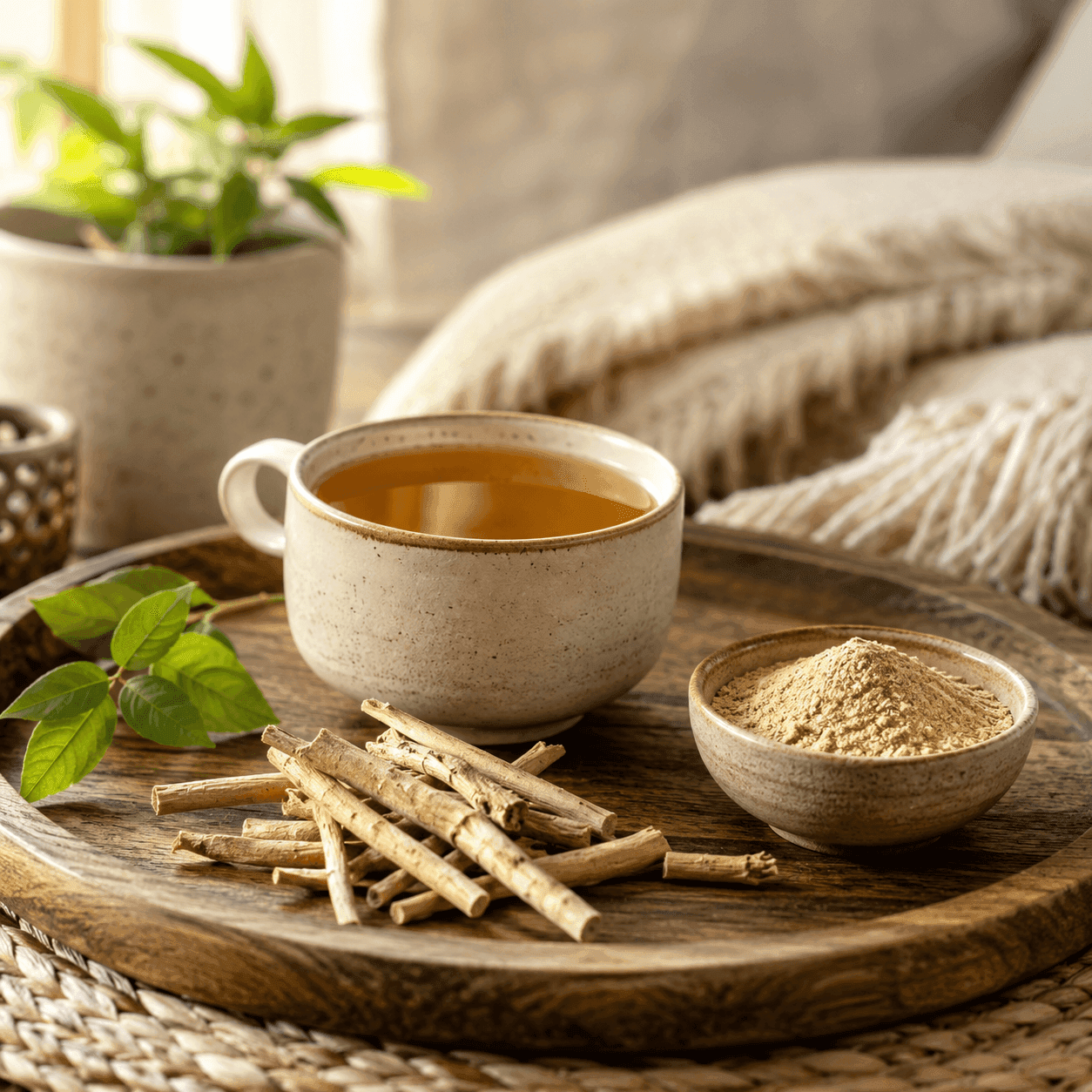
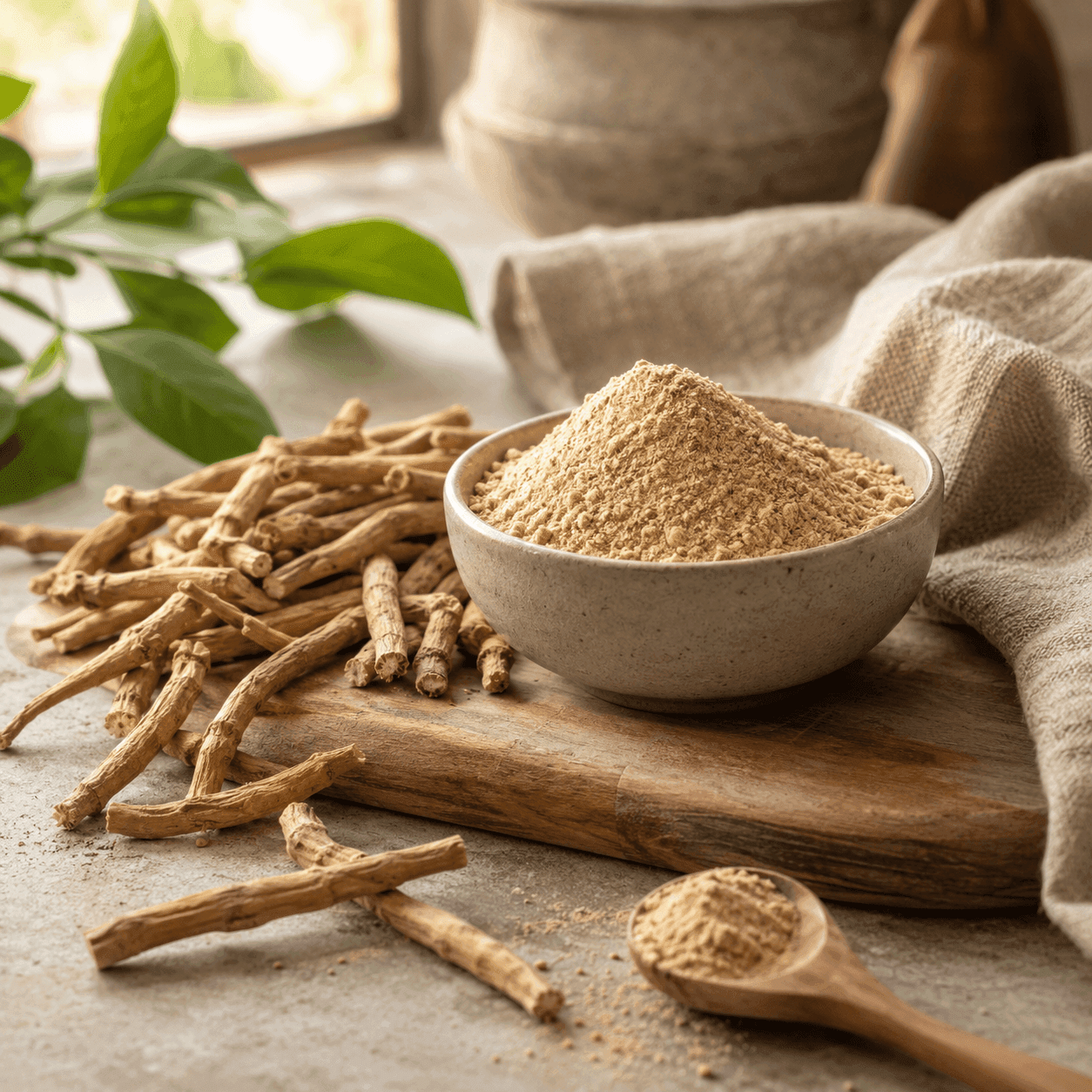
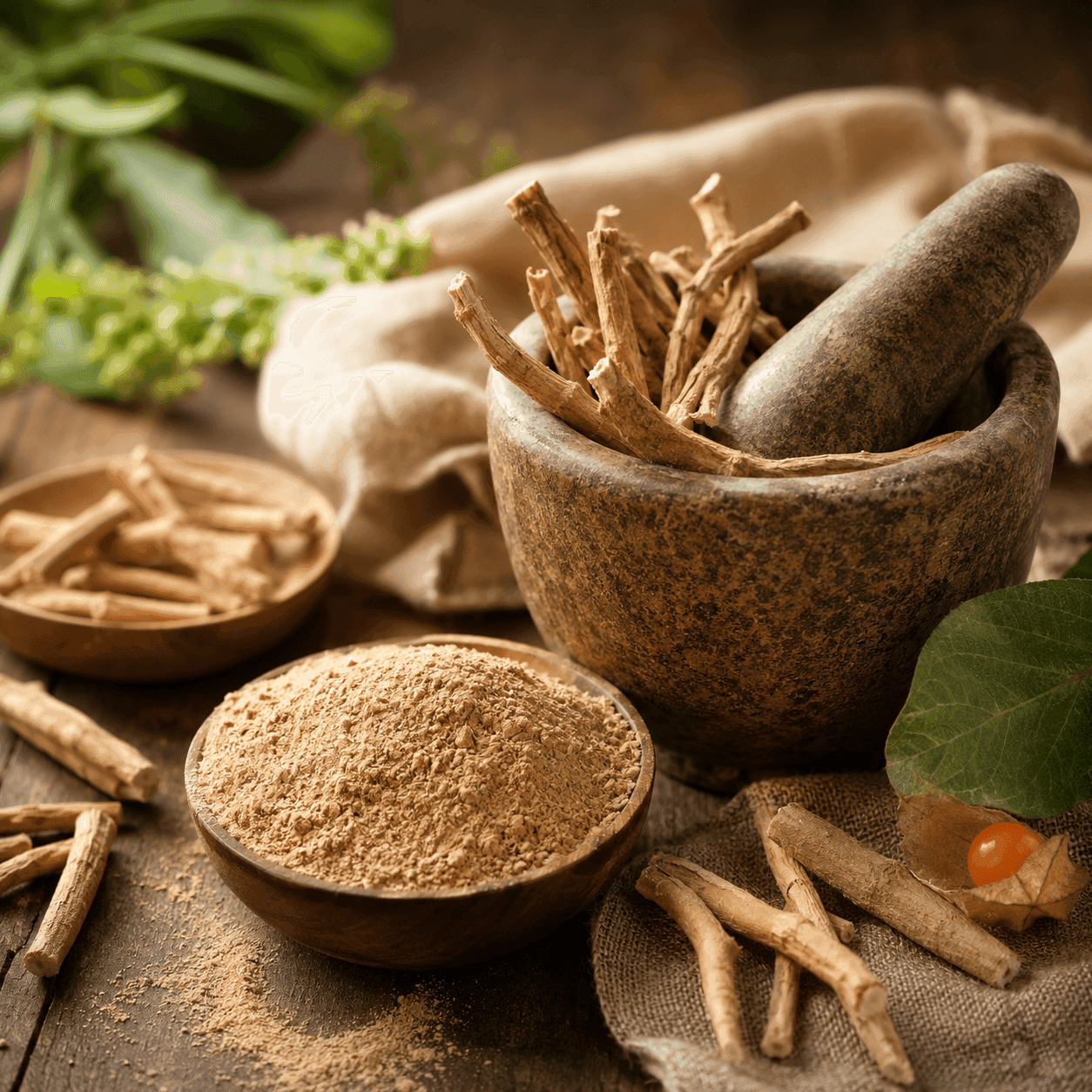
Ashwagandha (Withania somnifera) is a small evergreen shrub native to India, the Middle East, and parts of Africa. The root has been a foundational herb in Ayurvedic medicine for at least three thousand years, classified as a Rasayana — a rejuvenative tonic taken across a lifetime to support strength, longevity, and resilience. The Sanskrit name means roughly “smell of horse,” partly because of the root’s earthy aroma and partly because traditional medicine believed the herb conferred the stamina and vitality of a horse on the person who took it.
For most of its history, ashwagandha was one of dozens of valued Ayurvedic herbs — significant within its tradition but largely unknown to Western medicine. That changed in the 2010s, when a wave of well-designed randomized trials began documenting effects on cortisol, sleep, anxiety, testosterone, and cognitive function that were specific, consistent, and large enough to make Western researchers take notice. By 2020, ashwagandha had become the most-studied adaptogen in modern clinical literature, with over a hundred human trials published.
The herb earned the attention. What follows is what the research actually says, what the standardized extracts actually deliver, and the genuine cautions you need to know.
What an adaptogen actually is
The word adaptogen was coined in 1947 by Russian researcher Nikolai Lazarev to describe a class of plants that helped the body adapt to stress without being stimulants or sedatives. An adaptogen, by Lazarev’s definition and subsequent refinement:
- Increases the body’s resistance to physical, chemical, and biological stressors
- Has a normalizing effect — calms when the body is overstimulated, energizes when the body is depleted (the “bidirectional” quality)
- Doesn’t produce significant side effects at normal doses
- Doesn’t cause dependence or tolerance with continued use
Several plants meet these criteria — rhodiola, ginseng (Panax), eleuthero (Siberian ginseng), holy basil (tulsi), schisandra, cordyceps. Ashwagandha is among the most thoroughly researched of the group, and the cortisol-modulating effect is what most cleanly demonstrates the adaptogen mechanism in human trials.
Withanolides — the active chemistry
The compounds responsible for most of ashwagandha’s clinical effects are withanolides — a family of steroidal lactones largely unique to Withania somnifera. The total withanolide content of the root varies widely with growing conditions, processing, and the part of the plant used. Standardized extracts measure this content directly:
- Plain root powder: typically 0.3–0.6% withanolides
- KSM-66 extract: 5% withanolides, full-spectrum root extract, no leaf material
- Sensoril extract: 10% withanolides, root + leaf material (the leaf adds withaferin A, which is more cytotoxic)
The withanolides affect multiple systems: they modulate the HPA (hypothalamic-pituitary-adrenal) axis, interact with GABA receptors in the central nervous system (the calming mechanism), influence inflammatory cytokine production, and affect steroidogenesis in the testes (the testosterone mechanism). It’s a multi-target herb in a way that mainstream pharmacology hasn’t fully mapped.
Cortisol and stress reduction — the defining effect
Cortisol is the body’s primary stress hormone, produced by the adrenal glands in response to perceived threat. Acute cortisol is normal and useful. Chronically elevated cortisol — the pattern in modern chronic-stress lifestyles — drives a cascade of problems: poor sleep, abdominal weight gain, insulin resistance, immune suppression, mood depression, reduced testosterone, hippocampal atrophy.
Ashwagandha’s most-replicated effect in clinical trials is meaningful reduction in cortisol. The Chandrasekhar 2012 trial — the foundational modern study — documented a 27.9% reduction in serum cortisol after 60 days of KSM-66 supplementation (300 mg twice daily) in chronically stressed adults. Subsequent trials have replicated reductions in the 14–30% range.
What that translates to in practice:
- Less morning-cortisol-spike anxiety (the wired-but- exhausted 6 AM feeling)
- Improved tolerance for ongoing stress without breakdown
- Better sleep quality (cortisol and sleep are inversely linked)
- Reduced abdominal weight gain over time
- Improved sense of well-being
- Modest improvements in body composition for people who train
The effect builds over 4–8 weeks; it isn’t acute. Daily use is required for sustained benefit.
Anxiety reduction
The Chandrasekhar trial and several follow-ups also documented significant reductions in measured anxiety, using the standard Hamilton Anxiety Rating Scale and related instruments. One head-to-head trial compared ashwagandha to lorazepam for generalized anxiety and found comparable efficacy without the dependence and cognitive-blunting concerns of benzodiazepines.
The mechanism involves the GABA-receptor interaction mentioned above. Ashwagandha enhances GABA signaling without binding the receptor directly the way benzodiazepines do — producing a calmer, non-sedating reduction in anxiety symptoms.
Sleep
The Latin species name somnifera means “sleep-inducer.” The traditional use and the modern research agree on this one.
Multiple randomized trials have shown ashwagandha improves sleep onset time, sleep efficiency, and total sleep duration, particularly in adults with stress- related insomnia. The Langade 2019 trial in the journal Cureus showed 600 mg of KSM-66 daily for 10 weeks improved every measured sleep parameter significantly compared with placebo.
The mechanism appears to be partly the cortisol reduction (calmer evening hormonal state) and partly direct CNS effects through GABA. Unlike pharmaceutical sleep aids, ashwagandha doesn’t produce morning grogginess, doesn’t cause dependence, and doesn’t affect sleep architecture in ways that reduce restorative deep sleep.
For sleep-specific use, take ashwagandha in the evening with dinner or a couple of hours before bed.
Testosterone in men
One of the more interesting findings in recent ashwagandha research has been the consistent testosterone benefit in men. Multiple trials, with the most-cited being Lopresti 2019, have documented 14–22% increases in serum testosterone after 8–16 weeks of KSM-66 supplementation, primarily in men with low baseline T or sedentary lifestyles.
The mechanism is multi-factorial: the cortisol reduction alone allows testosterone to rise (cortisol and testosterone are inversely related at the steroidogenesis level), plus direct effects on Leydig cell function in the testes, plus the sleep improvements (which themselves drive testosterone production).
For men also training resistance exercise, ashwagandha shows additive benefits on muscle mass and strength gains. The Wankhede 2015 trial on resistance training documented superior strength and hypertrophy results with KSM-66 compared with training alone.
For men with documented low testosterone, ashwagandha is a reasonable first-line nutritional intervention to try before considering TRT. Combined with sleep, sunlight, zinc, vitamin D, and resistance training (see the natural-testosterone article in this section when it’s published), it can produce meaningful increases without medication.
Cognitive function
Ashwagandha has been shown to improve attention, processing speed, working memory, and executive function in several randomized trials, including in populations with mild cognitive impairment. The Choudhary 2017 trial documented significant improvements across multiple cognitive domains after 8 weeks of supplementation in adults with MCI.
The mechanism appears to involve neuroprotective effects through reduced oxidative stress in the brain, increased acetylcholine signaling, and the indirect cognitive benefits of better sleep and lower cortisol.
Exercise performance and recovery
Ashwagandha has been documented to improve:
- VO2 max in endurance athletes
- Strength and muscle mass in resistance trainers
- Recovery between training sessions
- Reduced exercise-induced muscle damage
- Improved testosterone-to-cortisol ratio (a key athletic recovery marker)
For people who train hard, ashwagandha is one of the more meaningful sport-supportive supplements available outside the protein and creatine basics.
Forms — KSM-66 vs Sensoril vs traditional
- KSM-66. The most clinically studied standardized extract. Full-spectrum root extract, 5% withanolides, no leaf material (which avoids the more cytotoxic withaferin A). Has the bulk of the modern human trial data behind it. The default for daytime use and for testosterone / cognitive / training applications. Typical dose: 300–600 mg daily, ideally divided.
- Sensoril. Different standardized extract using root + leaf material, 10% withanolides. More sedating, more calming, sometimes preferred for sleep-specific or anxiety-specific applications. Lower clinical-trial volume than KSM-66 but still substantial. Typical dose: 125–250 mg daily, often at night.
- Traditional root powder. The Ayurvedic form. Mixed into warm milk (cow, coconut, or almond) with a little ghee, honey, and sometimes cinnamon — the classic preparation called “ashwagandha milk.” The fat helps with withanolide absorption, the warm milk helps the calming effect. Less precisely-dosed than standardized extracts but the way the herb has been taken for three millennia. 1–2 teaspoons daily.
- Tincture. Alcohol-based liquid extract. Less common but useful for people who prefer liquid herbs. Faster onset than capsules; bitterness is significant.
Dosing and timing
- Stress and anxiety: 300–600 mg KSM-66 daily, divided morning and evening with meals. Effect builds over 4–8 weeks.
- Sleep specifically: 300–600 mg KSM-66, or 125–250 mg Sensoril, taken with dinner or about an hour before bed.
- Testosterone / athletic: 600 mg KSM-66 daily (300 mg twice). 8–16 weeks for measurable effect on serum T.
- Traditional ashwagandha milk: 1–2 teaspoons root powder simmered in 8 oz warm milk with a teaspoon of ghee and a drizzle of raw honey. Once daily, ideally in the evening.
- Take with food. Reduces the mild GI upset some people experience and improves absorption.
- Cycling: Some practitioners recommend taking ashwagandha for 8–12 weeks, then pausing for 1–2 weeks before resuming. Not strictly necessary based on the evidence, but reasonable for long-term use.
The thyroid question
This is the most important practical caveat with ashwagandha and deserves its own section.
Ashwagandha modestly stimulates thyroid function, raising T4 and T3 levels in clinical studies. For people with hypothyroidism (underactive thyroid), this is generally beneficial — the Sharma 2018 trial showed ashwagandha normalized thyroid hormones in subclinical hypothyroidism over 8 weeks. People on thyroid medication may find their medication needs reduce over time and should monitor with their practitioner.
For people with hyperthyroidism or Graves’ disease, ashwagandha is contraindicated. The same thyroid-stimulating effect that helps hypothyroid patients makes hyperthyroid symptoms worse, sometimes substantially. Don’t take it.
For people with Hashimoto’s thyroiditis (autoimmune hypothyroidism), the picture is more nuanced. Ashwagandha’s immune-modulating effects could theoretically worsen the autoimmune component even while the thyroid-stimulating effect helps symptoms. Some Hashimoto’s patients tolerate it well; others flare. Test carefully, with thyroid antibody monitoring if possible.
If you don’t know your thyroid status, a basic TSH-with-reflex panel is worth running before starting daily ashwagandha. Standard order at any major lab.
Where I buy ashwagandha
- NOW Foods KSM-66 Ashwagandha — the standard everyday product. 450 mg KSM-66 per capsule, well-priced, third-party tested. The default for daily use.
- Jarrow Formulas Ashwagandha KSM-66 — alternative quality KSM-66 product. 300 mg per capsule, useful when you want flexible dosing.
- Pure Encapsulations Ashwagandha (Sensoril) — the Sensoril option, more sedating, useful for evening / sleep-specific use. Pure Encapsulations quality control is among the best in the industry.
- Banyan Botanicals Organic Ashwagandha Root Powder — traditional Ayurvedic preparation, root powder for ashwagandha milk. Organic, fair-trade sourced from Indian farmers. The form for people who want the traditional preparation.
- Gaia Herbs Ashwagandha Root — liquid phyto-cap form, faster onset than powder capsules. Useful alternative format.
Where to start
A common starting point is one standardized KSM-66 capsule (450 mg) with breakfast and another with dinner during weeks when stress load or training volume is high. The effect on sleep quality and morning cortisol tends to show up within about ten days.
On calmer weeks, many people drop back to a single capsule daily with dinner.
For those who want the traditional preparation, ashwagandha milk makes an earthier, more sedating evening option: one teaspoon of root powder simmered in 8 oz coconut milk with a teaspoon of ghee, a pinch of cardamom, and a drizzle of raw honey added off the heat — a natural fit for the colder months.
Closing
Ashwagandha is one of the rare alt-health staples where the traditional use and the modern clinical evidence have converged with unusual clarity. The cortisol- reduction effect is real and replicable. The sleep benefits are documented. The testosterone effect in men is consistent. The anxiety reduction approaches pharmaceutical efficacy without the dependence issues.
The honest caveats: don’t take it if you have hyperthyroidism. Monitor if you have hypothyroidism on medication. Be cautious with autoimmune flares. Skip it in pregnancy. Get periodic liver enzymes if you take it long-term in high doses.
For most adults dealing with chronic stress, poor sleep, low testosterone, or training demands, the herb does what three thousand years of Ayurveda said it does. Take the standardized extract that fits your need. Or make the milk. The horse smell included.
Sources & further reading
Studies cited
- Chandrasekhar, K. et al. (2012). A prospective, randomized double-blind, placebo-controlled study of safety and efficacy of a high-concentration full-spectrum extract of ashwagandha root in reducing stress and anxiety in adults. Indian Journal of Psychological Medicine. — The foundational modern trial; KSM-66 600 mg/day produced 27.9% reduction in serum cortisol after 60 days.
- Lopresti, A.L. et al. (2019). A randomized, double-blind, placebo-controlled, crossover study examining the hormonal and vitality effects of ashwagandha (Withania somnifera) in aging, overweight males. American Journal of Men's Health. — Documented 14-22% testosterone increase in middle-aged men with KSM-66 supplementation.
- Langade, D. et al. (2019). Efficacy and safety of ashwagandha (Withania somnifera) root extract in insomnia and anxiety. Cureus. — 10-week trial of KSM-66 600 mg/day showed significant improvements across all measured sleep parameters.
- Wankhede, S. et al. (2015). Examining the effect of Withania somnifera supplementation on muscle strength and recovery: a randomized controlled trial. Journal of the International Society of Sports Nutrition. — KSM-66 added to resistance training produced superior strength gains and muscle hypertrophy compared with training alone.
- Choudhary, D. et al. (2017). Efficacy and Safety of Ashwagandha (Withania somnifera) Root Extract in Improving Memory and Cognitive Functions. Journal of Dietary Supplements. — Demonstrated cognitive improvements across multiple domains in adults with mild cognitive impairment.
- Sharma, A.K. et al. (2018). Efficacy and Safety of Ashwagandha Root Extract in Subclinical Hypothyroid Patients. Journal of Alternative and Complementary Medicine. — Documented thyroid hormone normalization in subclinical hypothyroidism over 8 weeks.
Authorities & further reading
- Examine.com — Ashwagandha summary — The most thorough evidence-based summary of ashwagandha research; useful for tracking ongoing studies.
- Adaptogens: Herbs for Strength, Stamina, and Stress Relief — David Winston & Steven Maimes — Standard contemporary herbalist reference on the adaptogen class, including extensive ashwagandha coverage.
- Ayurvedic Healing — Dr. David Frawley — Traditional Ayurvedic framework for ashwagandha’s rasayana classification and clinical applications.