
Health · Superfood · ~9 min read
Bee pollen — what the bees collected for themselves.
The protein-dense, vitamin-loaded, allergy-desensitizing food humans have been eating since the Egyptians — and the careful start-low protocol that’s non-negotiable for first-time users.
By George Hinestrosa · Personal experience & independent research
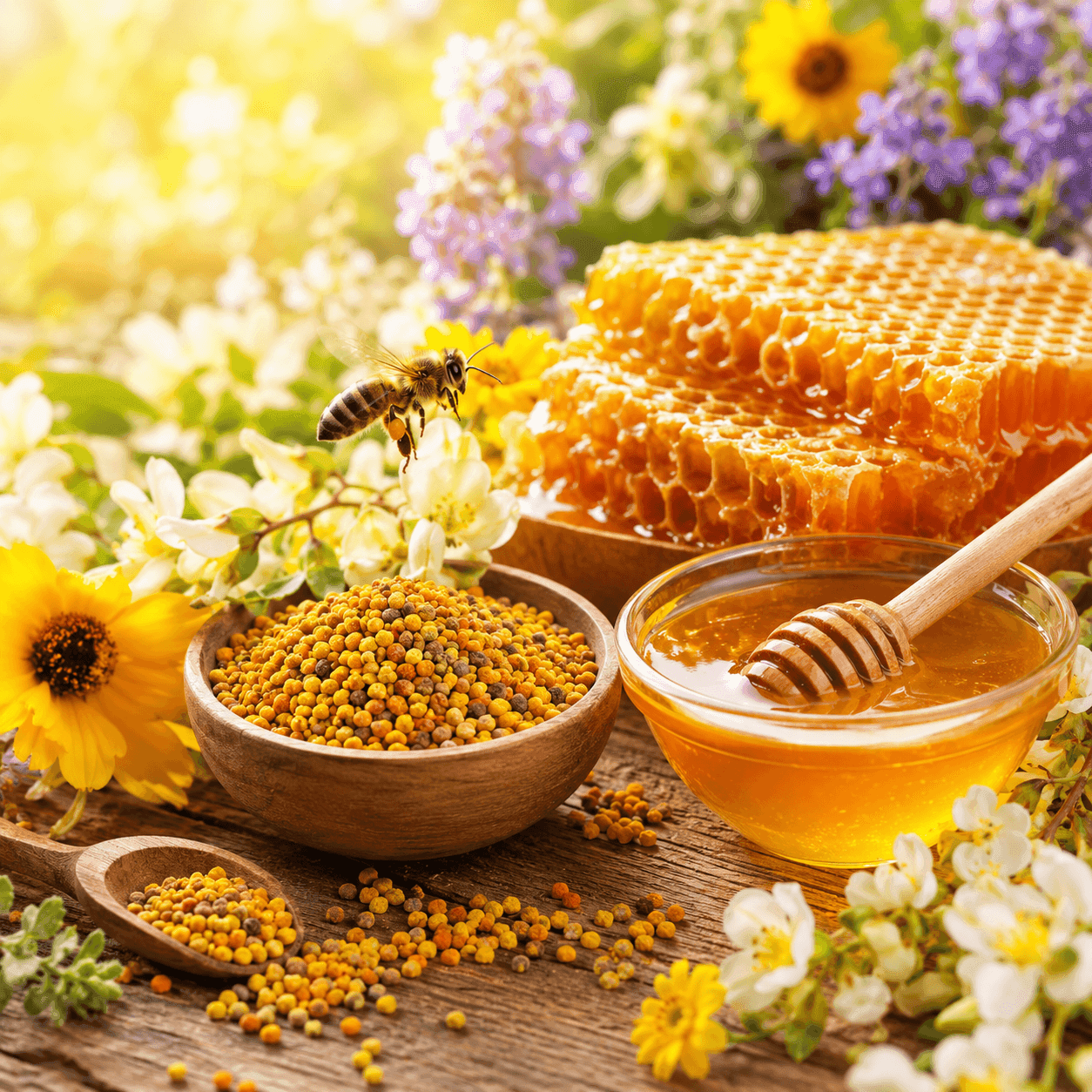
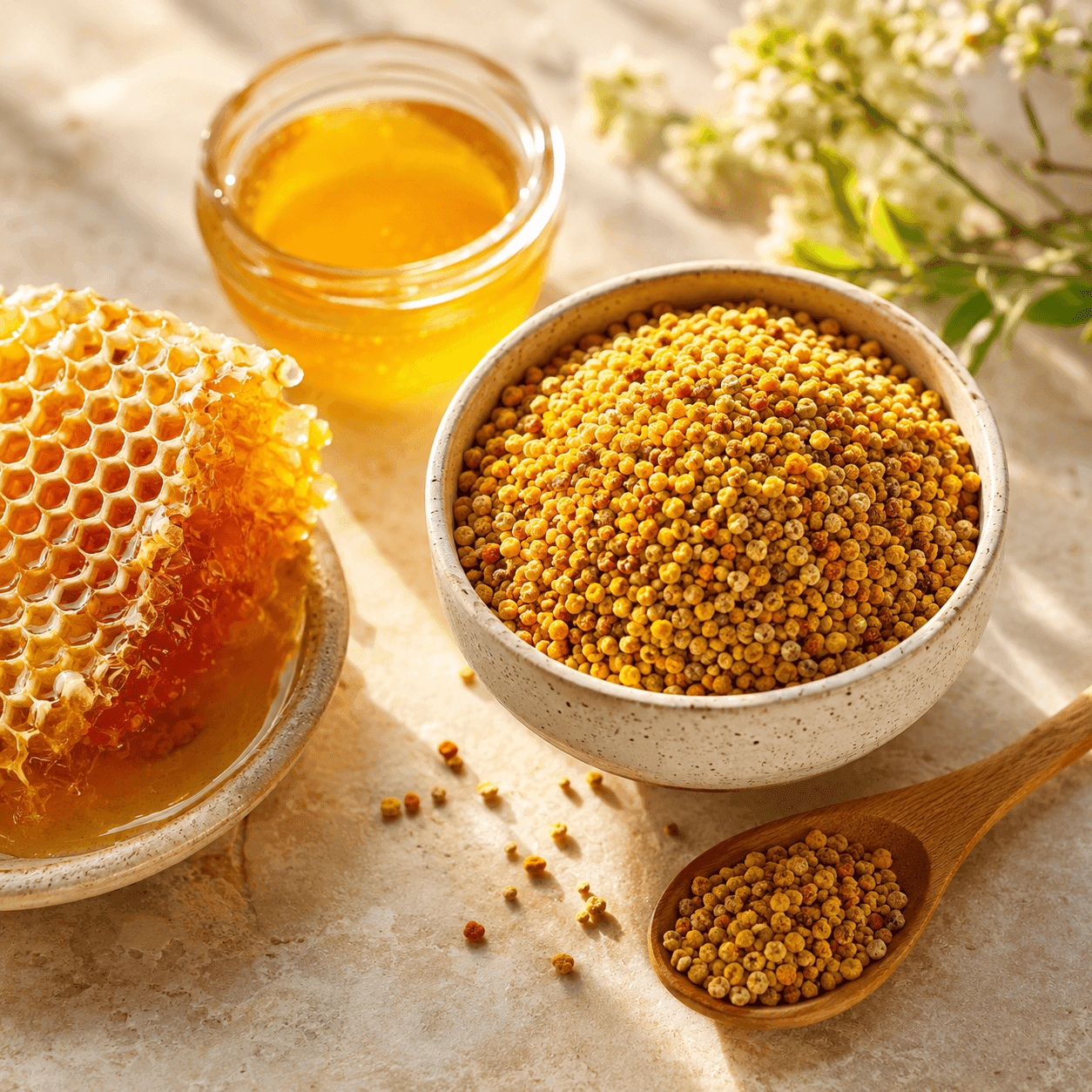
Bee pollen is exactly what it sounds like: pollen collected by bees from flowers, mixed with a small amount of bee saliva and nectar, packed into tiny granules, and carried back to the hive as the colony’s protein source. Beekeepers harvest a portion of it by stretching a pollen trap over the hive entrance, which scrapes the granules off the bees’ legs as they pass through.
What you end up with is a food the Egyptians called “life-giving dust,” the Greeks called “ambrosia,” Hippocrates prescribed for general health, and the Russians studied as a candidate food for cosmonauts on long-duration missions. The nutrient density is unusually high; the amino acid profile is complete; the secondary compound load (flavonoids, enzymes, lecithin) is impressive even for a category that includes spirulina and chlorella.
And it works for seasonal allergies in a way that has been frustrating mainstream medicine for decades.
What’s in it
- Protein. About 40% by dry weight, with all 22 amino acids present including the 9 essential ones. Higher protein density than most animal foods on a per-gram basis, and a more diverse amino acid profile than nearly any other plant-sourced food.
- Vitamins. Most of the B-complex (B1, B2, B3, B5, B6, B9 / folate), vitamin C, vitamin E, vitamin A as beta-carotene, vitamin K, and small amounts of vitamin D. Note: bee pollen, like spirulina, contains B12 analogues rather than the bioactive form — don’t rely on it for B12 (see the B12 article).
- Minerals. Calcium, magnesium, potassium, phosphorus, iron, zinc, selenium, manganese, and trace amounts of nearly every mineral the body needs.
- Enzymes. Bee pollen retains many active digestive and antioxidant enzymes when properly harvested and stored. Lost when dried at high temperatures.
- Flavonoids and polyphenols. Rutin, quercetin, kaempferol, and others — the same antioxidant and anti-inflammatory compound family found in fruits, herbs, and onions.
- Phytosterols. Plant-derived steroid-like compounds with documented hormonal-balancing effects.
- Lecithin. Phospholipid important for cell membrane structure and fat metabolism.
- RNA and DNA. Significant levels of nucleic acids; one of the few dietary sources outside of organ meats.
The allergy adaptation story
The most-cited alt-health use for bee pollen is seasonal allergy desensitization. The principle is essentially the same as immunotherapy injections (“allergy shots”) but delivered orally and far more gradually: the immune system encounters small, controlled amounts of the same flower pollens that drive its overreaction during peak season, and slowly learns to stop overreacting.
The protocol that has been used clinically by holistic practitioners for decades:
- Start months before allergy season — ideally 4–6 months ahead. Building tolerance takes time.
- Use local bee pollen. The desensitization only works against the pollens your local bees actually encounter. Spanish bee pollen won’t help with Texas oak season. Find a beekeeper within 50 miles or so, or buy from a local farmers’ market.
- Day 1: one granule. Wait 24 hours. Watch for any reaction.
- Day 2: two granules. Day 3: three granules. Build up by one or two granules daily for two weeks.
- Reach maintenance dose of 1–2 teaspoons daily, taken with food, ideally with raw honey for absorption.
- Continue through allergy season and ideally year-round for sustained tolerance.
The mechanism appears to involve oral tolerance induction through the gut-associated lymphoid tissue (GALT), a documented immunological pathway. Several small clinical trials have shown benefit; the literature is less robust than for immunotherapy injections but also far cheaper, more accessible, and lower-risk.
Energy and athletic performance
Bee pollen has been called “the most complete food in nature.” The combination of complete protein, B vitamins, simple carbohydrates from nectar, and adaptogen-like phytochemicals produces a real sustained-energy effect for many people.
Athletes — particularly endurance athletes — have used bee pollen for decades. The 1970s Russian Olympic teams supplemented heavily with it; their wrestlers and weightlifters credited bee pollen with recovery improvements. The Finnish track team in the 1972 Munich Olympics, the U.S. men’s track team under Coach Lloyd, and various other competitive programs have all included it.
The clinical evidence on athletic performance is mixed but suggestive — some trials show meaningful endurance and recovery benefits, others show effects comparable to placebo. The variability likely traces to differences in pollen source, dose, and how long subjects had been taking it. Practical alt-health experience is that the energy effect builds over weeks, not within hours.
Hormonal and reproductive support
Bee pollen contains phytosterols that have documented effects on hormone balance. Traditional and alt-health uses include:
- Menopausal support. Several Scandinavian trials have shown bee pollen reduces hot flashes and other menopausal symptoms in women, with the effect comparable to hormone replacement therapy in some endpoints and without the cancer-risk profile.
- Male fertility. Studies on bee-pollen supplementation in men have shown increased sperm count and motility, likely through the combination of amino acid density, zinc content, and phytosterol modulation of testosterone.
- Prostate health. The Japanese-developed extract Cernilton (also called Cernitin or graminex), derived from specific pollen species, has been studied for over fifty years for chronic prostatitis and benign prostatic hyperplasia (BPH). Multiple randomized trials show meaningful symptom improvement.
- Libido. A traditional use across many cultures. Mechanism is probably the combination of hormonal support, B-vitamin load, and amino-acid density supporting nitric oxide production.
Other documented effects
- Wound healing — topical use accelerates healing in burn and ulcer studies; traditional in several European folk medicine systems.
- Liver protection — documented in animal studies against alcohol, acetaminophen, and chemotherapy-induced damage.
- Cardiovascular — modest LDL-lowering effect, blood-pressure support, anti-platelet action.
- Anti-cancer in animal models — preliminary evidence on inhibition of tumor growth; not yet established in human trials.
- Mood and cognitive support — B-vitamin and amino-acid content supports neurotransmitter production.
Forms — fresh frozen, refrigerated, dried
- Fresh-frozen granules. The highest quality. Harvested, immediately frozen, shipped frozen. Enzymes and all heat-sensitive compounds intact. Hardest to find, sometimes available at farmers’ markets or from local beekeepers.
- Refrigerated raw granules. Low-temperature dried (under 105°F to preserve enzymes) and stored cool. The standard premium form. Most of the active compounds intact.
- Shelf-stable dried granules. Dried at higher temperatures. Enzymes mostly destroyed but protein, vitamins, and minerals preserved. The most common commercial form, perfectly useful for most applications.
- Capsules or tablets. Dose-precise and convenient, but the heat or pressure of processing reduces some activity. Useful for travel or for people who can’t handle the texture of granules.
Sourcing
Bee pollen quality depends heavily on what the bees foraged and how the pollen was processed. Considerations:
- Local matters for allergy use. For seasonal-allergy desensitization, the pollen must come from bees foraging in the same general region you live in. Search local farmers’ markets, beekeeper associations, or natural-food stores carrying local product.
- Clean foraging environment. Bees from agricultural areas can carry pesticide residues into the pollen. Look for producers who certify their bees forage from organic or wild flower sources.
- Spain, France, U.S., New Zealand produce reliably clean commercial bee pollen. Chinese-sourced bulk pollen has had pesticide contamination issues; verify testing if buying from that origin.
- Color variety. A single batch of bee pollen usually contains multiple colors — yellow, orange, brown, pink, sometimes white or red — reflecting the different flowers the bees visited. Color diversity is a sign of biological diversity in the source.
Dosing
- First-time test: 1 granule, then 24 hours of observation. No reaction means proceed.
- Build-up: Add 1 granule per day for a week, then move to small pinches, building to a teaspoon over 2–3 weeks.
- Maintenance: 1–2 teaspoons daily, with food or in a smoothie.
- Therapeutic / athletic: 1–2 tablespoons daily, divided into morning and afternoon doses.
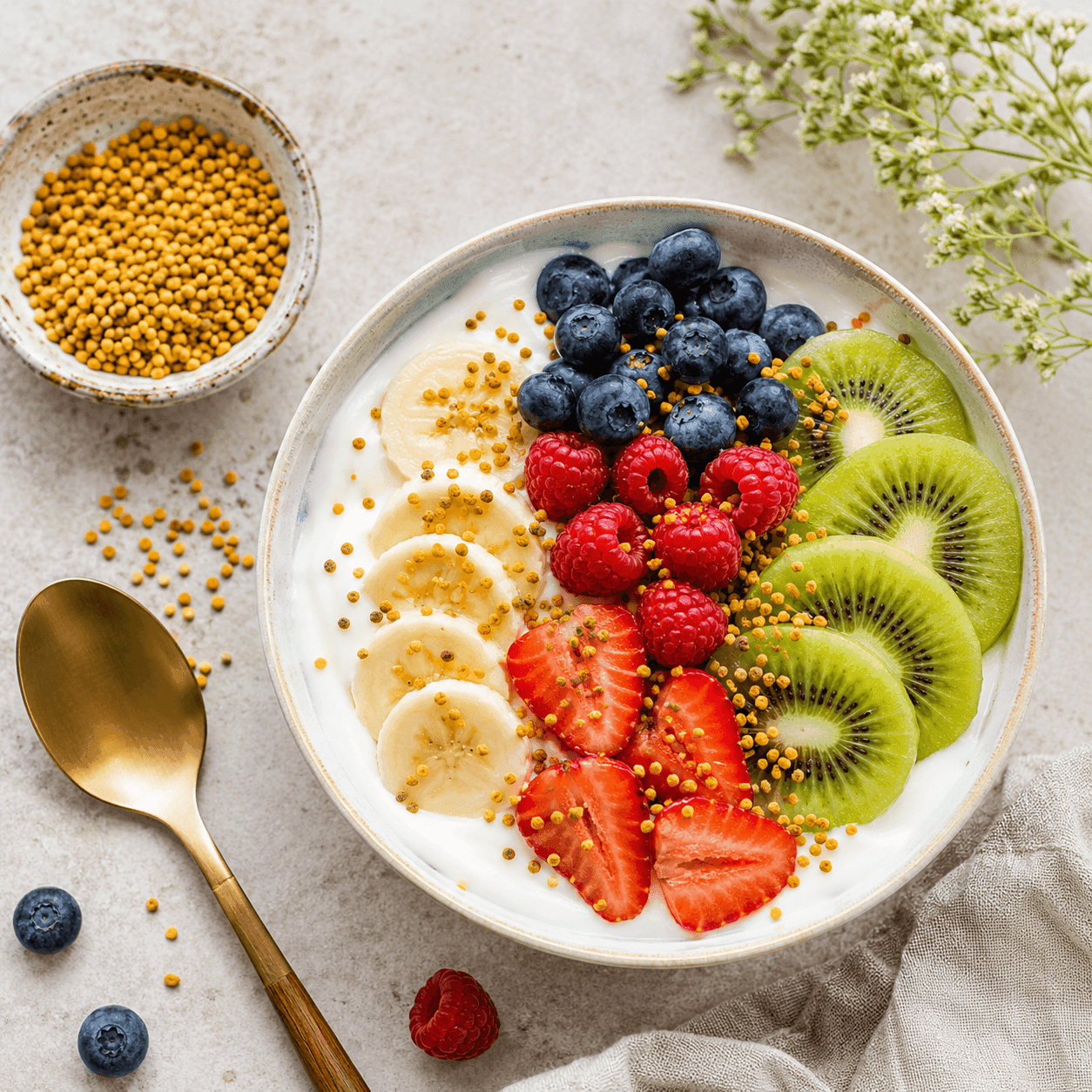
Take bee pollen with food, ideally including some fat (the fat-soluble vitamins absorb better that way). Many people mix granules into yogurt, oatmeal, smoothies, or raw honey. The taste is mildly sweet and floral, with a slight bitterness — not unpleasant for most people once they get used to it.
Where I buy bee pollen
For seasonal allergy use, the first recommendation is always: find a local beekeeper. Farmers’ markets, beekeeper associations, and local natural-food stores often carry small-batch local pollen that’s ideal for desensitization.
For general nutrition or when local isn’t available:
- Stakich Bee Pollen Granules — Michigan-based, U.S.-sourced, low-temperature dried. Reliable everyday quality.
- Beekeeper’s Naturals Bee Pollen — Canadian sourcing, third-party tested, clean processing. Slightly more expensive but well-formulated.
- Greenbow 100% Pure Spanish Bee Pollen — Spain is one of the cleaner sourcing regions globally. Good price-quality ratio for everyday use (not for local-allergy purposes).
- Mountain Rose Herbs Bee Pollen — Pacific Northwest sourcing, organic. Frequently rotated stock, often fresher than big-box options.
Where to start
Local bee pollen from a beekeeper, where it’s available, is the ideal — 1 teaspoon stirred into morning yogurt or oatmeal most days, bumped up to 2 teaspoons through allergy season for the desensitization effect.
On training days, an additional teaspoon mixed into a post-workout smoothie makes a useful recovery food — the amino acid profile plus the simple carbohydrates from the nectar.
Closing
Bee pollen is the food the bees curated for their own colony — protein-rich, complete in amino acids, dense in vitamins and minerals, alive with enzymes when handled properly, and quietly able to retrain an allergy-prone immune system over months. The Egyptians knew this. The Russians studied it for cosmonauts. Modern alt-health practice has carried the tradition forward.
Start with one granule. Build up slowly. Buy local for allergies, buy clean otherwise. Eat the curated pollen the bees worked all day to bring back to the hive. They selected for nutrition; you get the benefit.
Sources & further reading
Studies cited
- Cabrera, C. & Virás-Boixader, A. (1996). Bee Pollen: Chemical Composition and Therapeutic Application. Comprehensive review. — Standard reference on bee pollen composition and the major clinical and preclinical literature.
- Wojcicki, J. et al. (1986). Effect of pollen extract on the development of experimental atherosclerosis in rabbits. Atherosclerosis. — Foundational cardiovascular research; bee pollen extract reduced atherosclerotic plaque in animal models.
- Iglesias, M.T. et al. (2014). Bee pollen as a functional food: a review. Food Reviews International. — Comprehensive modern review of clinical and preclinical evidence.
- Wilt, T. et al. (2000). Cernilton for benign prostatic hyperplasia. Cochrane Database Systematic Reviews. — Cochrane review of the Cernilton (graminex) prostate research; documented symptom improvement vs placebo across multiple trials.
Further reading
- Bee Pollen: Miracle Food — Maurice Hanssen — Early lay-audience book that helped popularize bee pollen in the West; historically important even where individual claims have been refined since.
- American Apitherapy Society — Professional society dedicated to the therapeutic use of bee products; useful reference for finding practitioners and current protocols.