

Health · Trace Mineral · ~10 min read
Boron — the quiet mineral behind bones, joints, and hormones.
Why Dr. Rex Newnham figured it out forty years ago, why the soil ran out, and what 6 mg per day does for arthritis.
By George Hinestrosa · Personal experience & independent research
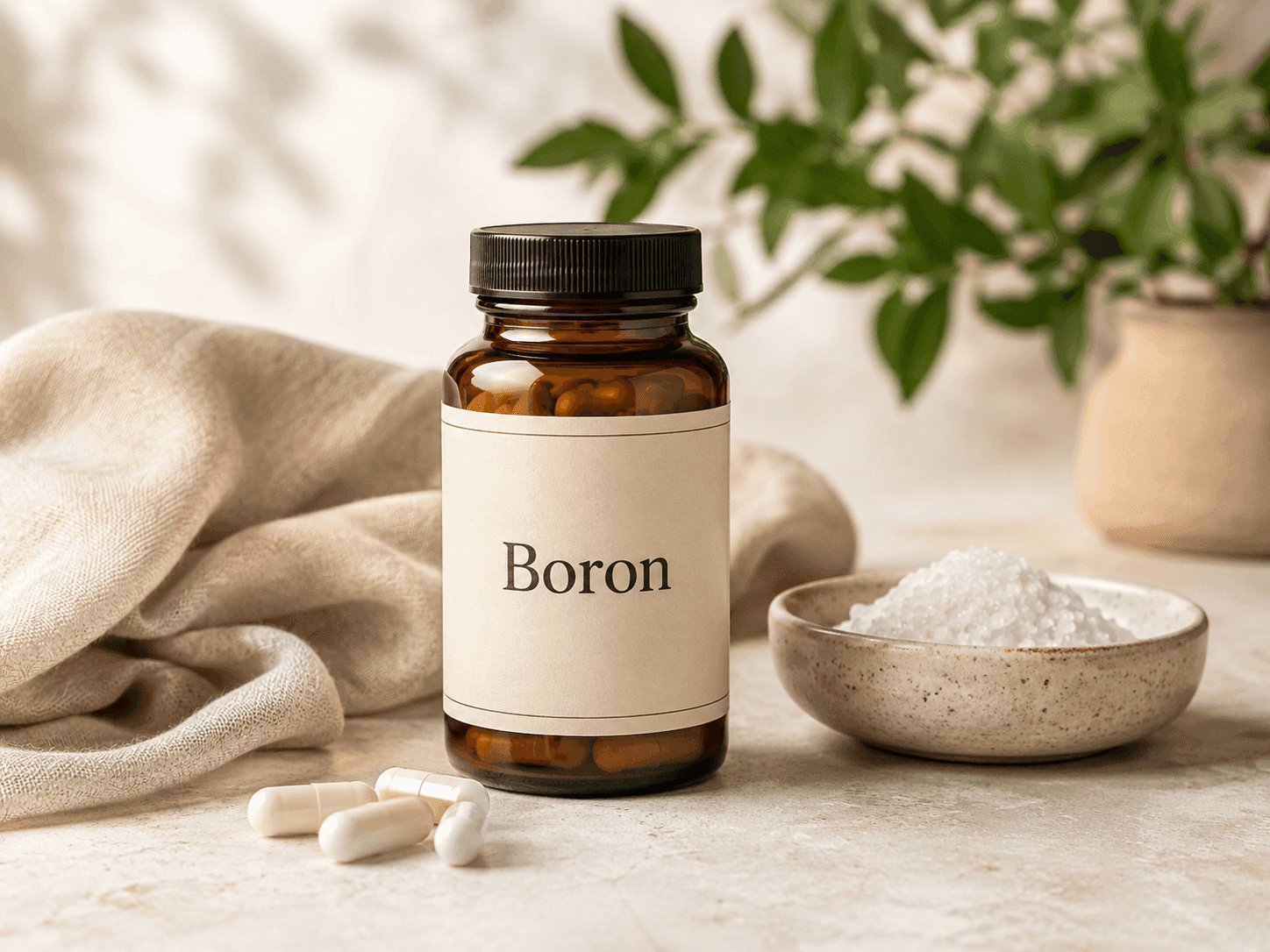
Boron is the trace mineral nobody studied for most of the twentieth century. It wasn’t classified as essential. It didn’t have a recommended daily intake. It was something plants needed, the conventional wisdom said, but humans? Probably not.
That changed in the 1980s when a soil chemist named Rex Newnham figured out his own arthritis was a boron deficiency. He fixed it with a few milligrams a day. Then he started looking at why — and discovered that boron sits underneath bone health, joint integrity, hormone balance, vitamin D activation, and brain function in ways the orthodox nutritional literature had missed entirely.
The mineral is still under-recognized. The RDA still doesn’t exist officially. But the case for 3 to 9 mg per day has been building for four decades, and the people who know about it tend to stay on it.
Rex Newnham and the arthritis story
Newnham was a soil chemist working in Perth, Australia in the 1960s when he developed severe osteoarthritis in his knees. The pain was bad enough that he could barely walk. He was in his forties, with decades of work ahead of him.
What he noticed, working with the local soil, was that Western Australian soil was unusually boron-depleted — the result of decades of intensive agriculture without remineralization. The plants grown there were boron-poor. The animals eating those plants were boron-poor. The people eating those animals and plants were boron-poor. Australia, at the time, had one of the highest arthritis rates in the world.
Newnham added boron to his own diet — 30 mg per day initially, an aggressive load — and within three weeks his arthritis was substantially better. Within three months it was gone. He spent the next twenty years studying the mineral, publishing the global comparison that has since become the foundational boron data: countries with boron-depleted soil have high arthritis rates (Jamaica, Mauritius, Australia); countries with boron-rich soil have low arthritis rates (Israel). The relationship held across cultures and dietary habits.
His clinical protocol, refined over the decades, became the standard: 6 mg per day for general use, 9 mg per day for active arthritis. Hundreds of patients reported the same pattern of improvement.
What boron does in the body
Boron isn’t a single-purpose mineral. It modulates several systems at once:
- Bone integrity. Boron is required for calcium absorption from the gut and for calcium retention in bone. Without it, supplemented calcium is poorly utilized. Boron also activates the enzymes that build the bone matrix. Newnham’s research showed bone density improvements within months of starting supplementation.
- Joint health. The arthritis effect is the headline application. The mechanism appears to be a combination of reduced inflammation, improved calcium handling at joint margins, and modulation of synovial-fluid composition. Mainstream rheumatology has never picked this up seriously; the alt-health joint-health protocols built around it have decades of patient reports behind them.
- Testosterone. Multiple studies have shown that 10 mg per day of boron increases free testosterone by roughly 25–30% in men within a week, mostly by reducing sex-hormone binding globulin (SHBG). This is a notable, replicable effect that the bodybuilding community noticed decades before mainstream medicine did.
- Estrogen metabolism. In women, boron supports healthy estrogen levels and helps with menopausal symptoms in the same way some phytoestrogens do, but without being a phytoestrogen itself. The mechanism is hormonal modulation rather than receptor binding.
- Vitamin D. Boron extends the half-life of vitamin D in serum. People who supplement vitamin D and don’t see expected effects often respond once boron is added — the D doesn’t stay active long enough without it.
- Brain function. Boron deficiency impairs eye-hand coordination, short-term memory, and attention in controlled studies. The brain effects are subtle but real. Forrest Nielsen at the USDA Grand Forks lab published the foundational cognitive research in the 1990s.
- Fluoride excretion. This is the angle Sircus pays attention to: boron helps the body excrete fluoride. Some alt-health practitioners use boron specifically for fluoride detoxification, alongside iodine and magnesium.
The soil depletion problem
Modern agriculture depletes soil boron. Industrial farming replaces nitrogen, phosphorus, and potassium because those are the macronutrients plants need to grow visibly. Trace minerals — boron, selenium, zinc, manganese — are not replaced because the plant grows fine without them in the short term. The food just contains less of them than it used to.
The implication: food-only boron intake in industrialized countries has fallen substantially over the past century. Estimates put current Western intake at 1–2 mg per day. The therapeutic range is 3–9 mg. The gap is real, persistent, and gets worse with each generation of soil that isn’t remineralized.
What deficiency looks like
- Joint pain, stiffness, osteoarthritis
- Bone density loss, osteoporosis risk
- Low testosterone in men, low libido
- Difficult menopausal transition in women
- Poor response to vitamin D supplementation
- Subtle cognitive slowdown — eye-hand coordination, short-term memory, attention
- Dental and oral health decline
- Susceptibility to fluoride accumulation (no obvious symptom, but a real physiological signal)
None of these symptoms are specific to boron. That’s part of why mainstream nutrition never built a clinical picture of boron deficiency the way it did for iron or B12. The symptoms blend into the general background of modern decline. But when boron goes back in, the symptoms often go away.
Dosing — Newnham’s protocol
- General use: 3–6 mg per day, taken with food. Most reasonable starting point.
- Active arthritis or osteoporosis: 6–9 mg per day, divided into two doses.
- Hormonal optimization: 9–10 mg per day for the testosterone effect (men), or 6 mg per day for women working through menopause.
- Maintenance: 3 mg per day long-term once initial response is achieved.
The upper safe limit established in toxicology research is 20 mg per day for chronic intake. The therapeutic doses above sit comfortably below that ceiling. Acute toxicity requires gram doses — orders of magnitude above anything in a supplement bottle.
Forms — and the borax question
Standard supplement forms:
- Boron glycinate — boron chelated to glycine. Highly absorbed, gentle on the stomach. The form I default to.
- Boron citrate — boron with citric acid. Also well-absorbed, common in supplement form.
- Boron aspartate — another reasonable chelate.
All three deliver elemental boron effectively. There isn’t a strong reason to prefer one over the other for most people. Read the label for elemental boron content per serving.
On the question of borax — sodium tetraborate, the laundry product — there’s a niche alt-health practice of using it at micro-doses (a fraction of a teaspoon dissolved in a liter of water, portion of that consumed) for boron supplementation. The math works: borax is roughly 11% elemental boron, and the doses people use are within the therapeutic range. But for a beginner, the risk of measurement error is real, the FDA regulatory status is contested, and the supplement-form chelates do the same job without the controversy. Stick to glycinate or citrate. The borax route is a deeper-end-of-the-pool move that needs its own careful study.
Foods that deliver
Whole-food boron, where it’s still in the soil:
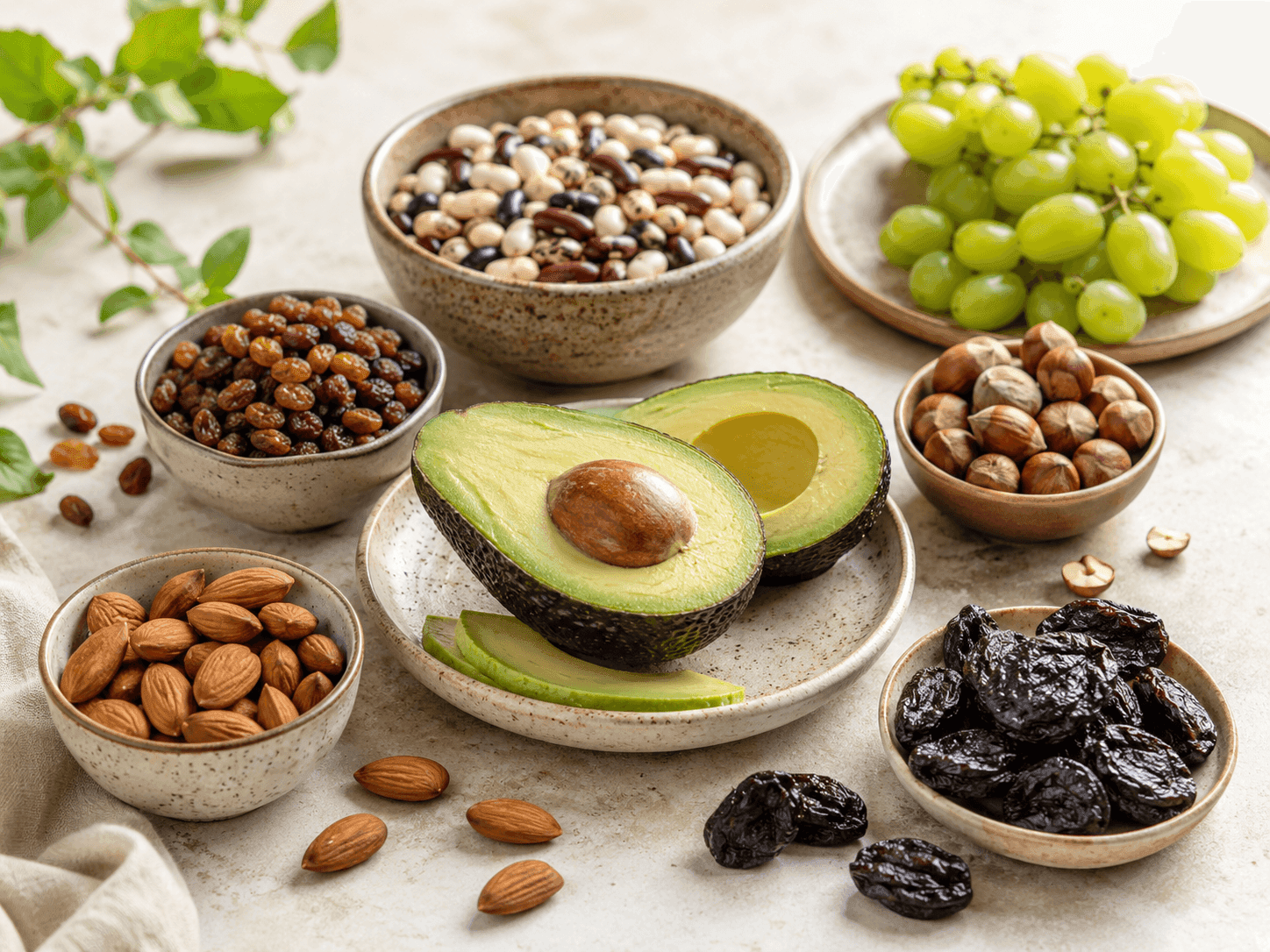
- Prunes — the densest food source. 1.4–2.7 mg per serving (roughly 5 prunes). The standard alt-health boron-from-food recommendation: eat a few prunes daily.
- Raisins — 0.5–1.5 mg per serving
- Avocado — 1 mg per fruit
- Almonds — 0.5 mg per ounce
- Apples and pears — 0.3–0.5 mg each
- Beans and legumes
- Raw honey — trace amounts
- Red wine — surprisingly, 0.5–1.4 mg per glass (the boron in the grapes carries through)
A daily handful of prunes is the simplest food-only boron strategy. For therapeutic dosing the supplement is usually easier.
Where I buy boron
- Now Foods Boron 3 mg, 100 capsules — the most accessible product. 3 mg per capsule makes dosing straightforward. Inexpensive.
- Pure Encapsulations Boron Glycinate — clean formulation, no fillers, slightly more expensive but a reliable brand.
- Source Naturals Boron 3 mg — alternative if Now Foods isn’t available. Same dose, same form, comparable price.
Where to start
A common dose is 3 mg of boron glycinate with breakfast daily. When joints are flaring or training has been heavy, some bump to 6 mg (one in the morning, one with dinner). A handful of prunes a few times a week adds more boron alongside the fiber.
The effect isn’t dramatic on day one — it compounds over weeks. Bone, joint, and hormone tissue all turn over slowly, so the real difference shows up three to six months in.
Closing
Boron is the kind of mineral that doesn’t make headlines because no one can patent it and the therapeutic effects unfold over months, not hours. Rex Newnham figured it out forty years ago, published in peer-reviewed journals through the 1990s, and the mineral has been quietly working for the people who bothered to read him.
If you have joints that ache, bones you want to protect, hormones that could use the help, or you’ve been supplementing vitamin D and not seeing the response you expected — try 6 mg of boron daily for ninety days. It costs a few dollars a month and resolves more than it should.
Sources & further reading
Authorities cited
- Dr. Rex Newnham (1923–2017) — Australian soil chemist and boron pioneer; founded Natural Health Group in 1980. His Journal of Applied Nutrition papers (1990s) are the foundational clinical and epidemiological work on boron and arthritis.
- Forrest H. Nielsen, PhD — USDA Grand Forks Human Nutrition Research Center; published the standard research on boron's role in bone metabolism, cognition, and hormonal modulation through the 1980s and 90s.
- Dr. Mark Sircus — Writes on boron primarily in the context of halide displacement and fluoride detoxification, alongside iodine and magnesium.
Books & reading
- Newnham, R.E. (1994). Essentiality of boron for healthy bones and joints. Environmental Health Perspectives, 102 Suppl 7, 83-85. — The peer-reviewed clinical paper that put boron on the joint-health map.
- The Mineral Fix — James DiNicolantonio, Siim Land — Modern survey with strong boron chapter covering Newnham's work.
- Naghii, M.R. et al. (2011). Comparative effects of daily and weekly boron supplementation on plasma steroid hormones and proinflammatory cytokines. — The replication study on boron and free testosterone — documents the SHBG-reduction mechanism.