
Health · Diet & Principles · ~16 min read
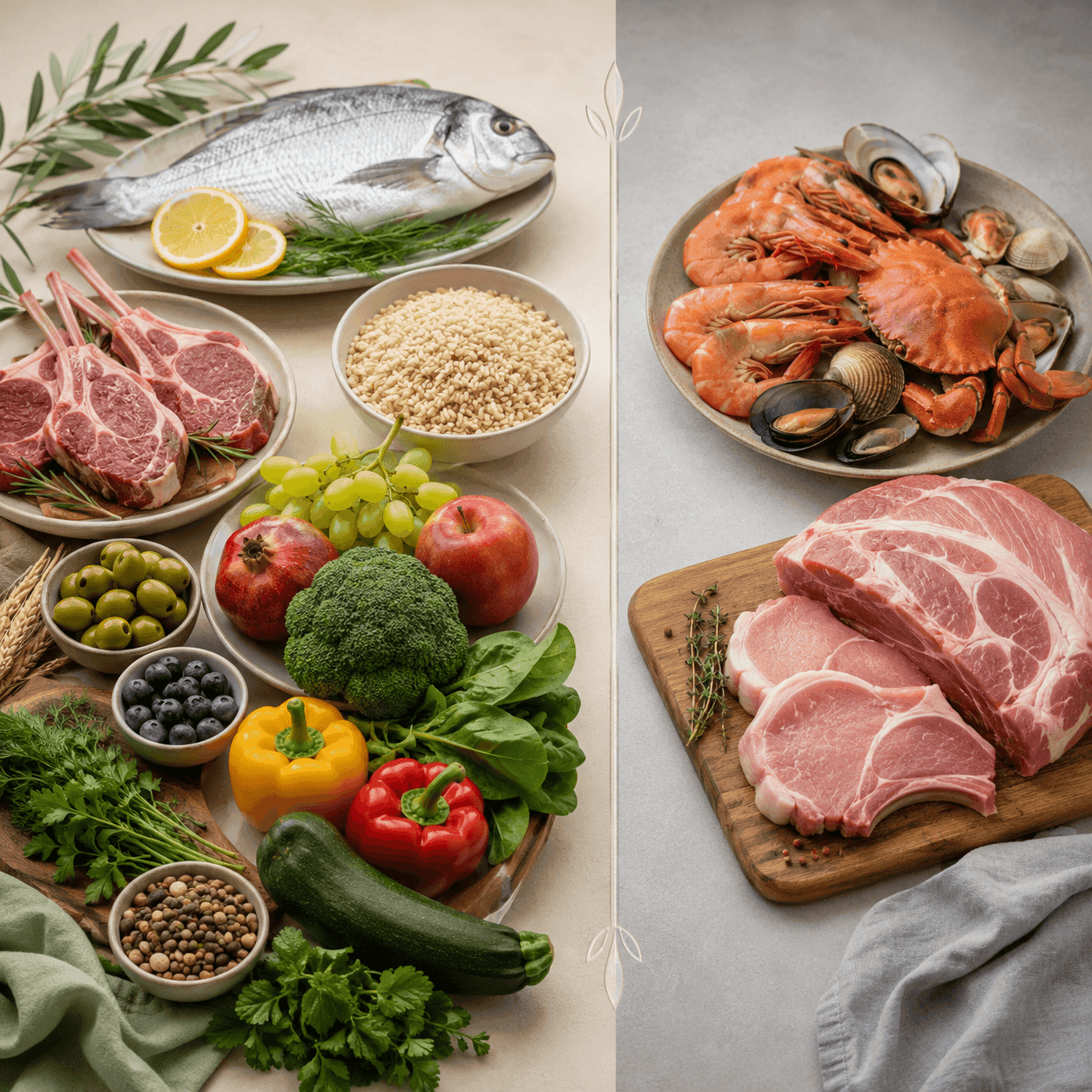
Clean & unclean foods — Leviticus 11 read through a modern nutritional lens.
Why the biblical clean/unclean distinctions predate Moses, what the scientific lens reveals about trophic levels and biological magnification, the honest treatment of the New Testament passages people cite to dismiss them, and what to actually eat.
By George Hinestrosa · Personal experience & independent research
Of all the topics in this section, this is the one most likely to produce the strongest reaction in both directions. The Leviticus 11 distinction between clean and unclean foods — the prohibition on pork, shellfish, scavenger birds, and most marine life without fins and scales — is either the most under-appreciated nutritional framework in the ancient world or, depending on who you ask, a piece of Jewish ceremonial law abolished by Jesus and no longer binding on Christians. Both positions are taken with confidence. Neither is quite as obvious as its defenders make it sound.
This article walks through the case that the biblical clean/unclean distinctions are older, broader, and more biochemically defensible than the common dismissal allows; that the framework holds up under modern nutritional scrutiny in ways that are difficult to explain by coincidence; that the New Testament passages people cite to dismiss the laws don’t actually say what they’re commonly read to say; and that the practical application — for Christian and non-Christian readers alike — is a defensible eating framework that consistently tracks the longest-lived and healthiest populations on earth.
The distinction is older than Moses
The first thing to notice about the clean/unclean categories is that they don’t begin in Leviticus. They begin in Genesis 7, when God instructs Noah to bring onto the ark seven of every clean animal and two of every unclean animal — male and female, and of fowls of the air by sevens, “to keep seed alive upon the face of the earth.” This is centuries before Moses, before there are Jews, before there is a Mosaic law to codify. The distinction is already operative and Noah is expected to know it without explanation.
After the flood, in Genesis 8:20, Noah builds an altar and offers burnt offerings from the clean animals specifically. The seven-of-each ratio for the clean animals makes sense in that context: he had extras for sacrifice and for food. The two-of- each ratio for the unclean was the minimum needed to repopulate the species — they were never on the ark to be eaten.
This is the strongest single argument against the common dismissal that “clean and unclean is just a Jewish ceremonial law.” The categories predate the Jewish people by several generations. Whatever they are, they aren’t purely ceremonial and they aren’t culturally specific to one nation.
The cross-cultural distribution
The other thing the “just Jewish” dismissal can’t account for is how widely the same categories show up across unrelated cultures with no historical connection to Israel.
Islamic dietary law forbids pork and uses a slaughter method (dhabihah) closely paralleling Jewish kosher practice. Both traditions independently identify the pig as off-limits and require careful blood drainage from clean animals.
The Hindu Code of Manu, one of the oldest legal texts in the world, forbids carnivorous birds and animals that lack a cloven hoof — the exact same criteria as Leviticus, framed in a religious system with no historical contact with the Hebrew tradition.
The ancient Iranians (Zoroastrian tradition) forbade eating fish without both fins and scales — the same specific fish criterion as Leviticus 11. The peoples of the South Pacific avoided eel, an unscaled scavenger fish. The Navajo, the Yakuts of northern Turkey, and the Lapps of Scandinavia all independently prohibited pork. The patterns are too consistent and too cross-cultural to be coincidental.
The most plausible explanation: the categories track real properties of the animals themselves — properties that traditional peoples across the ancient world observed empirically (the people who ate scavengers got sick more often) and codified into religious law to preserve. The biblical framework is one expression of a much broader pattern of pre-modern wisdom about which animals are safe food and which aren’t.
The criteria, plainly
Leviticus 11 lays out four categories with specific criteria for each.
Mammals. An animal is clean if it has both a fully cloven hoof and chews the cud. Cattle, sheep, goats, deer, antelope, bison, elk — all of these qualify. The pig has the cloven hoof but doesn’t chew the cud and is unclean. The camel chews the cud but has a paw rather than a cloven hoof and is unclean. The rabbit, hare, and cony chew (after a fashion) but don’t have divided hooves and are unclean. The horse fails on both criteria and is unclean. Anything that walks on paws (dogs, cats, rodents, bears, raccoons) is unclean.
Marine life. Anything in the water with both fins and scales is clean. Salmon, cod, sardines, tuna, bass, trout, herring, mackerel — all clean. Anything without fins or scales (or with both missing) is unclean: shellfish (shrimp, lobster, crab, oysters, mussels, clams), squid, octopus, shark, catfish, eel, monkfish, all scaleless or partially scaleless fish.
Birds. The criterion isn’t given as a positive rule but as a list of forbidden species — birds of prey (eagles, hawks, owls, vultures, kites), scavengers (ravens, crows), water birds (pelicans, herons, cormorants), and the bat (categorized colloquially with birds). The implicit positive rule, derived from what’s permitted, is foraging seed-eating birds: chickens, turkeys, ducks, geese, pheasant, quail, pigeons, doves.
Insects. A narrow exception: insects with “jointed legs above their feet to leap with” — grasshoppers, locusts, crickets — are clean. John the Baptist’s diet of locusts and wild honey was within this category. Everything else that flies or creeps is unclean.
Why the criteria track biology — the trophic-level case
Here is where the framework becomes interesting from a scientific standpoint. The single feature most strongly associated with the clean animals is that they all eat at the lowest level of the food chain — the herbivores, the grass and leaf eaters. The unclean animals are almost universally either scavengers, carnivores, omnivores with broad scavenging behavior, or coprophagic (eating their own waste, of which more below).
This matters because of a phenomenon called biological magnification. Toxins, environmental pollutants, heavy metals, and a wide range of biochemical waste products accumulate as you move up the food chain. A grass-eating cow has far less accumulated toxin in its tissues than a scavenging pig that’s been eating garbage, dead animals, and anything else it can find. A salmon eating krill has far less accumulated toxin than a shark eating salmon eating krill. The higher up the trophic ladder, the more concentrated the toxic load.
The biblical criteria, read this way, are a clean empirical rule for steering toward the lowest-toxin animal foods available. Cloven hoof plus chewing the cud is shorthand for “herbivore at the base of the food chain.” Fins plus scales is shorthand for “fish whose physiology efficiently eliminates the salts and toxins of the marine environment.” Foraging bird rather than raptor is shorthand for “seed eater, not flesh eater.”
The criteria don’t describe a theological mystery. They describe a biological pattern that tracks measurable toxin burden.
The mammal mechanisms in detail
The clean ruminants — cattle, sheep, goats, deer — have a four-chambered stomach with a pre-stomach (the rumen) where bacterial fermentation breaks down cellulose and produces additional proteins and B vitamins. The food is regurgitated, chewed again, and passed through several fermentation chambers before reaching the true stomach. This system is exquisitely adapted to extracting nutrition from plant matter while leaving the animal’s tissues relatively clean of the substances it eats.
The camel has a rumen but lives in a desert environment where water conservation matters more than waste elimination. To minimize water loss, the camel retains urea (a metabolic waste product) and doesn’t sweat the way most mammals do. Body-temperature regulation, normally accomplished by sweating, instead happens through tolerated heat buildup. The result: substantially higher levels of urea and other waste products in the tissues than in a cow or sheep. The cloven-hoof criterion fails in a way that tracks a real biochemical difference.
The rabbit, hare, horse, and most rodents are coprophagic — they re-ingest their own waste to extract additional nutrition from partially digested plant matter. The rabbit has a large fermentation chamber (the cecum) at the end of its intestine rather than at the beginning. To capture the bacterial output of that fermentation, the rabbit eats two kinds of feces: hard pellets that get discarded, and soft pellets taken directly from the anus and re-ingested. The horse does something similar in less obvious form. This is a real adaptation that lets these animals extract more nutrition from poor forage — and it’s also why their tissues carry higher concentrations of secondary bile salts and other recycled waste compounds than the ruminants do. Some of those secondary bile salts are now known to be carcinogenic in mammalian systems.
The pig is the canonical scavenger omnivore. It will eat plant matter, animal carcasses, garbage, its own waste, and almost anything else. By biological magnification alone, the pig’s tissues concentrate more environmental and dietary toxin than nearly any other commonly farmed animal. On top of that, the pig is famously hospitable to parasites: trichinella (causing trichinosis), taenia solium (the pork tapeworm), toxoplasma. The pig is also the most studied non-human reservoir for viruses that jump the species barrier into humans — H1N1 swine flu being the textbook example, with the pig serving as a mixing vessel where avian and human influenza strains can recombine.
The 2015 World Health Organization classification of processed pork (bacon, ham, sausage) as a Group 1 carcinogen — the same category as tobacco and asbestos — isn’t a fringe alt-health claim. It’s the consensus classification of the WHO’s International Agency for Research on Cancer. Modern epidemiology arrived at the same conclusion the biblical text asserted three thousand years earlier.
The fish mechanisms
Fish with fins and scales have a sophisticated osmoregulatory system. In marine environments, where the seawater is roughly three times saltier than the fish’s body fluids, scaled fish drink water continuously and excrete excess salt through specialized cells in their gills. The scales themselves serve as a protective barrier and limit passive ion exchange. The result is a fish whose tissues stay relatively clean of the salts and dissolved waste in the surrounding water.
Sharks and rays solve the same osmotic problem differently and, in doing so, become genuinely toxic food. A shark’s body fluids are still less salty than the surrounding ocean, so water would tend to leave the body by osmosis. Instead of excreting salt, the shark retains urea — a nitrogenous waste product that other animals eliminate — at concentrations high enough to make the internal osmotic pressure exceed the ocean’s. This keeps the shark from dehydrating but loads its tissues with the very compound the rest of the animal kingdom is built to excrete.
Dried shark fin — the basis of shark fin soup — concentrates this urea further. The soup is, biochemically, hot water steeped with a urea-rich tissue. The fact that this is a high-status delicacy in some food cultures is one of the more striking demonstrations that cultural value and biological wisdom are not the same thing.
Catfish, eels, monkfish, and other scaleless or partially scaled fish are typically bottom-feeders and scavengers — consuming dead organic matter and concentrating the toxins associated with it. Shellfish (oysters, clams, mussels) are filter feeders whose job in the marine ecosystem is essentially water purification — they extract dissolved particles, including environmental pollutants, microplastics, heavy metals, and the algal toxins released during red tides. Eating filter feeders is, in concentrated form, eating whatever was in the water they filtered. When red-tide warnings go out, the danger is specifically that shellfish in the affected area have accumulated lethal levels of paralytic toxins that the live algae produced.
Shrimp, lobster, and crab are crustacean scavengers — the cleanup crew of the ocean floor. Their digestive systems are typically consumed along with the rest of the body, which means the diner eats whatever was being processed at the moment of capture. The aesthetic of luxury seafood doesn’t change the underlying biology.
The bird categories
The clean birds, derived from what Leviticus permits and what tradition has identified, are foraging seed and insect eaters: chickens, turkeys, ducks, geese, pheasant, quail, pigeons, doves. These birds eat low on the food chain and their tissues reflect that.
The unclean birds — explicitly named in Leviticus 11 — are raptors (eagles, hawks, owls, kites) and scavengers (vultures, ravens, crows, ospreys). These birds eat at the top of their respective food chains and concentrate the corresponding toxins. The bat, classified colloquially with the birds, is now well documented as a primary reservoir for some of the most dangerous viruses that have crossed into humans — rabies, SARS, MERS, several hemorrhagic fevers. The biblical prohibition on eating bats has aged well.
The phytotoxic index experiments
One of the more curious experimental confirmations of the biblical categories comes from plant-growth studies. Researchers prepared dilute muscle extracts from a wide range of clean and unclean animals and used them as growth media for seedlings (typically the legume Lupinus albus). The growth of the seedlings was measured against a control and expressed as a phytotoxic index — 100% meaning no growth impairment, lower numbers meaning the extract actively suppressed plant growth.
The pattern that emerged tracked the biblical categories almost perfectly. Extracts from clean animals (sheep, ox, goat, deer, cow) produced indices in the 80-94% range — mild suppression at worst. Extracts from unclean animals (pig, dog, bear, rabbit, guinea pig) produced indices in the 60-70% range — substantial growth suppression. Whatever the specific compounds responsible (the candidates include secondary bile salts, benzopyrenes, and a range of accumulated toxins), the biochemical difference between clean and unclean animal tissues was measurable and reproducible.
This isn’t proof of anything definitive about human health. It is a striking demonstration that the biblical categories track a real, measurable biochemical distinction in animal tissue — not an arbitrary religious rule invented in the bronze age.
The New Testament passages, addressed honestly
The strongest objection to this framework, for Christian readers, comes from a small number of New Testament passages commonly read as abolishing the Levitical food laws. Each of them, read carefully, says something different than the common reading assigns to it.
Mark 7 — “Jesus declared all foods clean.” The context is critical. The Pharisees criticize the disciples for eating bread with unwashed hands — meaning they had skipped the ceremonial hand-washing tradition (not the practical hygiene one). Jesus responds that what defiles a person is what comes out of them, not what goes in. The phrase often translated “thus declaring all foods clean” (Mark 7:19) is, in the original Greek, a participial clause about the digestive process — literally “purging all meats,” referring to the body’s elimination of food waste, not a divine re-categorization of what counts as food. Several mainstream translations insert “Jesus declared all foods clean” as an editorial gloss; the Greek text doesn’t carry that meaning, and the parallel passage in Matthew 15 doesn’t include the phrase at all. The episode is about hand-washing tradition, not food categories.
Acts 10 — Peter’s vision of the sheet. Peter sees a sheet lowered from heaven containing all kinds of unclean animals. A voice instructs him: “Rise, Peter; kill and eat.” Peter responds: “Not so, Lord; for I have never eaten anything common or unclean.” The vision repeats three times. Then Peter wakes and immediately receives Gentile messengers from Cornelius. He goes with them, and in Acts 10:28 tells Cornelius: “God has shown me that I should not call any man common or unclean.” The vision’s interpretation is explicit and given by Peter himself: it was about Gentile inclusion in the gospel, not about food. Peter never eats anything from the sheet (it’s a vision). And in Acts 11, when recounting the vision to the Jerusalem council, he still affirms that nothing common or unclean has ever entered his mouth — years after Christ’s death and resurrection. If Jesus had abolished the food laws, Peter clearly never received that instruction.
1 Timothy 4 — “every creature of God is good.” Paul warns Timothy about teachers who “forbid marriage and command to abstain from foods which God created to be received with thanksgiving by those who believe and know the truth, for every creature of God is good and nothing to be refused if it is received with thanksgiving, for it is sanctified by the word of God and prayer.” The qualifying phrase is the key: sanctified by the word of God. The foods sanctified by God’s word are the ones His word designates as food — the clean categories. Paul is saying these are good and not to be refused on the basis of ascetic prohibitions (some early Christian sects were promoting vegetarianism and celibacy as spiritually superior; Paul is pushing back on that). He is not saying that prayer over a pork chop converts it into clean food, any more than prayer over a cigarette would make smoking beneficial. The principle that you can sanctify anything by praying over it is, on inspection, a doctrine almost no one actually believes.
Romans 14 & 1 Corinthians 8-10 — food offered to idols. These passages are the most commonly cited “eat whatever you want” texts. In context, they address a specific first-century problem: nearly all meat sold in Roman marketplaces had been ritually offered to one pagan deity or another as part of the slaughter process. Some early Christians refused to eat any of it for fear of indirect participation in idolatry. Paul’s position: the idol is nothing, the meat itself is not corrupted by the ritual, and the conscience of the eater is what matters. Crucially, 1 Corinthians 10:25-28 explicitly frames the question Paul is addressing: “eat whatever is sold in the meat market, asking no questions for conscience’ sake” — meaning, don’t ask whether it was offered to an idol. The passage assumes the eater is already eating from the clean categories; the only question is whether the ritual context taints clean meat. The passages have nothing to say about pork, shellfish, or other unclean animals.
The honest reading: the New Testament nowhere explicitly abolishes the Levitical food categories, and the apostles continued to observe them well after Christ’s death. The ceremonial law (sacrifices, festivals, ritual washings) was indeed abrogated through Christ’s atoning work — the New Testament is clear about that — but the food categories are not part of that ceremonial system. They predate it, they encode practical health information independent of ritual purpose, and the apostolic-era church continued to keep them.
Blood and fat
Two additional Levitical prohibitions are worth naming because they extend the framework. Leviticus 3:17 forbids the eating of either fat (specifically the visceral fat around organs, in context) or blood. The blood prohibition is repeated in Acts 15:20 — the apostolic council’s instruction to Gentile Christians — which is telling, because the only Levitical prohibitions specifically reaffirmed for Gentile believers were from idolatry, sexual immorality, things strangled, and blood. The food laws were assumed in the background; what got repeated was what was most likely to be violated by Gentile converts unfamiliar with them.
Biochemically, blood contains both nutrients and the metabolic waste products the body is actively trying to eliminate. Drinking blood loads the consumer with both. Proper kosher and halal slaughter both center on thorough blood drainage for this reason. Modern industrial meat processing is substantially less rigorous about this than traditional methods.
The Genesis 1:29 baseline
The clean/unclean distinction is the framework for if you’re going to eat meat. The biblical baseline, in Genesis 1:29, is substantially earlier and simpler: “Behold, I have given you every herb that yields seed which is on the face of all the earth, and every tree whose fruit yields seed; to you it shall be for food.” The original human diet, in the biblical telling, was plant-based — seed-bearing plants and fruit-bearing trees. Vegetables were added in Genesis 3 after the Fall. Clean meat was permitted after the Flood as an emergency provision after vegetation had been destroyed.
The longevity data tracks this. The patriarchs before the Flood, in the biblical account, lived on average to nearly 900. After the Flood, with meat eating now part of the diet, lifespans drop steadily across generations — from Noah’s 950 to Abraham’s 175 to Moses’s 120. Modern epidemiology echoes the pattern in attenuated form. The Blue Zones research (Buettner) identified the world’s longest-lived populations — Sardinia, Okinawa, Loma Linda — as sharing one common feature: minimal meat consumption. The Loma Linda data specifically, drawing on Seventh-day Adventists who follow the Levitical food framework and lean heavily plant-based, shows the longest-lived cohort in North America by a meaningful margin.
Translation: even if you take the clean/unclean laws as binding, you’re better off eating them sparingly. The framework is a constraint on what counts as food at all; it isn’t a mandate to maximize what’s permitted.
Practical application
For someone interested in applying this framework, without making it a legalistic burden:
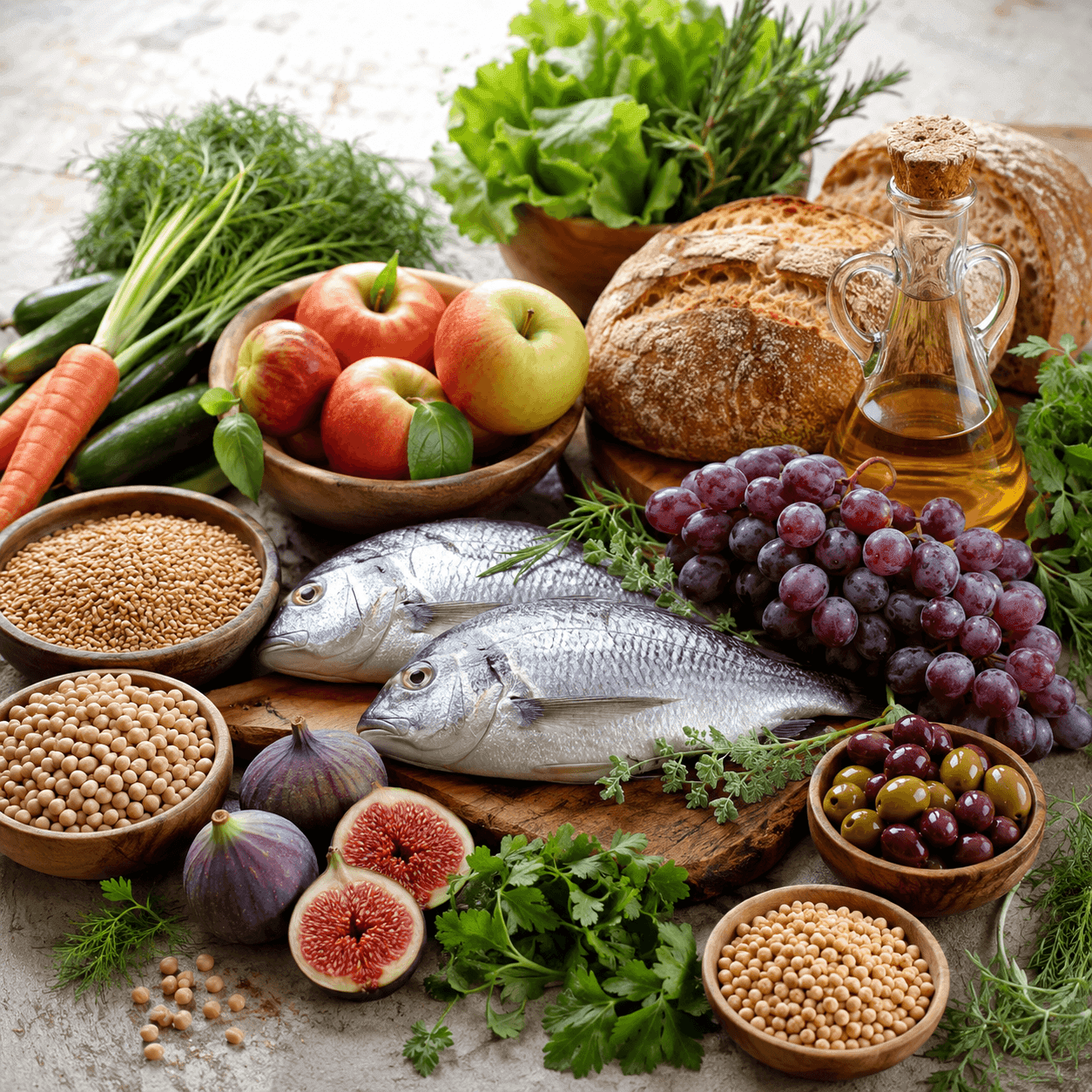
Default to plants. The Genesis baseline. Vegetables, fruits, legumes, whole grains, nuts, seeds, herbs. Build the bulk of the diet from the lowest trophic level. The evidence from the Blue Zones, from Adventist cohorts, from the broader vegetarian and Mediterranean-diet literature is consistent: this is the foundation.
If you eat meat, eat the clean ones. Cattle, sheep, goats, deer, bison, elk, chicken, turkey, duck, salmon, sardines, mackerel, cod, herring. These are the categories the biblical framework designates as food and that the biological-magnification logic supports. Grass- finished is meaningfully better than feedlot for the reasons covered throughout this section. Wild- caught is meaningfully better than farmed for the same reasons.
Avoid the unclean categories. Pork in all forms (including bacon, ham, sausage, and the products WHO has classified as Group 1 carcinogens), shellfish (shrimp, lobster, crab, oysters, mussels, clams), catfish, shark, eel, squid, octopus. Modern industrial production doesn’t change the underlying biology. The argument that “today’s pigs are cleaner” is the equivalent of arguing that modern tobacco is safe because of better manufacturing — the issue is the substrate, not the processing.
Skip the blood. Properly drained meat, kosher or halal slaughter standards, or grass-finished beef from farmers who follow similar practices. Avoid dishes (blood sausage, certain traditional preparations) built around blood as a central ingredient.
Don’t make it a virtue test. The framework is offered as wisdom about what the body is and isn’t designed to process. It isn’t a moral hierarchy that separates the righteous from the unrighteous. Most of the world’s heaviest pork-eaters are not aware of these categories; many of the people most rigorous about keeping them are spiritually unimpressive in other ways. The case for the framework is consequentialist (better outcomes, cleaner tissues, longer life) and historical (older and broader than commonly understood). The case isn’t that following it makes you better than people who don’t.
Where to start
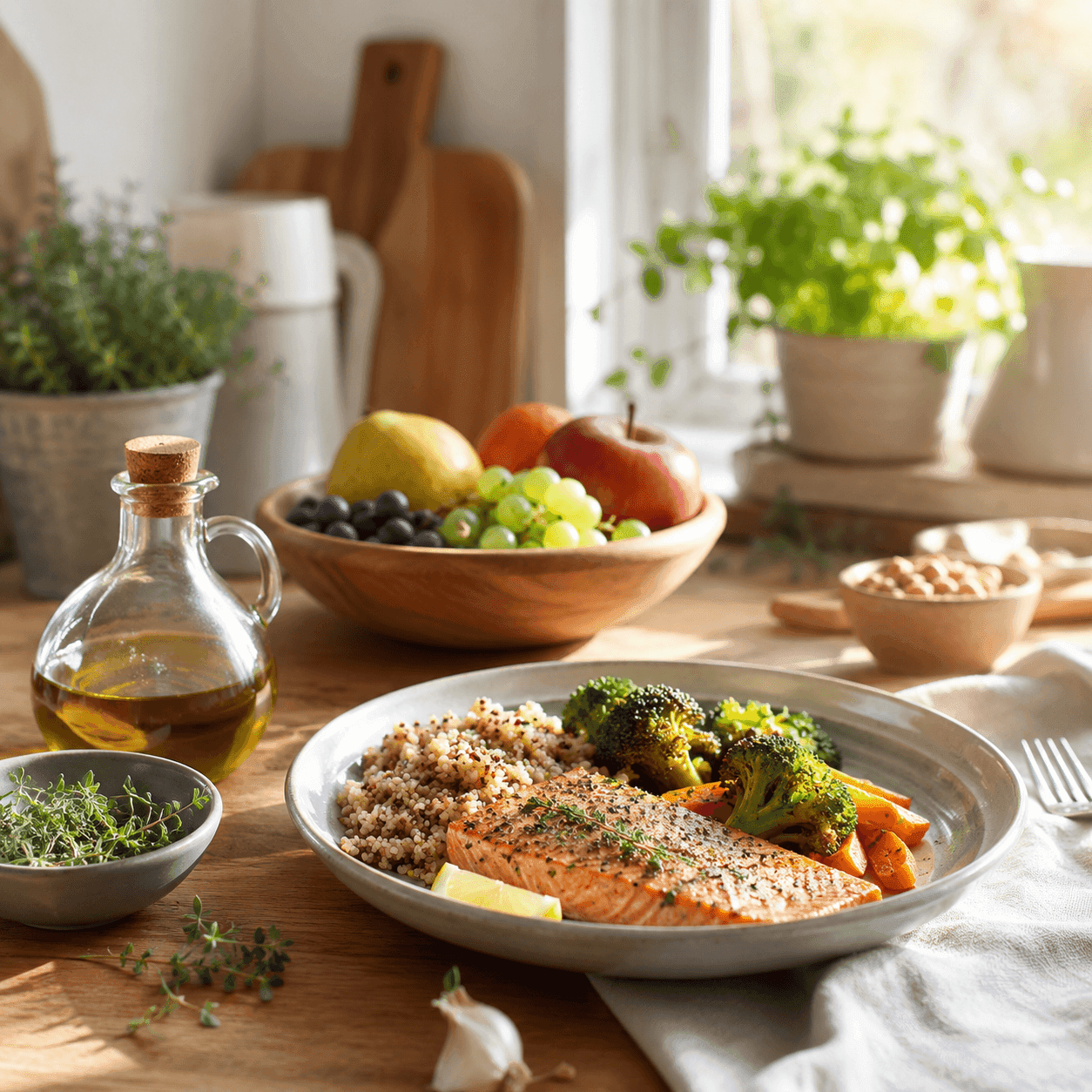
A practical pattern leans heavily on the clean categories and a plant baseline. Most meals are vegetable-forward, often with a small portion of clean animal protein — grass-finished beef, wild salmon, pasture-raised eggs, chicken from a trusted farmer. Bacon, ham, shellfish, and shrimp simply stay out of the kitchen. Eating out somewhere that serves predominantly unclean options is easy enough to navigate — order around them quietly, without making a scene.
The framework tends to simplify rather than complicate — it removes a whole category of decisions about what’s in the cart, what to order, what to cook. Combined with the rest of this section (fasting, walking, sleep, sunlight, quality fats), the cumulative effect is what most people report: steady weight, steady energy, almost no chronic complaints, and a clear sense that the system is operating closer to its design than it does on the standard modern diet.
Products and resources I’d recommend
Eating well within this framework doesn’t require premium-brand sourcing — a local grass-finished beef share, eggs from a neighbor, and a local fishmonger will outperform anything online. The list below is for readers who don’t have those local options.
Force of Nature 100% Grass-Fed Beef is the option I’d point people toward for clean ground beef shipped to the door. Genuinely grass-finished, regenerative sourcing, transparent about practices. Their ancestral blends (with organ meats included) are also worth knowing about for the nutrient density.
Vital Choice Wild Sockeye Salmon is the standing recommendation for wild-caught clean fish. Salmon, sardines, mackerel, herring — all squarely within the fins-and- scales category and all caught from sustainably managed Alaskan fisheries. Premium price, but the cost per gram of clean, low-toxin marine protein is reasonable.
Vital Farms Pasture-Raised Eggs is the most accessible clean animal protein available in a typical grocery store. Genuinely pasture-raised (108 square feet per bird, substantially more than “cage-free” labels), reasonable price, found in most supermarkets. Eggs from foraging hens are clean by the Levitical framework and the modern data on their nutritional density.
Hogs and Other Hazards by Doug Batchelor is the most accessible popular treatment of the biblical case against pork specifically, with a survey of the scientific reasons that align with the prohibition. Short, readable, and a useful handout for friends and family who are open to the discussion. Comes from the Seventh-day Adventist tradition, which has carried this framework into the modern era more consistently than most Christian traditions.
The Maker’s Diet by Jordan Rubin is the broader biblical-eating framework book worth knowing about. Rubin’s story (severe Crohn’s disease reversed through a return to biblical eating principles) is the entry point for many people into this conversation. The specific protocols are worth taking with some grain of salt — the book is more popular health than rigorous science — but the underlying framework is sound and the practical recipes are useful.
The bottom line
The biblical clean/unclean food framework is older than Moses, distributed across cultures with no historical contact with Israel, and tracks real biochemical properties of the animals involved — particularly their position on the food chain and the corresponding accumulation of toxins. The New Testament passages commonly cited to abolish the framework, read carefully, don’t actually do that. The modern epidemiological data on pork as a Group 1 carcinogen, the parasitic and viral risks of pork specifically, the urea-loaded biochemistry of sharks, the filter-feeder toxin concentration of shellfish, and the longevity outcomes of populations that follow the framework — all of these align with what the text said three thousand years ago.
The practical application is simpler than the theological argument. Default to plants. If you eat meat, eat the clean categories — cattle, sheep, goats, deer, chicken, turkey, scaled fish, pasture-raised eggs. Skip the pork in all forms, the shellfish, the catfish, the scavenger birds. Drain the blood properly. Don’t turn the framework into a legalism or a virtue test.
What you eat shapes the body you carry the rest of your life through. The instructions are ancient. The mechanisms are modern. The convergence is hard to dismiss as coincidence.
Sources & further reading
Biblical references
- Genesis 7:2-3 — Noah instructed to take seven of every clean animal and two of every unclean; the categories predate Moses by generations.
- Genesis 1:29 — original human diet of seed-bearing plants and fruit trees.
- Leviticus 11 — the full clean/unclean catalogue for mammals, fish, birds, and insects.
- Leviticus 3:17 — perpetual statute against eating fat and blood.
- Isaiah 65:3-4, 66:15-17 — eschatological judgment against eating swine's flesh and abominable things.
- Mark 7:1-23 — context (ceremonial hand-washing tradition, not food categories) and the Greek of v.19.
- Acts 10-11 — Peter's vision interpreted explicitly as Gentile inclusion (10:28); Peter continues to affirm he has eaten nothing unclean (11:8).
- Acts 15:20 — apostolic council reaffirms blood prohibition for Gentile believers.
- 1 Timothy 4:3-5 — foods 'sanctified by the word of God' (referring to the clean categories), not arbitrary sanctification by prayer.
- 1 Corinthians 10:25-28 — context of 'eat whatever is sold' (idol-offered meat question, not clean/unclean question).
Modern epidemiology and microbiology
- Bouvard V, Loomis D, Guyton KZ, et al. Carcinogenicity of consumption of red and processed meat. The Lancet Oncology. 2015;16(16):1599-1600. (IARC/WHO Group 1 classification of processed meats.)
- Consumer Reports investigation 'What's in That Pork?' January 2013 — 70% of pork samples tested showed contamination including antibiotic-resistant bacteria.
- Ma W, Kahn RE, Richt JA. The pig as a mixing vessel for influenza viruses: human and veterinary implications. Journal of Molecular and Genetic Medicine. 2009;3(1):158-66.
- Wilkins MR, Roper MH, Vaughan CM, Hayes WK. Effects of human muscle extracts on plant growth — phytotoxic index research summarized in popular biblical-health literature; original data documented in seedling growth assays.
Longevity and dietary pattern research
- Buettner D. The Blue Zones: Lessons for Living Longer From the People Who've Lived the Longest. National Geographic, 2008 — Loma Linda Adventist cohort and Mediterranean/Okinawan plant-leaning patterns.
- Orlich MJ, Singh PN, Sabaté J, et al. Vegetarian dietary patterns and mortality in Adventist Health Study 2. JAMA Internal Medicine. 2013;173(13):1230-1238.
Books and tradition
- Batchelor D. Hogs and Other Hazards. Amazing Facts.
- Rubin J. The Maker's Diet. Berkley, 2004.
- McMillen SI. None of These Diseases. Revell, original 1963 — early popular synthesis of biblical health laws with modern medical findings.
- Veith W. Public teaching on the biology of clean and unclean animals, the phytotoxic index research, and the trophic-level basis of the Levitical categories.