
Health · Fat · ~11 min read
Essential fatty acids — the omega ratio, and how to fix it.
Why the modern omega-6 to omega-3 ratio is the under-appreciated driver of chronic inflammation, where the seed-oil problem actually starts, and how much EPA and DHA you actually need.
By George Hinestrosa · Personal experience & independent research
Of the two categories of fat your body cannot make on its own — omega-3 and omega-6 — modern Americans are getting drastically too much of one and far too little of the other. The estimated ratio of omega-6 to omega-3 in the ancestral human diet was somewhere between 1:1 and 4:1. The modern Western diet runs closer to 20:1, and in some populations higher. That shift — not saturated fat, not cholesterol, not even sugar in isolation — is arguably the single biggest dietary change of the twentieth century, and it’s the change most tightly linked to the chronic inflammatory diseases that have risen alongside it.
This article walks through what essential fatty acids actually are, why the ratio matters more than the absolute amounts, where the modern excess of omega-6 comes from, how much EPA and DHA you actually need, the case against ALA-only (flax-based) strategies, and which sources are worth buying.
What “essential” actually means
A nutrient is called essential when your body can’t synthesize it and you have to get it from food. Of all the fatty acids your body uses, only two categories meet that bar: omega-3 fatty acids (specifically alpha-linolenic acid, or ALA, as the parent compound) and omega-6 fatty acids (linoleic acid, or LA, as the parent). Everything else — saturated fats, monounsaturated fats, even the longer- chain omega-3s and omega-6s — your body can in principle make from these two precursors or from other building blocks.
But here’s where it gets practical: the conversion from the short-chain parents (ALA and LA) to the long-chain forms that actually do the work in your tissues (EPA and DHA on the omega-3 side; arachidonic acid on the omega-6 side) is inefficient. In humans, only about 5-10% of dietary ALA gets converted to EPA, and 0.5-5% gets converted to DHA. The conversion is even worse in men than in women, and it gets crowded out further when the diet is high in omega-6, because the same enzymes process both families and they compete for the same conversion machinery.
The practical implication: if you want adequate EPA and DHA — the actual usable forms — you need to eat them directly, from animal sources, or take them as supplements. Eating flaxseeds and assuming your body will handle the conversion is a strategy that works on paper and fails in measured blood levels.
The ratio, and why it matters
The reason the omega-6 to omega-3 ratio matters more than the absolute amounts is that the two families produce structurally similar but functionally opposite signaling molecules. Omega-6 fatty acids are the building blocks of pro-inflammatory eicosanoids — prostaglandins, leukotrienes, thromboxanes — that drive inflammation, blood clotting, and immune activation. Omega-3 fatty acids build the resolution mediators — resolvins, protectins, maresins — that actively shut inflammation down. Both are necessary. The body needs to be able to mount an inflammatory response and then resolve it.
When the ratio is balanced — somewhere between 1:1 and 4:1 — this works. When the ratio shifts heavily toward omega-6, you tilt the entire inflammatory system toward activation and away from resolution. That’s not a metaphor; it’s measurable in tissue eicosanoid concentrations. The chronic, low-grade, smoldering inflammation that the functional medicine world has been pointing to for decades — and that mainstream medicine increasingly acknowledges as the substrate of cardiovascular disease, type 2 diabetes, autoimmune disease, depression, and Alzheimer’s — sits substantially on top of this ratio problem.
Artemis Simopoulos, the Greek-American physician who spent her career on this question, has been making this case in the peer-reviewed literature since the 1990s. Her 2002 paper in Biomedicine & Pharmacotherapy remains the standard reference. The pattern she documented — rising omega-6, falling omega-3, rising rates of every chronic inflammatory disease in lockstep — has continued in the two decades since.
Where the omega-6 excess comes from
It is almost entirely industrial seed oils. Soybean oil alone accounts for roughly half of all polyunsaturated fat intake in the United States. Corn oil, sunflower oil, safflower oil, cottonseed oil, grapeseed oil, and the catch-all “vegetable oil” on a label all run 50-70% linoleic acid, an omega-6. These oils were essentially nonexistent in the human food supply before 1900. The technology to extract them at industrial scale didn’t exist. Then it did, and the AHA’s saturated-fat campaign opened the cultural door, and within two generations they became the dominant cooking fat in American kitchens and almost the only fat in processed food.
Per capita consumption of soybean oil in the United States rose roughly 1,000-fold between 1909 and 1999. The body composition of Americans changed in step: adipose tissue, which reflects the long-term average of dietary fat, now contains historically unprecedented concentrations of linoleic acid — roughly tripling over the same period. The fat in modern human fat cells doesn’t look like the fat in our ancestors’ fat cells. The change is measurable and dramatic.
Fixing the ratio is therefore a two-front project. You raise the omega-3 input (fatty fish, fish oil, cod liver oil) and you lower the omega-6 input (eliminate industrial seed oils — cook with butter, ghee, tallow, coconut oil, or olive oil instead, and read labels on packaged food). Either move alone helps. Both together is the actual fix.
The omega-3 forms — ALA, EPA, DHA
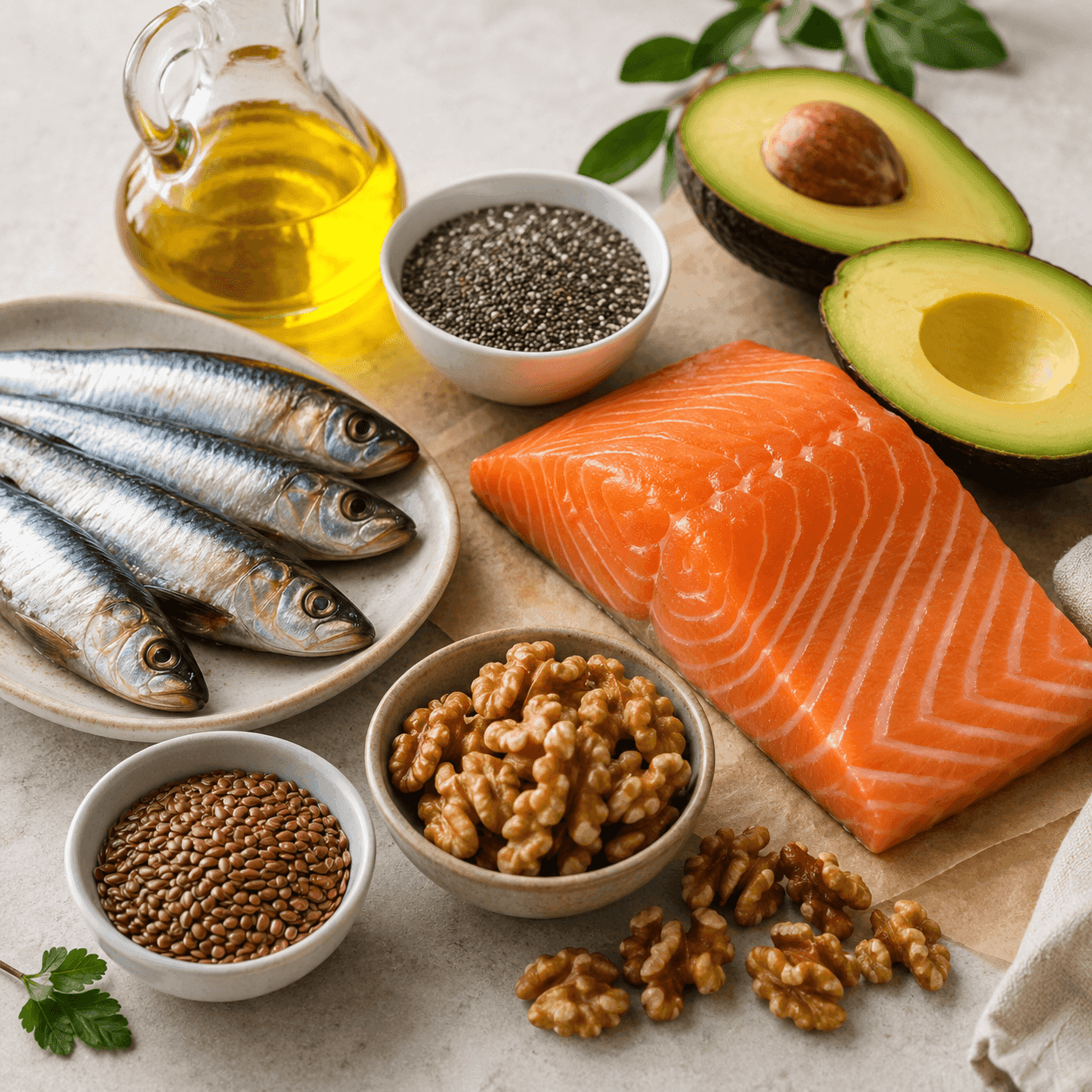
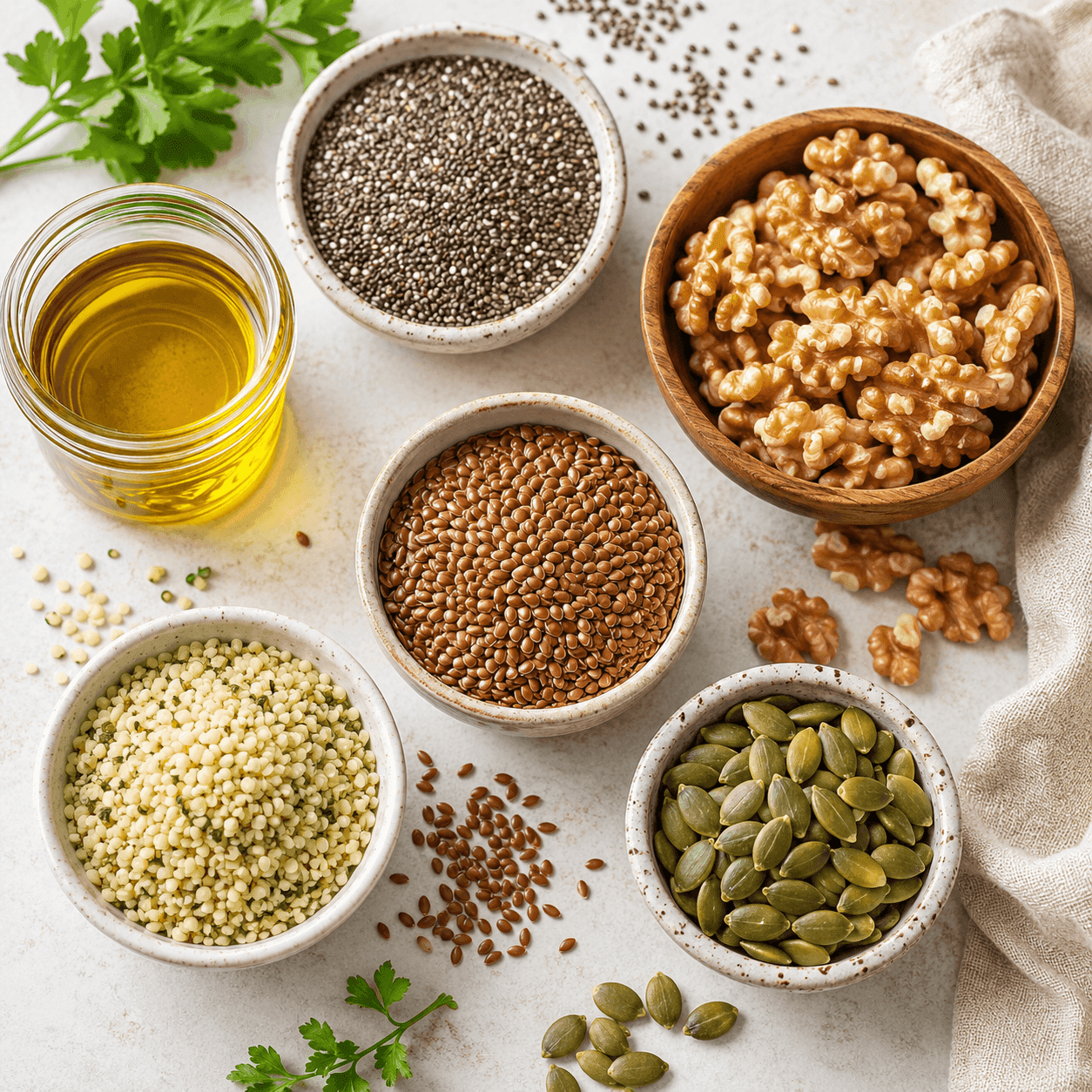
ALA (alpha-linolenic acid) is the plant-based omega-3. It’s found in flaxseed, chia, hemp, walnuts, and some leafy greens. As discussed, conversion from ALA to the active long-chain forms is inefficient. Vegetarians and vegans who rely on flax as their entire omega-3 strategy generally show low blood levels of EPA and DHA on testing.
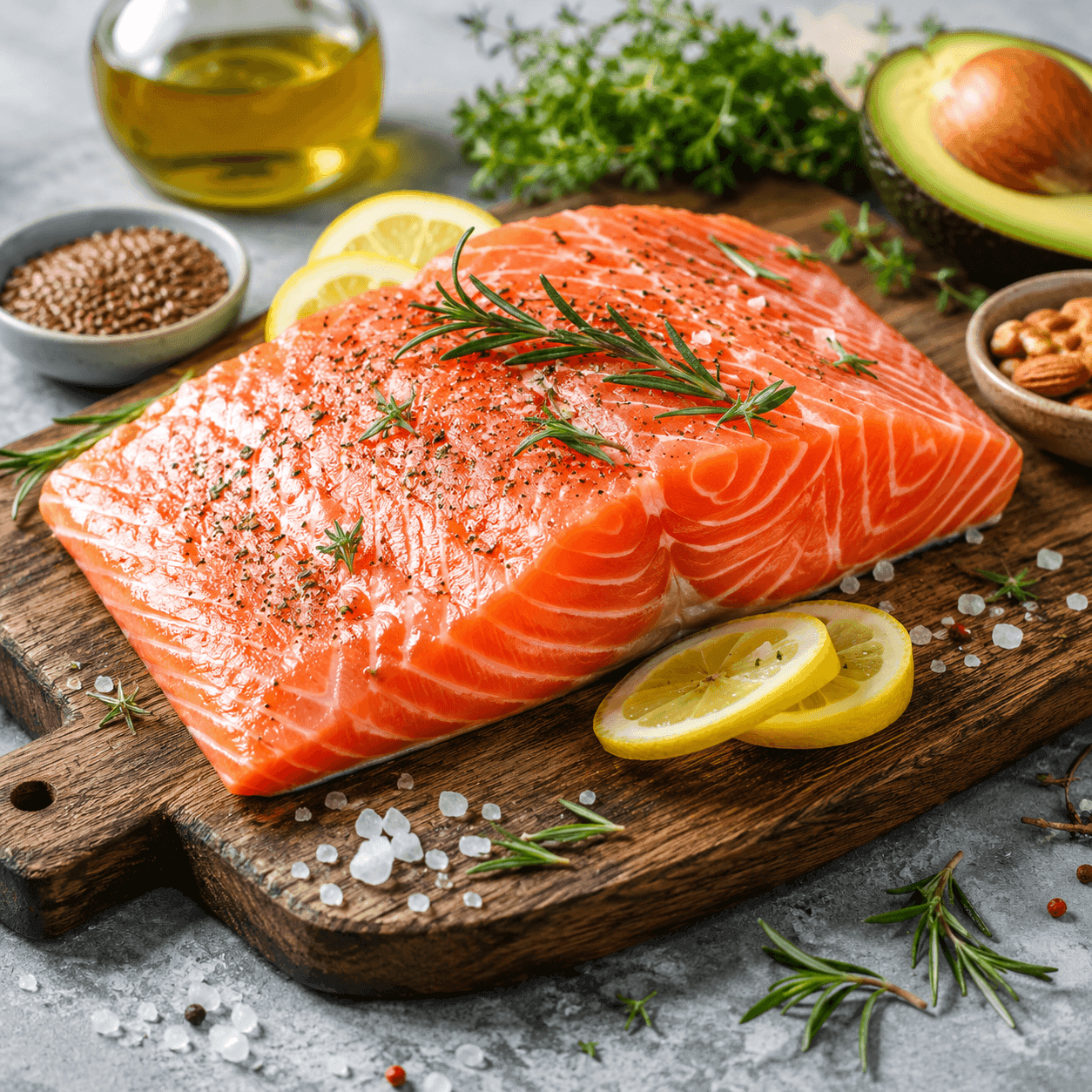
EPA (eicosapentaenoic acid) is the cardiovascular and anti-inflammatory omega-3. It’s the form that shows up in the trials that demonstrate triglyceride reduction, reduced cardiovascular events in high-risk populations, and improvements in inflammatory markers. Found in fatty fish — salmon, sardines, mackerel, anchovies, herring — and concentrated in fish oil.
DHA (docosahexaenoic acid) is the structural omega-3. It is the fat the brain is largely built out of — roughly 30% of the gray matter is DHA. It’s essential for fetal brain development, retinal function, and adult cognitive performance. Found in the same fish sources as EPA, generally in slightly lower amounts, and concentrated in algal oil (the original source of DHA in the marine food chain — fish are rich in it because they eat the algae).
For most people, the goal is both EPA and DHA, in a ratio close to what fatty fish naturally provides. EPA-only and DHA-only supplements exist and have their uses, but a balanced fish oil or cod liver oil covers the common case.
How much you actually need
The functional and integrative medicine consensus, and the dose used in most of the cardiovascular and inflammatory marker studies, is around 2-3 grams of combined EPA + DHA per day for active correction of a deficiency, dropping to 1-2 grams per day for ongoing maintenance. This is the actual EPA and DHA content, not the total fish oil weight — a 1,000 mg fish oil capsule typically contains around 300 mg combined EPA + DHA, so you’re reading the back-of-the- label numbers, not the front.
The American Heart Association’s recommendation for healthy adults is two fatty-fish meals per week, which provides roughly 500 mg per day averaged out. For people with established cardiovascular disease they recommend 1 gram per day. The alternative-health position would say both of those numbers are too low for the population we actually have — a population running a 15-to-20:1 omega-6:omega-3 ratio on average, with measurable EPA and DHA deficiencies in routine testing.
If you want to know where you actually stand, the omega-3 index test is available from several labs and measures the percentage of EPA + DHA in your red blood cell membranes. A score above 8% is considered protective; the average American scores around 4-5%. Most fish oil supplementation aims to move that number into the 8-12% range.
The cod liver oil case
Cod liver oil is the traditional form — the form generations of Northern Europeans grew up taking by the spoonful, the form Weston A. Price documented as part of the diets of healthy traditional cultures, the form that still has a small but committed following because it does something fish oil doesn’t. Cod liver oil contains preformed vitamin A and vitamin D naturally — both fat-soluble vitamins that the modern diet generally undersupplies and that work synergistically with each other.
This is the case for choosing cod liver oil over plain fish oil if you can tolerate the flavor: you get EPA and DHA, plus a meaningful dose of A and D, in their natural co-occurring ratio. The classical Weston A. Price Foundation position has been that A and D in isolation can cause problems but in their natural ratio in cod liver oil they don’t. The doses are modest enough that this is generally fine, though pregnancy is the exception worth flagging — preformed vitamin A is teratogenic at high doses, and women trying to conceive should stick to label doses and not stack multiple A-containing supplements.
Quality matters more than for almost any other supplement
Fish oil is a particularly easy supplement to do badly. Polyunsaturated fats are chemically unstable; they oxidize on exposure to heat, light, and oxygen. A poorly processed or stored fish oil can be rancid by the time you swallow it — meaning instead of anti-inflammatory EPA and DHA you’re consuming lipid peroxides, which are pro-oxidant and probably do net harm. The fishy burps people associate with fish oil are almost always rancidity; fresh fish oil shouldn’t burp back at you.
The signals to look for: third-party testing for oxidation (TOTOX value below 10, ideally below 5); molecular distillation or vacuum processing to remove heavy metals and PCBs; small-batch production with recent expiration dates; nitrogen-flushed bottles (oxygen displacement); and refrigeration after opening. Brands that publish their actual TOTOX numbers are signaling something the bulk-supplement brands generally won’t.
Where to start
A simple pattern is one teaspoon of high-quality cod liver oil per day, usually with the largest meal — it delivers EPA, DHA, vitamin A, and vitamin D in a single tradition-tested format. On days that already include fatty fish a few times a week (sardines on crackers, a salmon dinner, an anchovy on toast), the supplement can be skipped and food left to do the work. Real fish is preferred whenever it’s available; supplements are the gap-filler.
Once opened, the bottle keeps best in the refrigerator and is finished within a couple of months. Cheap fish oil is worth avoiding entirely — supermarket store-brand softgels are exactly the category most likely to be rancid. And most importantly, the omega-3 input is only half the project. The other half is cooking with the right fats and not eating processed food fried in the wrong ones. No supplement undoes a high omega-6 diet.
Products I’d recommend
Quality matters here more than for almost any other supplement, so the list below leans toward the brands that publish their testing data and have third-party verification.
Rosita Extra Virgin Cod Liver Oil is the one I keep coming back to. Wild-caught Norwegian cod, extracted without heat or chemicals using a process closer to how olive oil is pressed than how most fish oil is made. The TOTOX numbers are consistently among the lowest in the industry. Tastes mild and fresh, which is the test — fresh cod liver oil shouldn’t taste like rotten fish.
Nordic Naturals Ultimate Omega is the mainstream-accessible option. Concentrated to roughly 1,280 mg combined EPA + DHA per two-softgel serving, third-party tested, freshness-tested. Not cod liver oil — it’s a fish oil concentrate — so no vitamin A or D, but the EPA and DHA numbers are honest and high.
Carlson Labs Norwegian Cod Liver Oil is the option for people who want cod liver oil at a more accessible price point than Rosita. Sustainably sourced from Norwegian Arctic cod, lightly flavored with natural lemon to take the edge off the fish flavor. IFOS certified for purity.
Green Pasture Fermented Cod Liver Oil is the Weston A. Price-tradition option — fermented rather than extracted, which the brand argues preserves more of the natural cofactors. It has loyal users and skeptics in roughly equal numbers, and the controversy is worth knowing about before you buy. Strong flavor that takes acclimating to.
Vital Choice Wild Sockeye Salmon is the food version, not a supplement. If you can afford to eat wild fatty fish twice a week, that beats any supplement on the market. Vital Choice ships frozen wild sockeye salmon (and sardines, and mackerel) from sustainable Alaskan fisheries. Not cheap, but the cost per gram of clean EPA and DHA is competitive with high-end fish oil.
The bottom line
The omega-6 to omega-3 ratio is the single most consequential dietary shift of the last hundred years, and the chronic inflammatory diseases that have risen alongside it sit substantially on top of it. The fix is two-sided: get the omega-3s (EPA and DHA, from fatty fish or quality cod liver oil, in the 2-3 gram range during active correction) and cut the omega-6s (eliminate industrial seed oils — the soybean, corn, sunflower, safflower, cottonseed, grapeseed family — and replace them with the stable fats from the rest of this section: olive oil, coconut oil, beef tallow, ghee).
Supplementation matters, but it cannot compensate for an ongoing high omega-6 intake. The first move is the kitchen: read the labels on every fat that enters your house, and start there.
Sources & further reading
The ratio question
- Simopoulos AP. The importance of the ratio of omega-6/omega-3 essential fatty acids. Biomedicine & Pharmacotherapy. 2002;56(8):365-79.
- Simopoulos AP. An increase in the omega-6/omega-3 fatty acid ratio increases the risk for obesity and inflammation. Nutrients. 2016;8(3):128.
- Blasbalg TL, Hibbeln JR, Ramsden CE, et al. Changes in consumption of omega-3 and omega-6 fatty acids in the United States during the 20th century. American Journal of Clinical Nutrition. 2011;93(5):950-62.
EPA, DHA, and clinical outcomes
- Bhatt DL, Steg PG, Miller M, et al. Cardiovascular risk reduction with icosapent ethyl for hypertriglyceridemia (REDUCE-IT). New England Journal of Medicine. 2019;380(1):11-22.
- Harris WS, Tintle NL, Imamura F, et al. Blood n-3 fatty acid levels and total and cause-specific mortality from 17 prospective studies. Nature Communications. 2021;12:2329.
- Brenna JT. Efficiency of conversion of alpha-linolenic acid to long chain n-3 fatty acids in man. Current Opinion in Clinical Nutrition and Metabolic Care. 2002;5(2):127-32.
Tradition and books
- Price WA. Nutrition and Physical Degeneration. 1939 — original ethnographic case for cod liver oil and traditional fats.
- Enig MG. Know Your Fats: The Complete Primer for Understanding the Nutrition of Fats, Oils, and Cholesterol. Bethesda Press, 2000.
- DeLauer T. Public commentary on omega ratio and seed oil reduction protocols — YouTube channel and written work.