
Health · Whole Food · ~9 min read
Garlic — allicin, antimicrobial action, and the cardiovascular case.
Why the crush-and-wait rule matters, what the clinical literature actually shows on blood pressure and cholesterol, and how to use the world’s most studied medicinal food.
By George Hinestrosa · Personal experience & independent research
Garlic is the rare medicinal food where alt-health tradition and peer-reviewed clinical research point in essentially the same direction. The Egyptians fed it to the workers building the pyramids because it kept them healthy and strong. Hippocrates prescribed it. Roman soldiers carried it. Traditional Chinese medicine has used it for two thousand years. And modern clinical trials — hundreds of them, on blood pressure, cholesterol, immune function, antimicrobial action, and cancer prevention — have largely confirmed what the traditional uses said.
What sits underneath all of it is one compound: allicin. Garlic doesn’t actually contain allicin until the cell wall is broken. When you crush, chop, or chew a clove, an enzyme called alliinase converts a stable precursor (alliin) into the much more active and short-lived allicin. That conversion is the start of everything that makes garlic medicinal.
The allicin story — and why you crush and wait
Allicin formation takes a few minutes. The alliinase enzyme needs time to do its work after the cell wall is broken. If you crush garlic and immediately throw it into a hot pan, much of the alliinase is denatured by heat before it can convert alliin into allicin. The result is garlic with the flavor but a fraction of the medicinal activity.
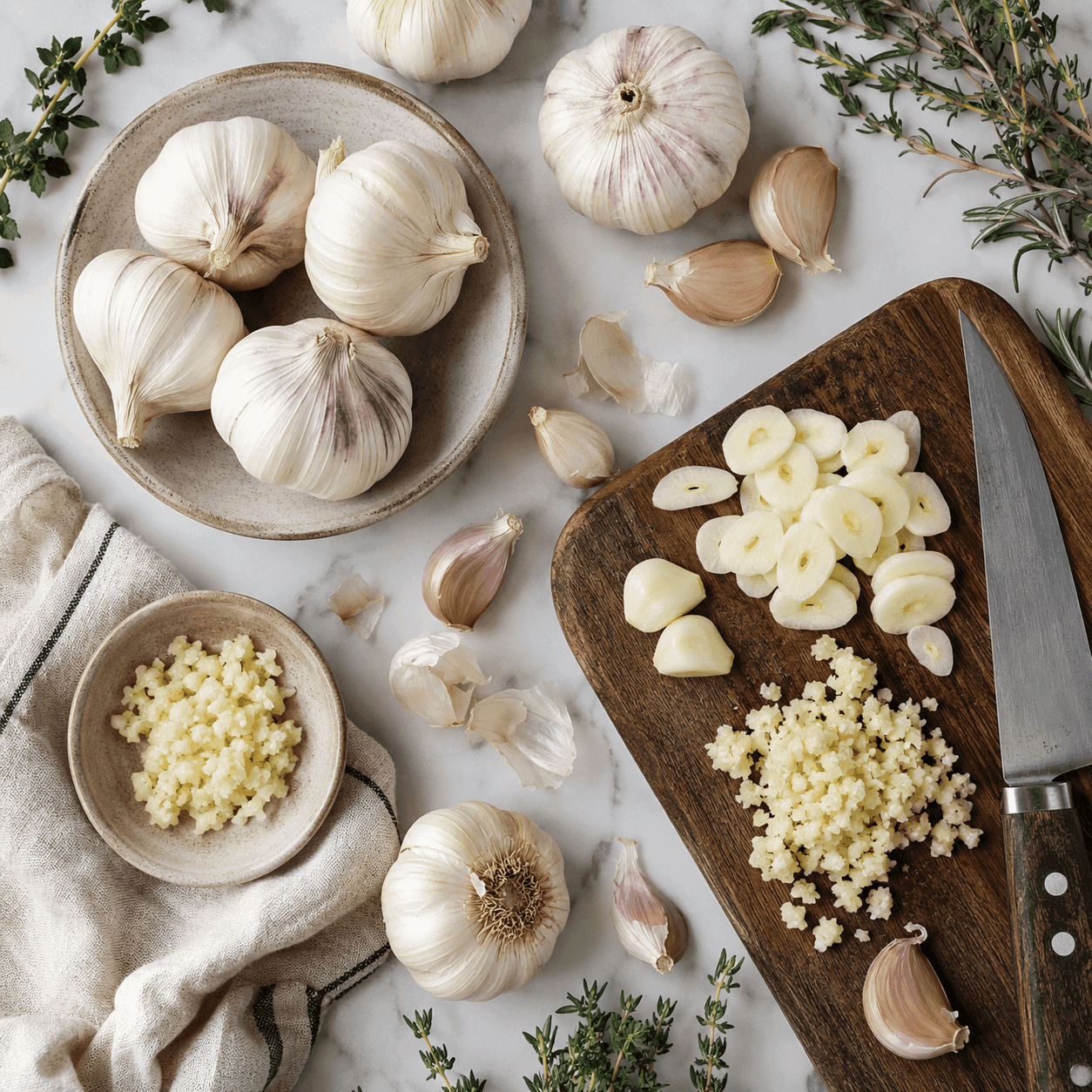
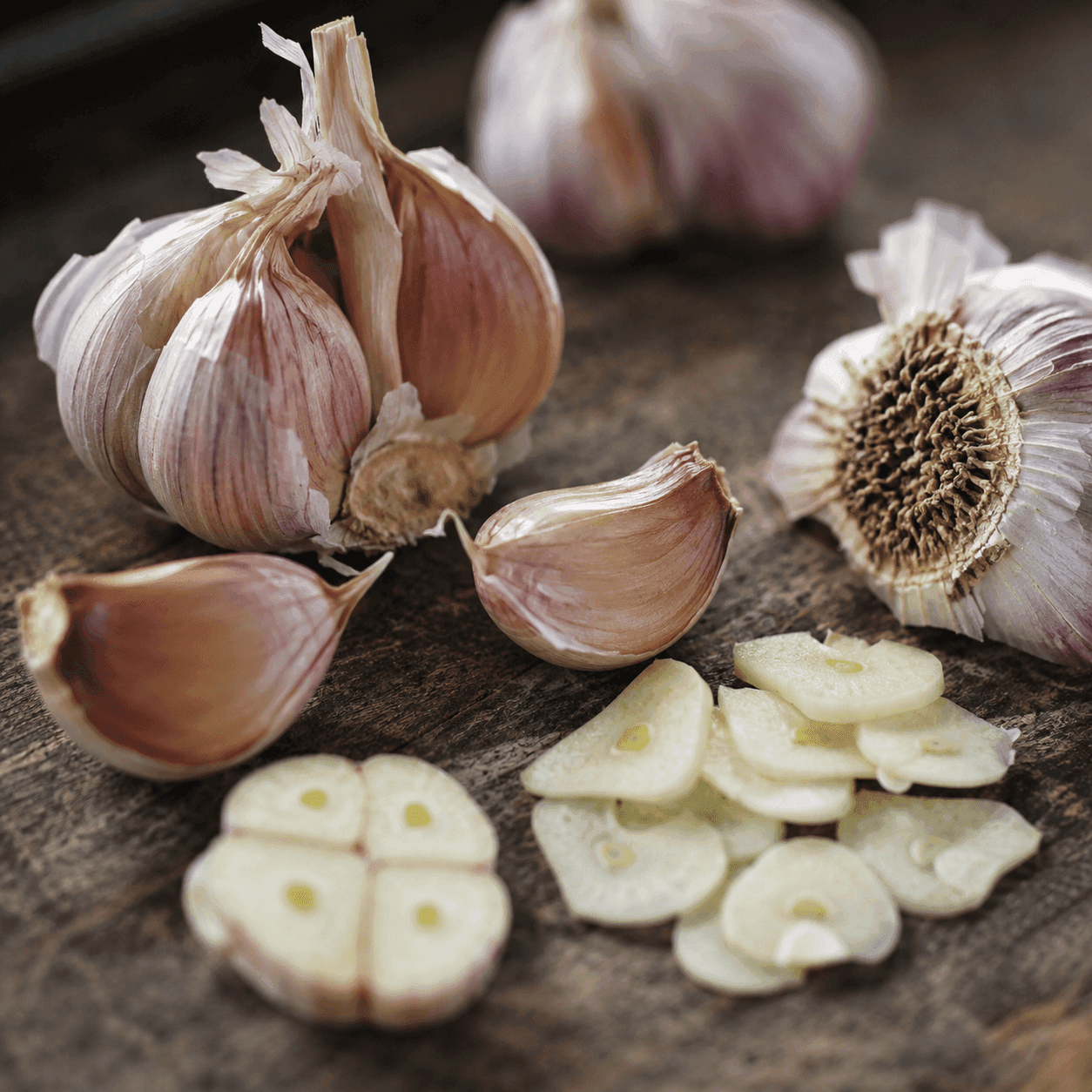
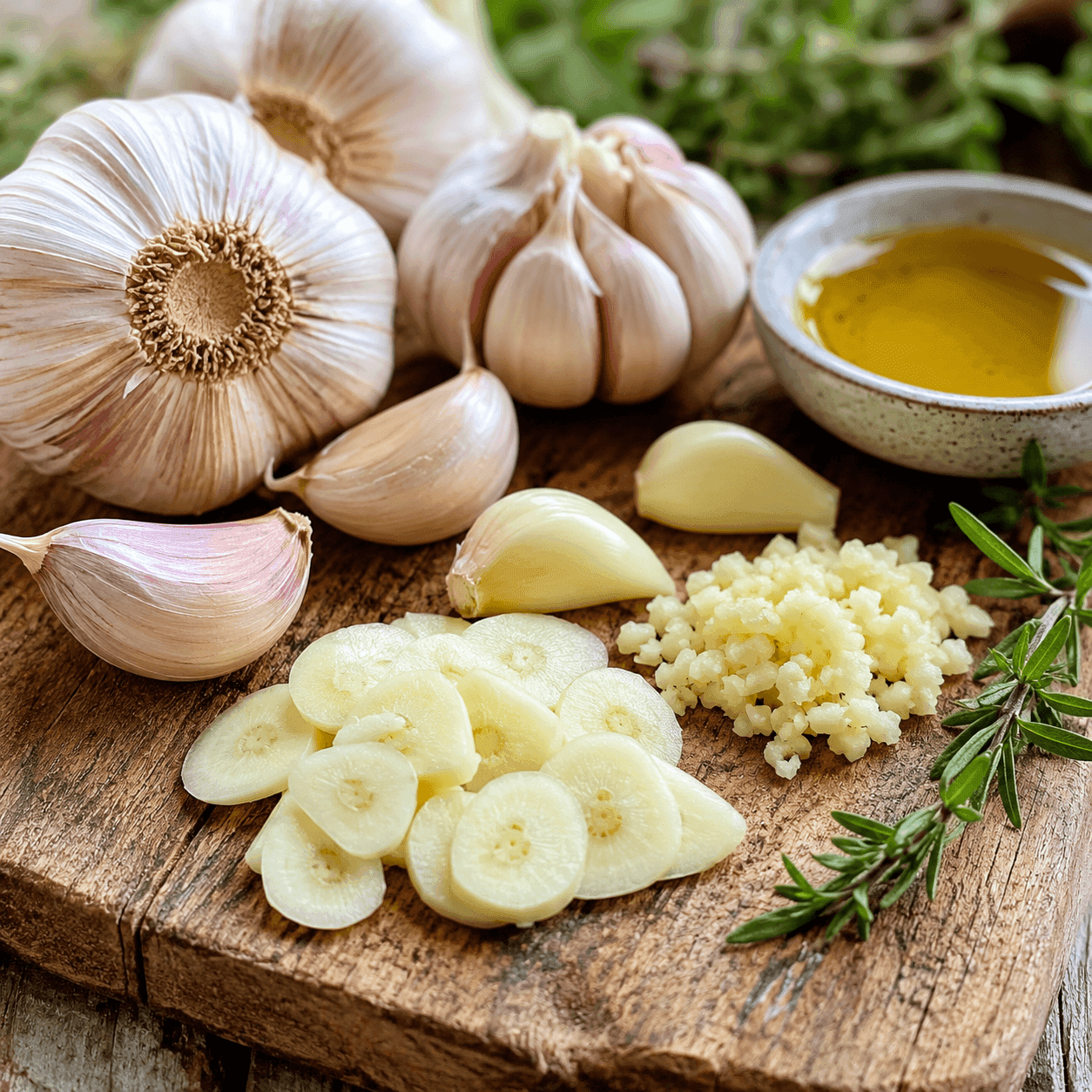
The fix is the crush-and-wait rule: crush or chop your garlic, then let it sit on the cutting board for at least 10 minutes before exposing it to heat. That window lets the alliinase finish its work and convert most of the alliin into allicin. Once allicin has formed, it’s much more heat-stable, and subsequent cooking preserves more of the medicinal effect.
This is the difference between garlic as flavoring and garlic as medicine. Ten minutes on a cutting board is the whole protocol.
Allicin itself is short-lived — it breaks down into a family of related organosulfur compounds (diallyl sulfide, ajoene, S-allyl cysteine, and others) within a few hours. Some of those breakdown products are the actual long-acting agents responsible for the cardiovascular and anticancer effects. The garlic family of compounds is collectively what does the work; allicin is the gateway compound that the rest derive from.
The cardiovascular case
Garlic affects cardiovascular health through several independent mechanisms, which is unusual for a single food:
- Blood pressure. Multiple meta-analyses (most recently Ried, 2020) have found that aged garlic extract lowers systolic blood pressure by an average of 8–10 mmHg and diastolic by 5–7 mmHg in hypertensive patients — comparable to first-line antihypertensive medications. The mechanism appears to involve nitric oxide signaling (similar to the beet pathway) plus direct relaxation of vascular smooth muscle.
- Cholesterol. Daily garlic intake lowers total cholesterol by roughly 7–10% and LDL by similar amounts in meta-analyses going back to the 1990s. The effect is modest individually but useful as part of a broader cardiovascular protocol.
- Anti-platelet action. Garlic mildly inhibits platelet aggregation — the same mechanism that makes aspirin cardioprotective, but gentler. This is why surgeons want patients off high-dose garlic supplements before procedures, and why the daily-clove habit is part of every traditional heart-health protocol that has ever existed.
- Endothelial function. Improvements in the responsiveness of arterial walls to blood-flow demands — documented through flow-mediated dilation studies.
- Plaque progression. The most striking study (Budoff et al., 2009) used CT-based coronary calcium scoring to show that aged garlic extract slowed the progression of arterial plaque over a year compared with placebo.
None of these effects individually is dramatic. Stacked together, daily, over years, they add up to one of the cleaner cardioprotective protocols in the food world.
Antimicrobial — bacteria, viruses, fungi, parasites
Garlic is broad-spectrum in a way most pharmaceutical antibiotics aren’t. Allicin and its derivatives have documented activity against:
- Bacteria — including antibiotic-resistant strains. Allicin works against MRSA, E. coli, Salmonella, H. pylori, and many others. Because it works through multiple mechanisms (membrane disruption, enzyme inhibition), bacteria don’t develop resistance to it the way they do to single-target antibiotics.
- Viruses — influenza, rhinoviruses (common cold), herpes simplex, and others. Less potent than antiviral drugs, but broad-acting and without resistance development.
- Fungi — particularly Candida species. Topical garlic preparations have been used clinically for vaginal and oral candidiasis.
- Parasites — traditional use against intestinal parasites going back millennia, with modern in vitro and clinical confirmation for some species.
The practical implication: a few cloves of crushed garlic with meals during respiratory-illness season, or at the first signs of a cold, is one of the oldest household interventions in medicine, and one that continues to work.
Immune and cold prevention
The cleanest single study on garlic and the common cold is Josling (2001), a 12-week randomized double-blind placebo-controlled trial. Participants taking a daily allicin supplement had 63% fewer colds than the placebo group, and the colds they did get resolved in less than half the time.
The mechanism is some combination of direct antiviral action and immune-system modulation — garlic increases the activity of natural killer cells and macrophages, which are first-line cellular defenses against viral infection.
Daily garlic is one of the more reliable immune-supportive habits across the alt-health literature. It doesn’t replace the rest of the stack (sleep, vitamin D, zinc), but it adds something real on top.
Cancer prevention — the population data
The strongest cancer data on garlic comes from population studies of stomach and colorectal cancer. Multiple meta-analyses have found that people with the highest dietary garlic intake have substantially lower rates of these cancers — on the order of a 30% reduction in stomach cancer for the highest-intake groups.
The mechanism is partly anti-H. pylori action (H. pylori is the leading cause of stomach cancer) and partly direct effects on cancer-cell biology — the organosulfur compounds in garlic induce apoptosis in several cancer cell lines and inhibit angiogenesis in tumors.
The data is strongest for gut cancers because that’s where the highest concentrations of garlic compounds reach. Other cancer types show weaker but consistent inverse correlations with garlic intake.
Forms — raw, cooked, aged, black
- Raw crushed garlic — highest allicin, strongest antimicrobial action, hardest on the stomach. Take with food, never on an empty stomach. The form to use for acute illness.
- Crushed-and-rested, then cooked — the everyday form. Crush, wait 10 minutes, then cook gently. Retains most of the cardiovascular and antimicrobial activity, much easier on the stomach.
- Aged garlic extract (Kyolic) — garlic aged in ethanol for up to 20 months. Allicin converts entirely to S-allyl cysteine and other stable, well-absorbed compounds. The form used in most peer-reviewed cardiovascular trials. Odorless. Lower acute antimicrobial action, comparable long-term cardiovascular effect.
- Black garlic — whole bulbs fermented in controlled heat and humidity for weeks. Becomes black, soft, sweet, almost molasses-like. Higher antioxidant content than fresh, very different flavor profile, useful as a culinary ingredient and probably as a daily medicinal food.
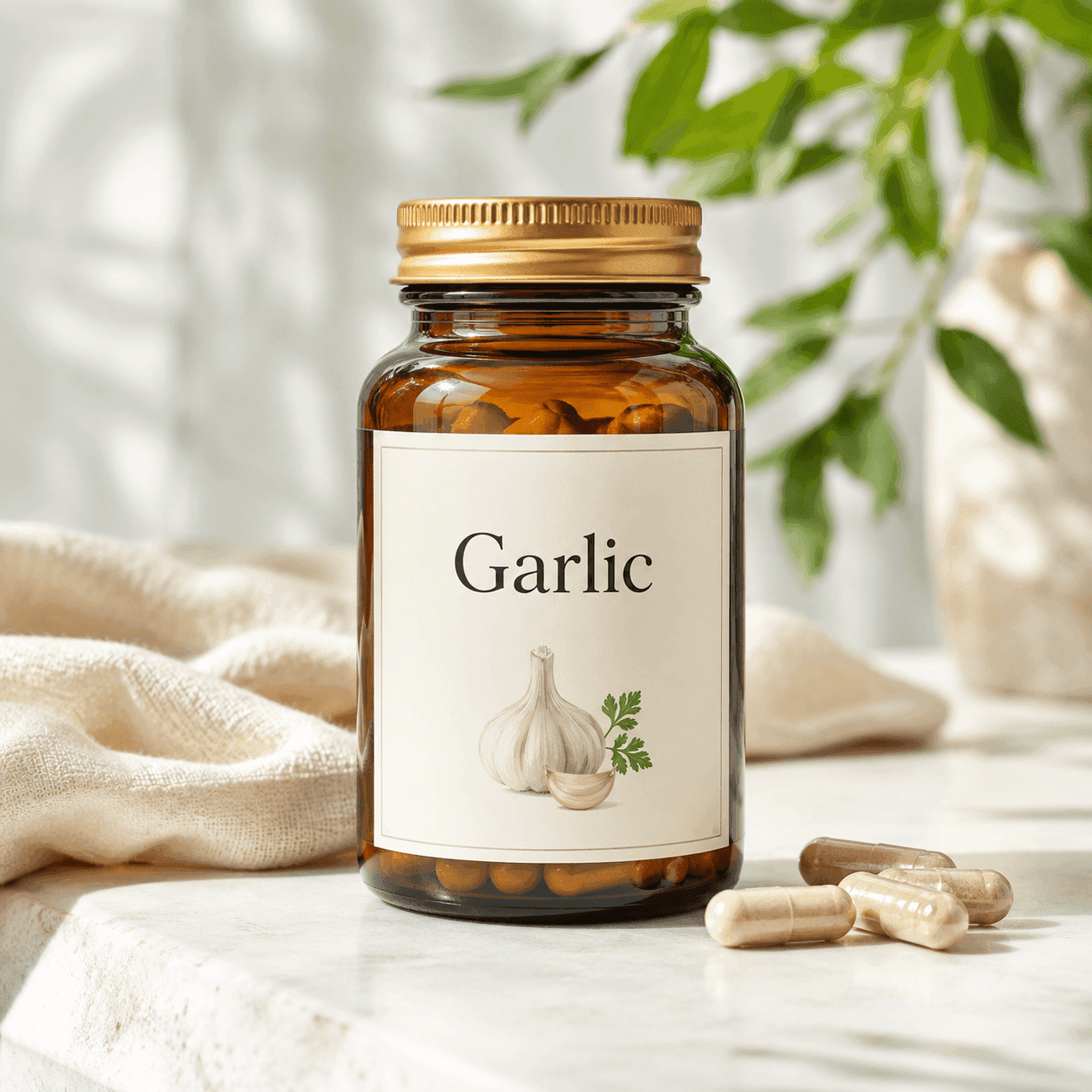
- Allicin extract supplements — stabilized allicin in capsule form (Allimax is the standard brand). The form to use for acute antimicrobial protocols without eating raw garlic.
- Garlic powder and granules — mostly degraded by the drying process. Useful for flavor, not for medicinal effect.
Dosing
- Maintenance / culinary: 1–2 cloves of crushed garlic per day, with food. The base case.
- Cardiovascular protocol: 2–4 cloves daily, or 600–1,200 mg of aged garlic extract. Most cardiovascular studies use dosing in this range.
- Acute illness: 3–5 cloves crushed and consumed at first signs of cold or flu, repeated 2–3 times daily for a few days. Or 180 mg of stabilized allicin twice daily.
- Stop a week before surgery — the anti-platelet effect is real enough that cardiothoracic surgeons specifically ask about garlic supplementation.
The garlic-and-honey traditional remedy
One of the oldest household remedies in the world: a few cloves of fresh garlic, peeled and lightly crushed, submerged in raw honey in a small jar. Stored at room temperature, the honey draws out the garlic’s allicin and stable derivatives. Within a week the honey becomes a thin, slightly garlic-flavored medicinal syrup that holds its activity for months in the refrigerator.
At the first sign of a sore throat or cold, a spoonful of the honey alone, or a clove of the infused garlic chewed with the honey, is one of the most effective and most pleasant cold remedies in the traditional repertoire. The honey adds its own antimicrobial action (see the raw honey article) and makes the raw garlic palatable in a way it usually isn’t.
Make sure the honey is real raw honey, not pasteurized supermarket honey. The wrong honey doesn’t do the work.
Where I buy garlic
- Fresh garlic. From the grocery store or farmers’ market. Look for firm bulbs with tight, dry papery skins, no soft spots. Skip the pre-peeled jars (allicin precursors degrade fast once the cloves are exposed). Bulk fresh garlic keeps for months in a dry cabinet.
- Kyolic Aged Garlic Extract Cardiovascular — the brand used in the cardiovascular trials. Odorless. The product to use for the long-term cardiovascular protocol if eating fresh garlic daily isn’t practical.
- Allimax Allicin Capsules — stabilized allicin in capsule form. The product to use for acute antimicrobial work when you don’t want to eat raw garlic. Used in the Josling cold-prevention trial.
- OXO Good Grips Garlic Press — the boring piece of equipment that makes the crush-and-wait protocol practical to actually do every day. Cleans easily, lasts years.
Where to start
Two cloves of crushed garlic with most meals is an easy baseline — eggs in the morning, anything with tomato or olive oil at lunch and dinner. Crush it first and let it rest while the rest of the cooking gets going, then add it at the end or close to it.
A jar of raw honey and garlic kept in the cupboard, a few cloves submerged and refreshed as it runs low, gives a ready remedy. At the first hint of a cold, a common approach is 3–5 crushed cloves daily plus a spoonful of the honey-garlic syrup every few hours; caught early, the cold often doesn’t fully develop.
For long-term cardiovascular support, an aged-garlic extract like Kyolic is a useful backstop on the days regular garlic-containing food isn’t on the menu — two capsules cover the gap.
Closing
Garlic is the rare food where the four-thousand-year traditional use record and the modern clinical literature agree. Antimicrobial. Cardioprotective. Anti-inflammatory. Modestly anticancer in the gut. Immune-supportive. All of it traces back to the organosulfur chemistry that starts when you crush a clove and let it sit on the board for ten minutes.
Daily, with food, for life. One of the simplest food-as-medicine practices in the world, and one of the most consistently rewarding.
Sources & further reading
Studies cited
- Josling, P. (2001). Preventing the common cold with a garlic supplement: a double-blind, placebo-controlled survey. Advances in Therapy, 18(4), 189-193. — The foundational trial on allicin and cold prevention; 63% reduction in cold incidence in the treatment group.
- Ried, K. (2020). Garlic lowers blood pressure in hypertensive subjects, improves arterial stiffness and gut microbiota: A review and meta-analysis. Experimental and Therapeutic Medicine. — Comprehensive meta-analysis confirming the blood-pressure effect, 8–10 mmHg systolic in hypertensive patients.
- Budoff, M.J. et al. (2009). Aged garlic extract retards progression of coronary artery calcification. Journal of Nutrition. — CT coronary calcium scoring trial showing slowed plaque progression on aged garlic extract.
- Fleischauer, A.T. & Arab, L. (2001). Garlic and cancer: a critical review of the epidemiologic literature. Journal of Nutrition. — The standard reference on garlic intake and gastric / colorectal cancer prevention.
Books & reading
- The Garlic Cure — James Scheer — Accessible book-length treatment of garlic in alt-health practice.
- Garlic and Other Alliums: The Lore and the Science — Eric Block — The scholarly reference on allium chemistry; technical but definitive.