
Health · Whole Food · ~9 min read
Hemp hearts — complete protein, the right omega ratio.
Why hemp hearts are one of the few foods with the omega ratio the body was actually designed for, what GLA does that other omega-6s don’t, and why this is the seed worth putting on everything.
By George Hinestrosa · Personal experience & independent research
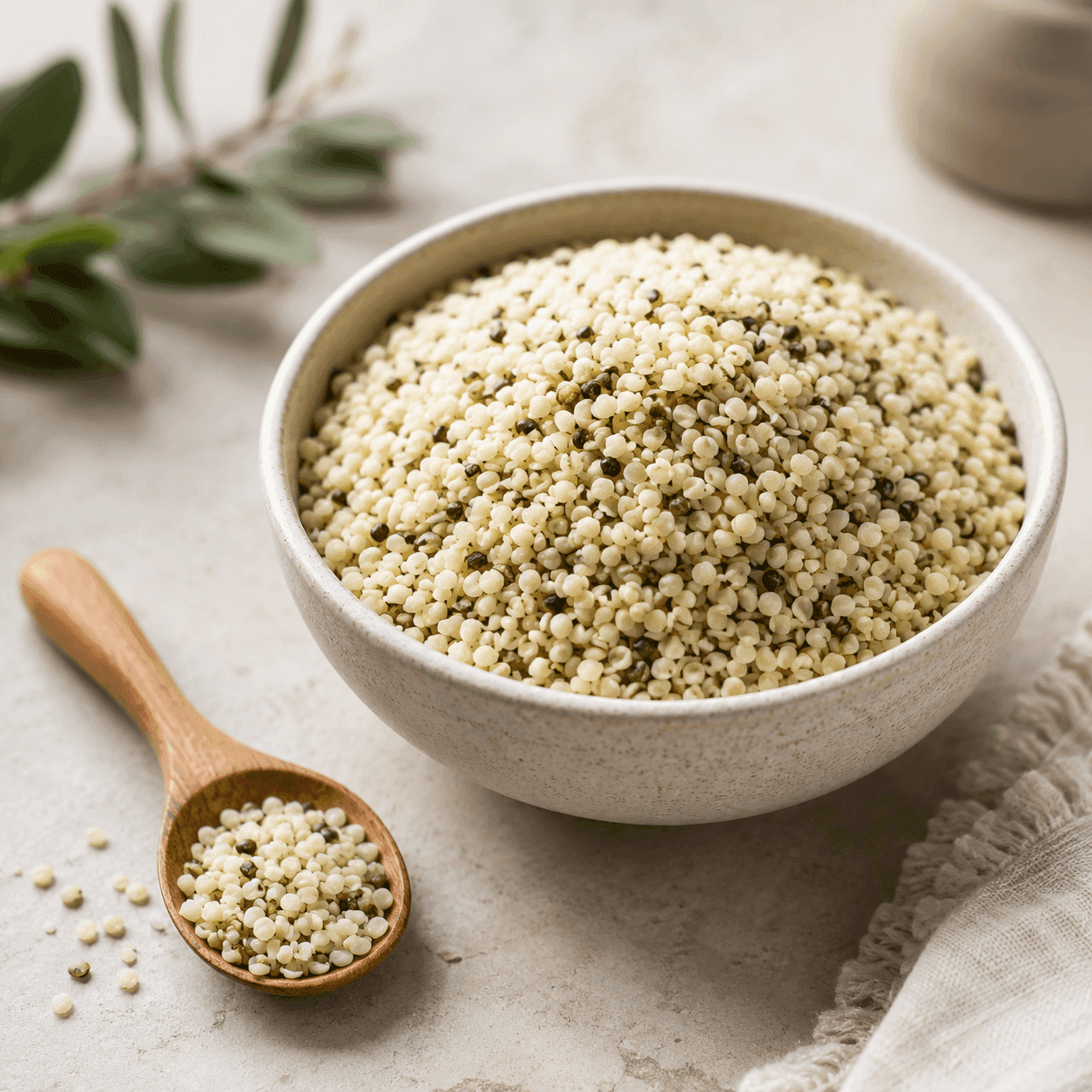
Hemp hearts are the shelled inner kernels of the hemp seed — the soft, nutty, slightly sweet center that’s left after the tough outer shell is removed. They’ve been eaten as food for thousands of years across Asia, the Middle East, and Europe; the seed is one of the oldest cultivated crops in human history. Modern industrial confusion with cannabis-as-drug kept hemp seeds out of much of Western commerce through the 20th century, but they’ve returned to grocery shelves in the past decade as the nutritional case for them has become impossible to ignore.
What hemp hearts deliver, in one small daily handful: complete protein with all nine essential amino acids. The right ratio of omega-3 to omega-6 fatty acids — close to what the human body was made for, and a fraction of what the standard modern diet delivers. GLA, the rare anti-inflammatory omega-6 that’s otherwise found mainly in evening primrose and borage oils. A substantial magnesium dose. Iron, zinc, and the full mineral roster. All in a soft, no-cooking-required food that goes on top of nearly anything.
Complete protein
Three tablespoons of hemp hearts — roughly 30 grams — deliver about 10 grams of complete protein. Complete meaning all nine essential amino acids are present in usable ratios. Most plant proteins are partially limiting in one or more essential amino acids (rice in lysine, beans in methionine, etc.); hemp hearts join soy, quinoa, buckwheat, and pseudocereals on the short list of plant foods that aren’t.
The proteins themselves are two related globulins: edestin (roughly 65% of total protein) and albumin (35%). Edestin in particular is highly digestible — the molecular structure is similar to the globulins in human blood plasma. Practical implication: hemp protein absorbs well, even in people with compromised digestive function who struggle with other plant proteins.
For vegetarians and vegans, hemp hearts are a useful complement to the broader protein stack. For omnivores, they add a clean plant-protein layer that doesn’t require swapping anything out.
The omega ratio — the headline nutritional feature
The most important thing about hemp hearts nutritionally isn’t their protein or their mineral content. It’s the ratio of omega-3 to omega-6 fatty acids, and the inclusion of GLA on the omega-6 side.
The standard modern Western diet delivers omega-6 and omega-3 in roughly a 15:1 to 20:1 ratio. Industrial seed oils — soybean, corn, sunflower, safflower, cottonseed — flood the diet with omega-6 linoleic acid in quantities the human metabolism wasn’t designed to handle. The omega-3 side, meanwhile, has collapsed: less wild-caught seafood, less grass-fed beef, less flax, less hemp, fewer leafy greens.
The ancestral ratio, reconstructed from hunter-gatherer dietary patterns and pre-industrial cuisines, was roughly 1:1 to 4:1 omega-6 to omega-3. The shift to 15:1 over the past century has paralleled the rise in inflammatory disease, cardiovascular disease, depression, and several other chronic conditions in which the omega imbalance is implicated.
Hemp hearts have a ratio of roughly 3:1 omega-6 to omega-3 — meaningfully better than nearly any commonly available oil-bearing food. Daily hemp hearts are one of the cheapest, easiest ways to shift the personal omega ratio back toward what the body was designed for.
The omega-3 in hemp hearts is alpha-linolenic acid (ALA), the plant form. The body converts ALA into the longer-chain EPA and DHA that do most of the physiological work, but the conversion is inefficient — only about 5–10% of ingested ALA converts. For maximizing EPA and DHA directly, fish (wild salmon, sardines) or algae oil supplements are still the most efficient sources. But hemp hearts plus occasional fish is a strong everyday combination, and the ALA itself has independent benefits separate from the EPA/DHA conversion.
GLA — the rare beneficial omega-6
Most omega-6 in the modern diet is linoleic acid — the seed-oil omega-6 that’s pro-inflammatory in excess. Hemp hearts contain a different omega-6 in meaningful quantities: gamma-linolenic acid (GLA), an anti-inflammatory long-chain omega-6 that the body normally produces from linoleic acid via the enzyme delta-6-desaturase.
The catch is that delta-6-desaturase is often underactive — impaired by aging, stress, insulin resistance, alcohol, and certain micronutrient deficiencies. People with impaired conversion don’t make enough GLA from dietary linoleic acid, even though they’re consuming plenty of the substrate. The result is a paradox: high total omega-6 intake, low GLA, ongoing low-grade inflammation.
Preformed dietary GLA bypasses the conversion problem. The traditional supplemental sources are evening primrose oil and borage oil; hemp hearts are one of the few whole foods that provide GLA naturally.
What GLA actually does:
- Anti-inflammatory. Through conversion to series-1 prostaglandins (the anti-inflammatory ones, as opposed to the inflammatory series-2).
- PMS and menstrual support. Documented effects on cyclical breast tenderness, cramping, and mood symptoms. The traditional evening-primrose-for-PMS protocol works through the same GLA mechanism.
- Skin health. GLA supports skin-barrier function and reduces eczema and atopic-dermatitis symptoms in clinical trials.
- Hormonal balance. Supports menopausal symptoms in women through prostaglandin pathways.
- Nerve protection. Some clinical evidence in diabetic peripheral neuropathy.
Minerals — the magnesium story
Hemp hearts are unusually mineral-dense for a seed. Per 100 grams (about 7 tablespoons):
- Magnesium: 700 mg (165% of RDA) — one of the densest dietary sources available
- Phosphorus: 1,650 mg (165% of RDA)
- Potassium: 1,200 mg (25% of adequate intake)
- Iron: 8 mg (44% of RDA)
- Zinc: 10 mg (90% of RDA)
- Manganese: 7.6 mg (over RDA)
- Copper: Adequate for daily intake
- Vitamin E: Meaningful dose
- B vitamins: Modest but present
The magnesium content alone makes hemp hearts a useful food for the muscle-cramp, sleep, anxiety, and blood-pressure issues that magnesium deficiency drives (see the Magnesium article in this section). A three-tablespoon daily serving delivers roughly 200 mg of magnesium — a meaningful fraction of the optimal daily intake from food alone.
How hemp hearts compare to other seeds
- Chia seeds. Higher fiber, higher calcium, lower protein density. ALA-rich. Chia’s gel-forming property makes it useful for digestion and satiety. Different role than hemp hearts — complement, not substitute.
- Flax seeds. Highest ALA content per gram of any common food. High in lignans (phytoestrogens with hormonal effects). Need to be ground for absorption — whole flax passes through largely intact. Less protein than hemp hearts.
- Sunflower seeds. High vitamin E, high in linoleic acid (the inflammatory omega-6). Less favorable omega ratio than hemp.
- Pumpkin seeds. Higher zinc, particularly good for prostate support. Less ALA than hemp hearts. Different specialty.
- Sesame seeds. High calcium and lignans. Lower protein, less favorable omega ratio than hemp.
The strategy isn’t to pick one. Different seeds have different specialties; rotating across them delivers a broader mineral and fatty-acid profile. Hemp hearts are distinctive on the omega-ratio + GLA + complete-protein triple, which is why they earn a daily place in the rotation.
Forms — hearts, oil, protein powder
- Hemp hearts (shelled hemp seeds). The everyday form. Soft texture, no cooking required, sprinkle on anything. The primary recommendation in this article.
- Whole hemp seeds (with shell). Higher fiber content but tougher texture, harder to incorporate. Useful for specific recipes (crackers, breads) where the texture works.
- Cold-pressed hemp seed oil. The most concentrated form of hemp’s omega profile. Refrigerate; use cold (not for cooking — the omega-3s oxidize with heat). Use in salad dressings, drizzled over finished dishes, mixed into smoothies. Tastes grassy and slightly nutty.
- Hemp protein powder. Concentrated hemp protein (typically 50–65% protein by weight) with much of the fat and fiber removed. Useful for vegan or higher-protein applications; loses most of the omega-3 and GLA benefits in the process. Different product than hemp hearts despite sharing the source seed.
Storage — the oxidation question
The omega-3 fats that make hemp hearts valuable are also the fats most vulnerable to oxidation. Polyunsaturated oils oxidize when exposed to oxygen, heat, or light, producing oxidized fats that are pro-inflammatory and damaging — the opposite of what you bought the hemp hearts for.
Practical storage:
- Refrigerate after opening. Unopened bags can sit in the pantry; once the seal is broken, the package goes in the fridge.
- Long-term storage: the freezer. Hemp hearts keep for a year or more frozen, with negligible quality loss.
- Buy reasonable quantities. A small bag you finish in a month is better than a large bag that sits for six months.
- Use them quickly once exposed. Don’t leave hemp hearts in a clear container on the counter for weeks.
- Don’t cook with hemp seed oil. The oil is for cold applications only.
The THC and drug-test question
One question that still comes up despite the regulatory clarification: can hemp hearts cause failed drug tests?
Modern hemp food products are produced from industrial hemp varieties with THC content below 0.3% (the legal threshold), and the seeds themselves contain essentially no THC even from that low baseline — the cannabinoids in cannabis are concentrated in the flowers and leaves, not the seeds.
Commercial hemp foods are tested to confirm trace THC levels far below detection thresholds for standard employment drug screens. The handful of older case reports of false-positive screens involved products that pre-dated modern processing standards. Contemporary hemp hearts from any reputable brand (Manitoba Harvest, Nutiva, Bob’s Red Mill, Navitas) are safe even for people with sensitive employment drug-testing requirements.
That said: this is the kind of thing where, if your employment depends on passing a drug test, you should still verify with the specific brand’s testing documentation. The technology has improved; the corporate policies haven’t always kept up.
Where I buy hemp hearts
- Manitoba Harvest Hemp Hearts — the standard. Canadian-grown, the largest hemp food company in North America, third-party tested. The default product for most people.
- Nutiva Organic Hemp Seeds — organic certified, fresh-tasting, well- packaged. A reliable alternative to Manitoba Harvest.
- Bob’s Red Mill Hulled Hemp Seeds — widely available at most grocery stores. Quality is solid; the resealable bags are practical for storage.
- Navitas Organics Hemp Seeds — organic, smaller-batch processing. Slightly more expensive but consistently fresh.
- Manitoba Harvest Cold-Pressed Hemp Seed Oil — for salad dressings and cold finishing. Refrigerate after opening. Use within 6 months for best quality.
Where to start
Three tablespoons of hemp hearts in a morning smoothie is one of the easiest daily nutrient additions there is. The taste is mild and nutty and disappears into anything with banana, berries, or cacao, and the texture is barely noticeable once blended.
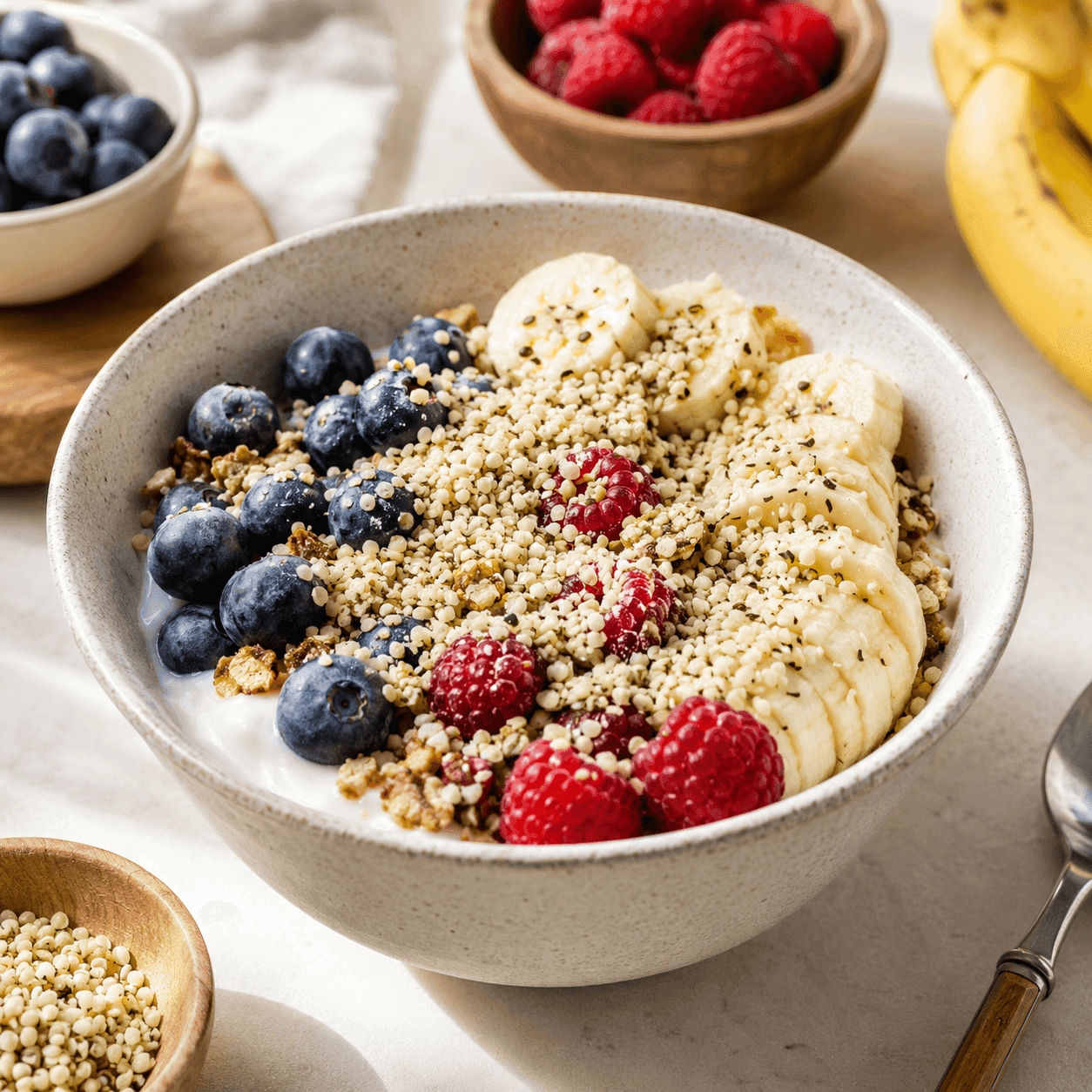
On non-blending days, a scoop sprinkled over yogurt, oatmeal, or grain bowls works just as well — hemp hearts on salads in place of croutons or grated cheese, or a tablespoon stirred into eggs while they cook.
Cold-pressed hemp oil belongs in vinaigrettes alongside good olive oil and red wine vinegar — never for cooking, always for finishing.
Closing
Hemp hearts are one of those foods where everything stacked together is more interesting than any single feature in isolation. Complete protein. Omega ratio close to ancestral. GLA where most omega-6 sources don’t have it. Magnesium and zinc and iron in usable quantities. Soft texture, no cooking, no preparation. Three tablespoons on top of whatever you’re already eating.
Industrial hemp returned to the food supply just in time. The seeds humans have eaten for thousands of years are back on the shelf. Use them daily. Refrigerate the bag. The body knows what to do with the rest.
Sources & further reading
Studies cited
- Callaway, J.C. (2004). Hempseed as a nutritional resource: an overview. Euphytica. — The standard scholarly reference on hemp seed nutritional composition, including the protein, omega ratio, and GLA content.
- Simopoulos, A.P. (2002). The importance of the ratio of omega-6/omega-3 essential fatty acids. Biomedicine & Pharmacotherapy. — Foundational paper on the ancestral 1:1-4:1 omega ratio versus the modern 15:1+ and its implications for chronic inflammatory disease.
- Horrobin, D.F. (2000). Essential fatty acid metabolism and its modification in atopic eczema. American Journal of Clinical Nutrition. — Standard reference on GLA’s mechanism in skin and inflammatory conditions; explains why hemp’s GLA content matters distinctly from other omega-6 sources.
Further reading
- The Linus Pauling Institute Micronutrient Information Center — Essential Fatty Acids — Standard biochemistry reference on omega-3, omega-6, and the conversion pathways that make GLA distinctive.
- Hemp Industries Association — Hemp Food Resources — Trade group reference for hemp food regulation, processing standards, and safety documentation.