
Health · Hormones · ~12 min read
Natural testosterone — the case against TRT-first thinking.
Why the modern testosterone decline is not normal aging, the six natural levers that move it meaningfully before any prescription is needed, and an honest take on when TRT is and isn’t the right answer.
By George Hinestrosa · Personal experience & independent research

Male testosterone levels in the developed world have been falling for the better part of half a century. The Travison 2007 study, which compared three serial cohorts of American men born across different decades, documented a roughly 1% annual population-level decline in serum testosterone — independent of age. Meaning the average forty-year-old man today has substantially lower testosterone than the average forty-year-old man in 1980 did. The trend has continued in the intervening years. Whatever else is true about modern men, their endocrine systems are operating differently than their grandfathers’ did.
The medical response has largely been to prescribe testosterone replacement therapy (TRT) when levels drop below a clinical threshold. TRT is a real tool with real benefits for the men who actually need it. The argument of this article isn’t against TRT — it’s against TRT-as- first-line, before the natural levers that move testosterone meaningfully have been pulled. The men who’ve optimized sleep, lifting, sunlight, fat intake, zinc, and boron, and still have clinically low testosterone, are candidates for medical intervention. The men who’ve optimized none of those things and go straight to a clinic are skipping the part of the protocol that would have made the medication unnecessary.
This article walks through what testosterone actually does, why it’s declining, the six natural levers that move it most, the endocrine disruptors quietly tanking it, the daily habits that compound, and an honest discussion of when TRT is and isn’t the right answer.
What testosterone actually does
Testosterone is the primary male sex hormone but its function extends far beyond reproduction. It regulates muscle protein synthesis, bone density, red blood cell production, cognitive function (particularly visuospatial processing and executive function), motivation and drive, fat distribution, insulin sensitivity, and mood stability. Low testosterone in men maps onto a cluster of symptoms that look like “getting old” in the popular imagination but are substantially the endocrine pattern of testosterone deficiency: fatigue, mental fog, low libido, mood flatness, slow recovery from exercise, weight gain (particularly abdominal), and loss of muscle tone.
Women produce testosterone too, in smaller amounts, and benefit from the same hormone for libido, energy, lean mass, and bone density. The framework in this article applies in attenuated form to women, though the absolute levels and dosing are different. The women’s cycle article in this section covers the female hormonal picture more comprehensively.
Why testosterone is declining
The honest answer is that no single cause explains the entire trend. The likely candidates, in descending order of probable contribution:
Endocrine-disrupting chemicals. BPA in plastic containers and receipt paper, phthalates in food packaging and personal care products, atrazine in drinking water (the most widely used herbicide in the US, banned in the EU since 2003), parabens in cosmetics, and a long list of similar compounds all act as xenoestrogens — molecules that mimic estrogen and disrupt the normal androgen-estrogen balance in the body. Population-level exposure to these compounds has risen dramatically over the same period that testosterone has been falling.
Obesity and metabolic dysfunction. Adipose tissue produces the enzyme aromatase, which converts testosterone to estrogen. The more body fat a man carries, the more aromatase he runs, the more of his own testosterone gets converted to estrogen, and the lower his net androgen status. Roughly one-third of American men are now classified as obese, and the insulin-resistance epidemic compounds the effect.
Sleep deprivation. Leproult and Van Cauter 2011 in JAMA showed that one week of 5 hours of sleep per night dropped young healthy men’s testosterone by 10-15% — the equivalent of aging the endocrine system by 10-15 years. The modern norm of 6 hours or less per night, sustained for decades, is producing exactly this effect at the population level.
Reduced physical activity and strength training. The cohort that gave us the Travison data was substantially more physically active and more strength-focused in its movement patterns than the current cohort. Modern American men sit more, walk less, and lift almost nothing.
Reduced sun exposure. Vitamin D status, driven primarily by UV exposure to skin, correlates strongly with testosterone levels. The modern indoor lifestyle has produced widespread vitamin D insufficiency that the endocrine system reflects.
Industrial seed oils and low-fat dietary culture. Cholesterol is the precursor molecule for all steroid hormones, including testosterone. Decades of low-fat dietary recommendations, combined with replacement of saturated fats with polyunsaturated seed oils, have measurably altered the lipid substrate the endocrine system has to work with.
The cumulative picture: the modern male is sleep-deprived, sedentary, sun-deprived, low-fat-fed, fat-storing, and chronically exposed to chemicals that mimic estrogen. The endocrine response is exactly what you’d predict.
The six natural levers
Each of these moves testosterone meaningfully on its own. Stacked, they often raise serum testosterone enough to take someone from clinically low to mid-normal without any prescription.
1. Sleep. Seven to eight hours per night, anchored to a consistent bedtime, in a dark cool room. Testosterone production peaks during REM sleep and the deepest stages of slow-wave sleep, concentrated in the first half of the night. Cutting sleep short cuts the production window directly. The sleep article in this section covers the full protocol; for testosterone specifically, sleep is the single highest-leverage intervention available.
2. Heavy compound resistance training. Squat, deadlift, overhead press, bench press, row, pull-up. These lifts acutely elevate testosterone and growth hormone, and the chronic adaptation to sustained resistance training raises baseline levels. The weight-lifting article covers the full case; for testosterone, the operating principle is heavy compound lifts done in the 5-8 rep range, three times per week, with progressive overload. Cardio doesn’t produce the same effect — in fact, excessive endurance training can suppress testosterone in men through chronic cortisol elevation.
3. Sunlight on bare skin. Twenty to thirty minutes of direct sunlight on substantial skin area, several times per week, during the part of the year and time of day when UVB is available. The pathway has two components: vitamin D production (which directly correlates with serum testosterone) and a direct effect of light on the testes themselves. The 1939 Myasnikov study often referenced in this area is small and old, but the broader correlation between UV exposure and androgen status is robust across modern data.
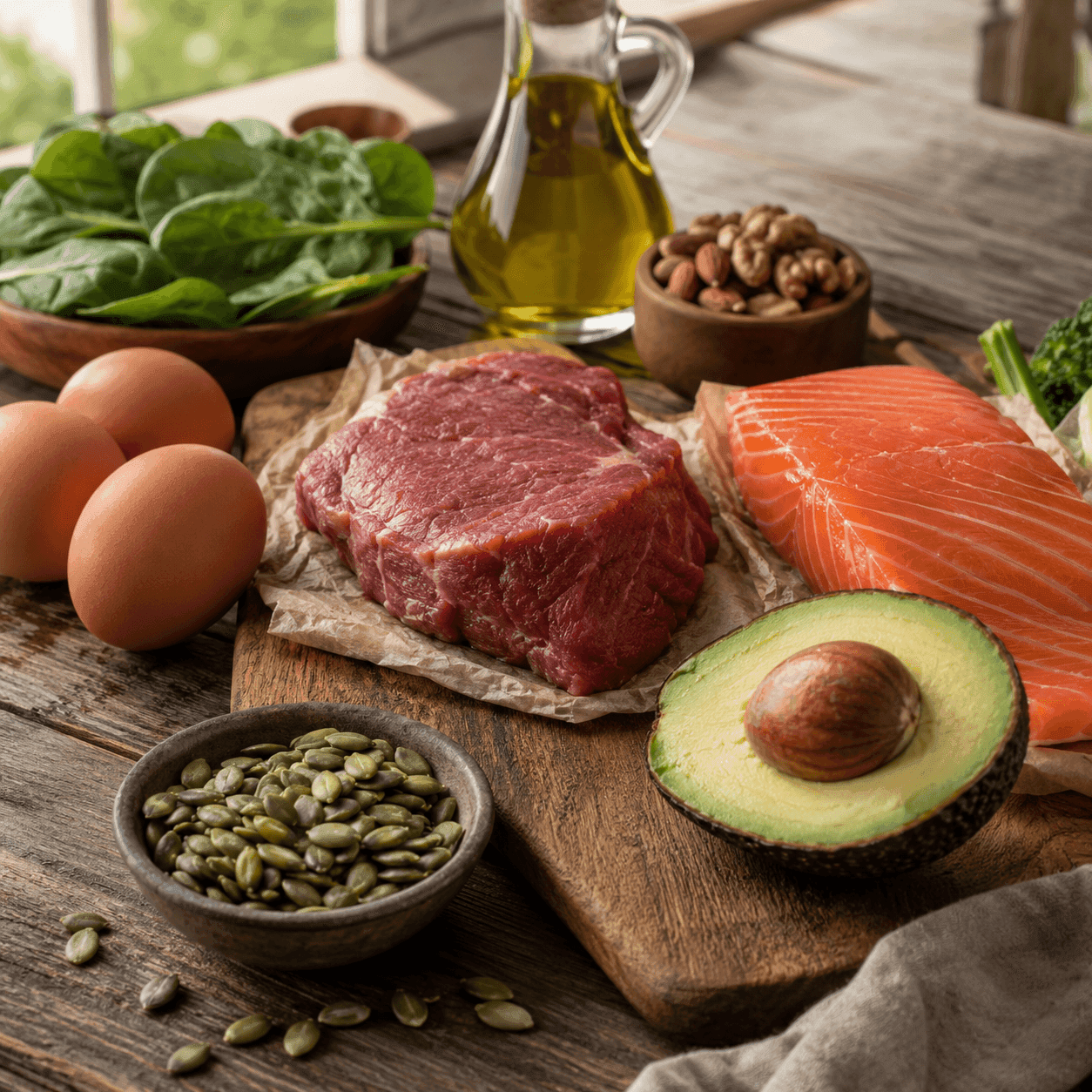
4. Adequate cholesterol and saturated fat intake. All steroid hormones are built from cholesterol. A diet substantially below 30% of calories from fat, particularly when most of those fats are polyunsaturated, starves the endocrine system of its substrate. The fats from grass-finished beef, pasture-raised eggs, butter and ghee, coconut oil, and olive oil are the relevant ones. The Fats section of these resources covers the broader case; for testosterone, the rule of thumb is don’t fear saturated fat, eat enough total fat (35-40% of calories is reasonable), and avoid industrial seed oils.
5. Zinc. Zinc deficiency causes hypogonadism. The mineral is essential for testosterone synthesis and for the conversion of testosterone to its active forms. Modern diets are widely zinc-insufficient, particularly in populations relying on grains (which contain phytates that bind zinc and reduce absorption). The zinc article in this section covers the full case; the operating dose for testosterone optimization is 25-40 mg per day of zinc picolinate or bisglycinate, taken with food. Don’t exceed 40 mg long-term without copper balance attention.
6. Boron. The least-known of the major levers and possibly the most under-rated. A 2011 study by Naghii and colleagues showed that 10 mg per day of boron for one week increased free testosterone by 28% and reduced estradiol by 39% in healthy men. The mechanism is partly through reduction of sex hormone binding globulin (SHBG), which frees up bound testosterone to circulate in its active form. The boron article in this section covers the broader case. Dosing for testosterone is 3-10 mg per day of boron glycinate or boron citrate.
Beyond these six, magnesium (particularly glycinate form, 300-400 mg at night), vitamin D with K2 (5,000 IU daily, more during winter), and adequate protein (1.0 g per pound of bodyweight, from clean animal sources) round out the foundation. Stress management and alcohol moderation matter too — chronic stress elevates cortisol, which directly competes with testosterone for the same precursor molecule (pregnenolone), and alcohol acutely lowers testosterone for 24-48 hours per heavy drinking session.
Endocrine disruptors — the avoidance list
Lowering exposure to xenoestrogens is a real lever and one most men aren’t pulling. The high-impact moves:
Get plastic out of the food chain. Don’t microwave in plastic. Don’t store hot food in plastic. Switch to glass storage containers. Avoid plastic water bottles (use stainless steel or glass). Don’t touch thermal receipts unnecessarily (BPA-coated paper).
Read your personal care product labels. Parabens, phthalates (often labeled as “fragrance”), and triclosan are common in shampoos, soaps, deodorants, and lotions. The EWG’s Skin Deep database is a free tool for evaluating specific products.
Filter your water. Atrazine and other agricultural runoff compounds are in most US tap water at low but cumulative doses. A good carbon filter (Berkey, AquaTru, or similar) removes most of them.
Consider soy intake. Soy isoflavones are weak phytoestrogens. The evidence on whether moderate consumption affects male testosterone is mixed — the larger meta-analyses suggest no significant effect at normal intakes — but heavy soy consumption (soy protein isolates, processed soy products) is worth limiting for men actively trying to optimize.
The herbal adaptogens, honestly
The supplement industry around testosterone is full of herbal products marketed as “natural T boosters.” The honest read on the major ones:
Tongkat Ali (Eurycoma longifolia). The best-supported of the herbal options. Multiple randomized trials show modest but measurable testosterone increases at doses of 200-400 mg per day of standardized extract. Mechanism appears to involve SHBG reduction (freeing bound testosterone) and possibly modest stimulation of production. Worth knowing about.
Ashwagandha. Has shown small testosterone increases in some studies, primarily in stressed populations. The mechanism is mostly cortisol reduction rather than direct testosterone elevation. The ashwagandha article in this section covers the broader case.
Fenugreek. Modest libido improvements in some trials, less clear effect on serum testosterone. Reasonable but not standout.
Tribulus terrestris. The most marketed of the “T boosters” and the most disappointing in the literature. Doesn’t reliably raise testosterone in healthy men. Skip it.
D-aspartic acid. Initial small studies showed promise; larger replication trials have been mixed. Not a standout.
The general framing: the herbal options can add 10-15% to the baseline you’ve built through the six natural levers. They cannot substitute for those levers. A man with poor sleep, no lifting, no sun, and low zinc isn’t going to fix his testosterone with tongkat ali no matter the dose.
When TRT is the right answer
TRT has its place. The men for whom it’s genuinely the right intervention generally share certain features:
Clinically low testosterone (typically total T below 300 ng/dL on multiple morning fasting draws) with corresponding symptoms. Documented primary hypogonadism (testicular failure) or secondary hypogonadism (hypothalamic-pituitary dysfunction). Failure of the natural protocol after 6-12 months of consistent application. Specific medical conditions that benefit (Klinefelter syndrome, post-chemotherapy recovery, certain pituitary disorders).
The honest downsides that need to be discussed before starting:
Suppression of natural production. Exogenous testosterone suppresses the hypothalamic-pituitary signal that drives natural production. The testes shrink. In most men it’s effectively a permanent decision — stopping TRT after years on it often produces a period of profoundly low testosterone before (and sometimes without) recovery.
Fertility impact. TRT typically suppresses sperm production substantially. Men who want to father children in the future need to think carefully about timing and may need ancillary medications (hCG, clomid) to maintain testicular function.
Estrogen management. Exogenous testosterone partially aromatizes to estrogen, which can produce its own set of symptoms (gynecomastia, water retention, mood instability) and requires either dosing adjustment or anti-aromatase medication.
Cardiovascular monitoring. Hematocrit (red blood cell concentration) typically rises on TRT and can require periodic blood donation. Cardiovascular risk profile needs ongoing monitoring.
None of this is reason to avoid TRT when it’s warranted. It is reason to not treat it as the casual first move it’s become at many men’s health clinics.
Where to start
A consistent application of the six natural levers looks like this: seven and a half to eight hours of sleep nightly, anchored to a 10 PM bedtime; three resistance-training sessions per week, compound lifts at the center, progressive loading; morning sun for the circadian anchor and additional outdoor time most afternoons; a substantial-fat diet with grass-finished beef, pasture-raised eggs, butter, ghee, and olive oil as the regular fat sources; zinc picolinate 30 mg daily with dinner; boron glycinate 6 mg daily; magnesium glycinate 400 mg before bed; and vitamin D 5,000 IU with K2 in winter, less in summer when the sun is doing the work.
Endocrine-disruptor management rounds it out: glass food storage, filtered water, paraben-free personal-care products, no microwaving plastic. Alcohol kept rare. Stress managed mostly through walking, sauna, and a sane weekly structure.
Applied consistently, this is the kind of foundation that tends to put serum testosterone in the upper quartile for age, with the subjective markers (energy, recovery, libido, mood, body composition) tracking the lab numbers. None of it requires a prescription — it requires consistency on the foundation.
Products I’d recommend
The foundation is behavior; the supplements are supportive. Below are the specific products that fill the most consistent gaps.
Pure Encapsulations Boron Glycinate is the boron supplement I’d point men toward. 2 mg per capsule, allowing flexible dosing in the 3-10 mg range covered in the literature. Clean ingredient list, third-party tested.
Thorne Zinc Picolinate is the well-absorbed zinc form at the right dose (30 mg per capsule). Thorne has a long-standing reputation for tested potency and clean formulations. Take with food to minimize stomach upset.
Pure Encapsulations Magnesium Glycinate is the standing magnesium recommendation throughout this section. For testosterone support specifically, the night-time dose also supports sleep architecture — which feeds back into the morning testosterone production window.
Thorne Vitamin D/K2 Liquid is the combined formula that handles both nutrients in their proper ratio. 1,000 IU D3 plus 200 mcg K2 per drop, easy to titrate dose seasonally. Vitamin D alone (without K2) can drive calcium into soft tissue; the combination is the right move.
KAL Tongkat Ali is the herbal adaptogen option for men who’ve built the foundation and want the additional 10-15% from the best-supported botanical. 400 mg per capsule of standardized extract. Cycle 8 weeks on, 4 weeks off rather than running continuously.
The bottom line
Modern testosterone decline is not normal aging. It’s a measurable population-level shift driven by sleep deprivation, sedentary lifestyle, indoor living, low-fat dietary culture, processed food, plastic-mediated endocrine disruption, and chronic stress. Each of those contributing causes is addressable behaviorally before any prescription is warranted.
The six natural levers — sleep, heavy compound lifting, sunlight, adequate dietary fat, zinc, boron — reliably move testosterone into the upper quartile for age when applied consistently over 6-12 months. The herbal adaptogens add a small additional bump on top of that foundation. TRT is a real tool for the men who genuinely need it after the foundation has been built; it’s a poor first move for the men who’ve never built it.
Don’t skip the foundation. The medication is more powerful, easier, and more permanent in its consequences than the natural protocol — and that’s exactly why the foundation deserves to be tried first.
Sources & further reading
Testosterone decline epidemiology
- Travison TG, Araujo AB, O'Donnell AB, et al. A population-level decline in serum testosterone levels in American men. Journal of Clinical Endocrinology & Metabolism. 2007;92(1):196-202.
- Andersson AM, Jensen TK, Juul A, et al. Secular decline in male testosterone and sex hormone binding globulin serum levels in Danish population surveys. Journal of Clinical Endocrinology & Metabolism. 2007;92(12):4696-705.
Natural levers
- Leproult R, Van Cauter E. Effect of 1 week of sleep restriction on testosterone levels in young healthy men. JAMA. 2011;305(21):2173-4.
- Naghii MR, Mofid M, Asgari AR, et al. Comparative effects of daily and weekly boron supplementation on plasma steroid hormones and proinflammatory cytokines. Journal of Trace Elements in Medicine and Biology. 2011;25(1):54-8.
- Pilz S, Frisch S, Koertke H, et al. Effect of vitamin D supplementation on testosterone levels in men. Hormone and Metabolic Research. 2011;43(3):223-5.
- Prasad AS, Mantzoros CS, Beck FW, et al. Zinc status and serum testosterone levels of healthy adults. Nutrition. 1996;12(5):344-8.
- Kraemer WJ, Ratamess NA. Hormonal responses and adaptations to resistance exercise and training. Sports Medicine. 2005;35(4):339-61.
Endocrine disruptors
- Meeker JD, Calafat AM, Hauser R. Urinary bisphenol A concentrations in relation to serum thyroid and reproductive hormone levels in men from an infertility clinic. Environmental Science & Technology. 2010;44(4):1458-63.
- Joensen UN, Frederiksen H, Blomberg Jensen M, et al. Phthalate excretion pattern and testicular function. Environmental Health Perspectives. 2012;120(10):1397-403.
Herbal adaptogens
- Talbott SM, Talbott JA, George A, Pugh M. Effect of Tongkat Ali on stress hormones and psychological mood state in moderately stressed subjects. Journal of the International Society of Sports Nutrition. 2013;10(1):28.
- Lopresti AL, Drummond PD, Smith SJ. A randomized, double-blind, placebo-controlled, crossover study examining the hormonal and vitality effects of ashwagandha (Withania somnifera) in aging, overweight males. American Journal of Men's Health. 2019;13(2):1557988319835985.
Authority figures
- Berg E. Public protocols on natural testosterone optimization, particularly sleep, zinc, and resistance training — YouTube channel.
- Attia P. Outlive: The Science and Art of Longevity. Harmony, 2023 — broader framework on hormone optimization and longevity.
- Huberman A. Hormone optimization protocols — Huberman Lab podcast.