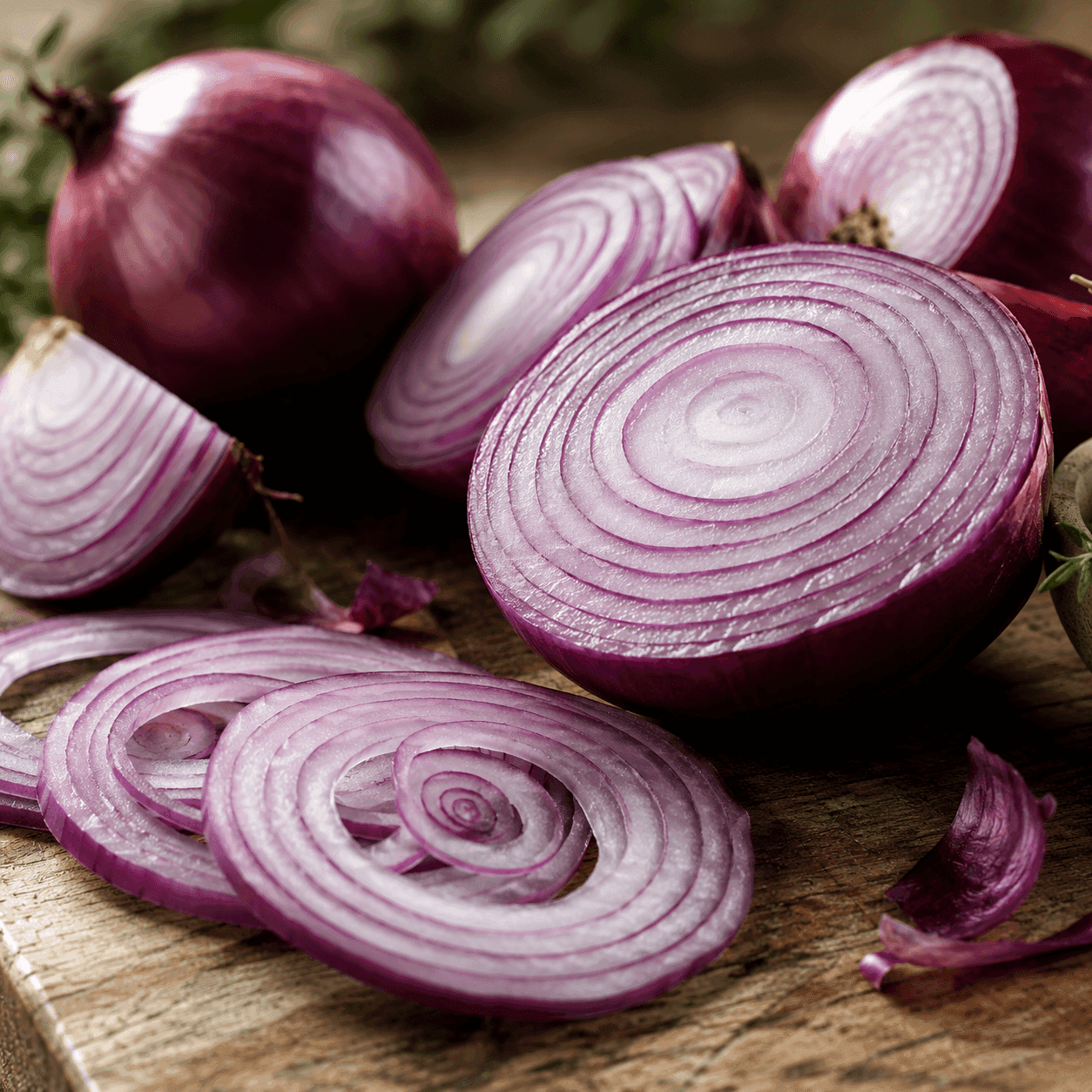

Health · Whole Food · ~9 min read
Onion — quercetin, sulfur, and the gut bacteria that depend on it.
Why the onion isn’t just garlic’s understudy — the antihistamine angle, the inulin that feeds your microbiome, and the traditional uses your grandmother already knew.
By George Hinestrosa · Personal experience & independent research
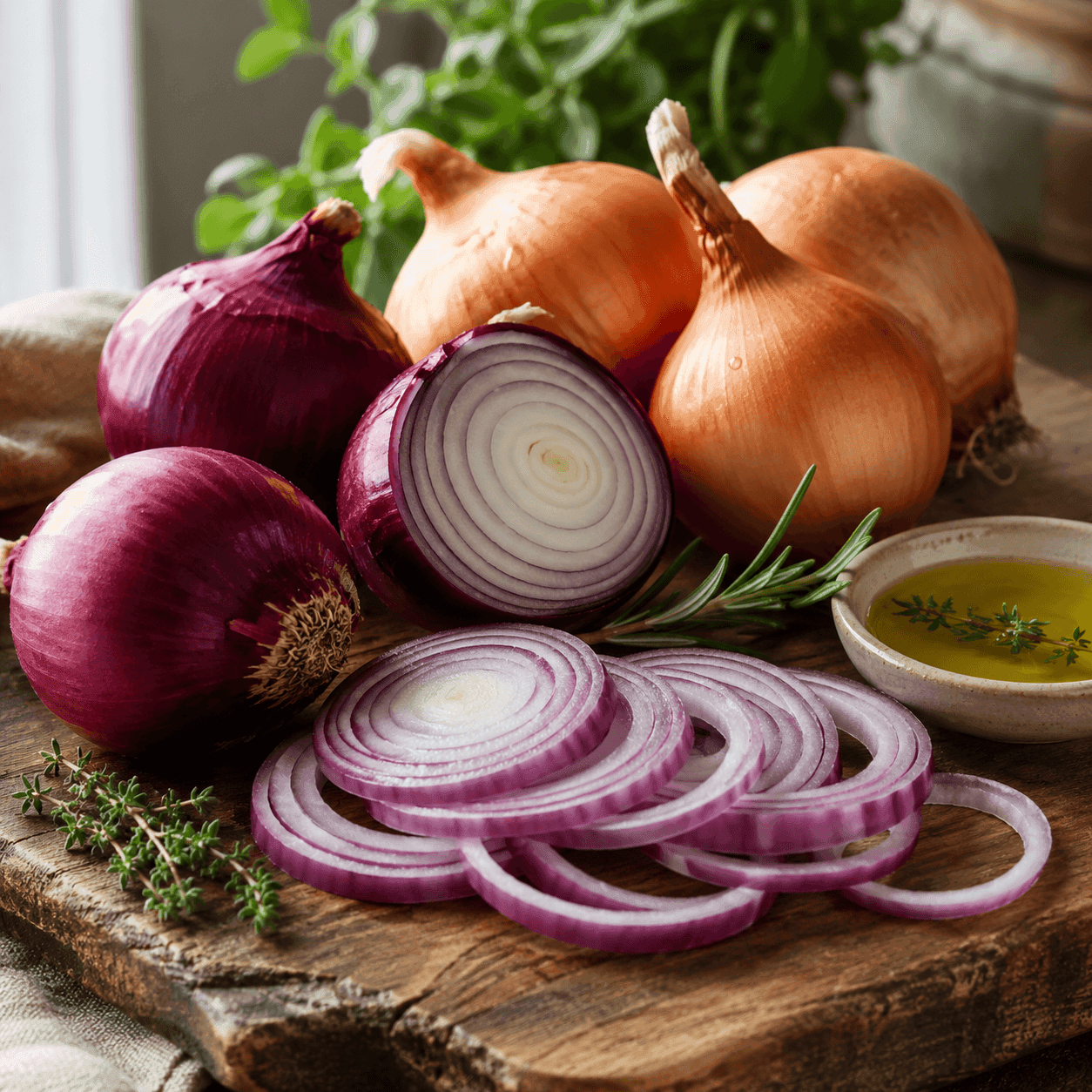
Garlic gets the headlines. Onion does the unglamorous daily work. They’re cousins — both in the Allium genus, both built on similar sulfur chemistry, both with millennia of traditional medicinal use behind them — but they have different specialties, and the onion’s specialties are worth treating on their own merits.
What the onion brings that garlic doesn’t: an unusual concentration of quercetin, the flavonoid that does most of the antihistamine and anti-inflammatory work in the plant kingdom; an unusually high load of inulin and other prebiotic fibers that feed beneficial gut bacteria; and a milder sulfur chemistry that’s easier to use in bulk than garlic’s.
The quercetin story
Quercetin is one of the most studied flavonoids in human nutrition. It’s a powerful antioxidant, a documented anti-inflammatory, and an effective mast-cell stabilizer — which means it reduces histamine release and dampens allergic reactions.
Onions, particularly red and yellow onions, are one of the densest dietary sources of quercetin in the human diet. A single medium red onion contains roughly 30–50 mg of quercetin. Standard supplemental doses range from 250–1,000 mg per day, so onions don’t replace supplementation when therapeutic doses are needed — but daily onion in food keeps a meaningful background level present.
What quercetin does:
- Antihistamine and anti-allergic. Stabilizes mast cells, the immune cells that release histamine in response to allergens. Reduces seasonal allergy symptoms, hives, and other histamine-driven reactions. The classic alt-health allergy stack is quercetin plus bromelain (from pineapple) plus vitamin C.
- Anti-inflammatory. Inhibits multiple inflammatory pathways including NF-kB and the production of inflammatory cytokines. The same mechanism is part of why daily onion intake correlates with lower rates of chronic inflammatory disease.
- Antioxidant. Quenches free radicals, supports glutathione regeneration, protects mitochondrial membranes.
- Zinc ionophore. This is the technical term: quercetin helps zinc enter cells. The combination of zinc plus quercetin gained attention in 2020 because zinc inside cells inhibits viral RNA replication, and quercetin helps get it there. The alt-health respiratory-illness protocol that emerged from that period — zinc, quercetin, vitamin D, vitamin C — remains a reasonable seasonal-immune stack.
- Cardiovascular. Quercetin lowers blood pressure modestly and improves endothelial function in clinical trials.
The sulfur compounds — cousin chemistry, not identical
Like garlic, onions release organosulfur compounds when their cells are broken. The chemistry isn’t identical — onions don’t produce allicin specifically, but they produce a related family of thiosulfinates and disulfides (allyl propyl disulfide, propanethial S-oxide, others).
The lachrymatory factor — the gas that makes you cry when chopping — is propanethial S-oxide, a volatile sulfur compound that reaches your eyes and converts on contact with the moisture there into a small amount of sulfuric acid. The tears are the eye’s defense.
Three things reduce the crying:
- Chill the onion in the refrigerator for 30 minutes before cutting (slows volatile release)
- Cut near a running tap or under cold water (binds the gas before it reaches you)
- Use a very sharp knife (less cell rupture per cut, less gas released)
The sulfur compounds themselves have the same broad family of benefits as garlic’s — antimicrobial, anti-platelet, cardioprotective — in slightly milder form. Daily onion is part of why the Mediterranean and Eastern European traditional diets track with cardiovascular health.
The gut story — inulin and the microbiome
This is where onion does work that garlic doesn’t, and where it earns its own article.
Onions are one of the highest-density food sources of inulin and fructooligosaccharides (FOS) — prebiotic fibers that humans can’t digest, but that the beneficial bacteria in the colon ferment as their primary fuel. The bacteria that thrive on inulin and FOS — particularly Bifidobacterium and Lactobacillus species — are exactly the ones associated with good gut and immune health.
The fermentation produces short-chain fatty acids (SCFAs) — butyrate, acetate, propionate — which:
- Feed the cells lining the colon (butyrate is the primary fuel for colonocytes)
- Reduce systemic inflammation
- Modulate immune-cell behavior
- Strengthen the intestinal barrier (less leaky gut)
- Influence blood-sugar regulation and appetite signaling
- Affect brain function through the gut-brain axis
One medium onion contains roughly 5–6 grams of prebiotic fiber. Eaten daily, that’s a substantial consistent input to the microbiome.
The catch: people with damaged guts — IBS, SIBO, significant dysbiosis — sometimes can’t tolerate onion well because the bacteria fermenting it include some of the wrong ones. In a healthy gut, onion is one of the cleanest prebiotic foods available. In a dysbiotic gut, it can cause gas, bloating, and discomfort. People in gut-repair phases often need to cook onions thoroughly (reducing the FODMAP load by roughly half) or temporarily limit them.
Cardiovascular and blood sugar
The cardiovascular effects of onion are similar to garlic’s in mechanism but gentler in magnitude:
- Modest blood-pressure reduction (quercetin and sulfur compounds both contribute)
- Improved cholesterol profile — lower LDL, slightly higher HDL
- Mild anti-platelet effect
- Improved endothelial function
- Lower fasting blood sugar and improved insulin sensitivity in diabetic and pre-diabetic populations
The blood-sugar effect is worth pulling out. A 2010 trial published in Environmental Health Insights found that 100 g of raw onion (about half a large onion) daily reduced fasting blood glucose substantially in type 2 diabetic patients. The mechanism appears to be quercetin’s effect on insulin sensitivity plus the sulfur compounds’ effect on glucose absorption.
Cancer prevention — the gut and beyond
The allium-vegetable cancer literature treats onion and garlic together. The population studies are consistent: people with the highest intake of allium vegetables have substantially lower rates of stomach, colon, and prostate cancer.
The proposed mechanisms include:
- Quercetin’s direct effect on cancer cell apoptosis
- Sulfur compounds’ effect on detoxification enzymes
- The SCFA effect on colon health from the inulin
- Inhibition of nitrosamine formation in the stomach (relevant to gastric cancer)
- Modulation of inflammation
Daily onion is part of the dietary pattern that correlates with the longest healthspans. The traditional Mediterranean, Eastern European, and East Asian diets all include daily onion in some form, and all show better gut-cancer outcomes than the standard modern Western diet.
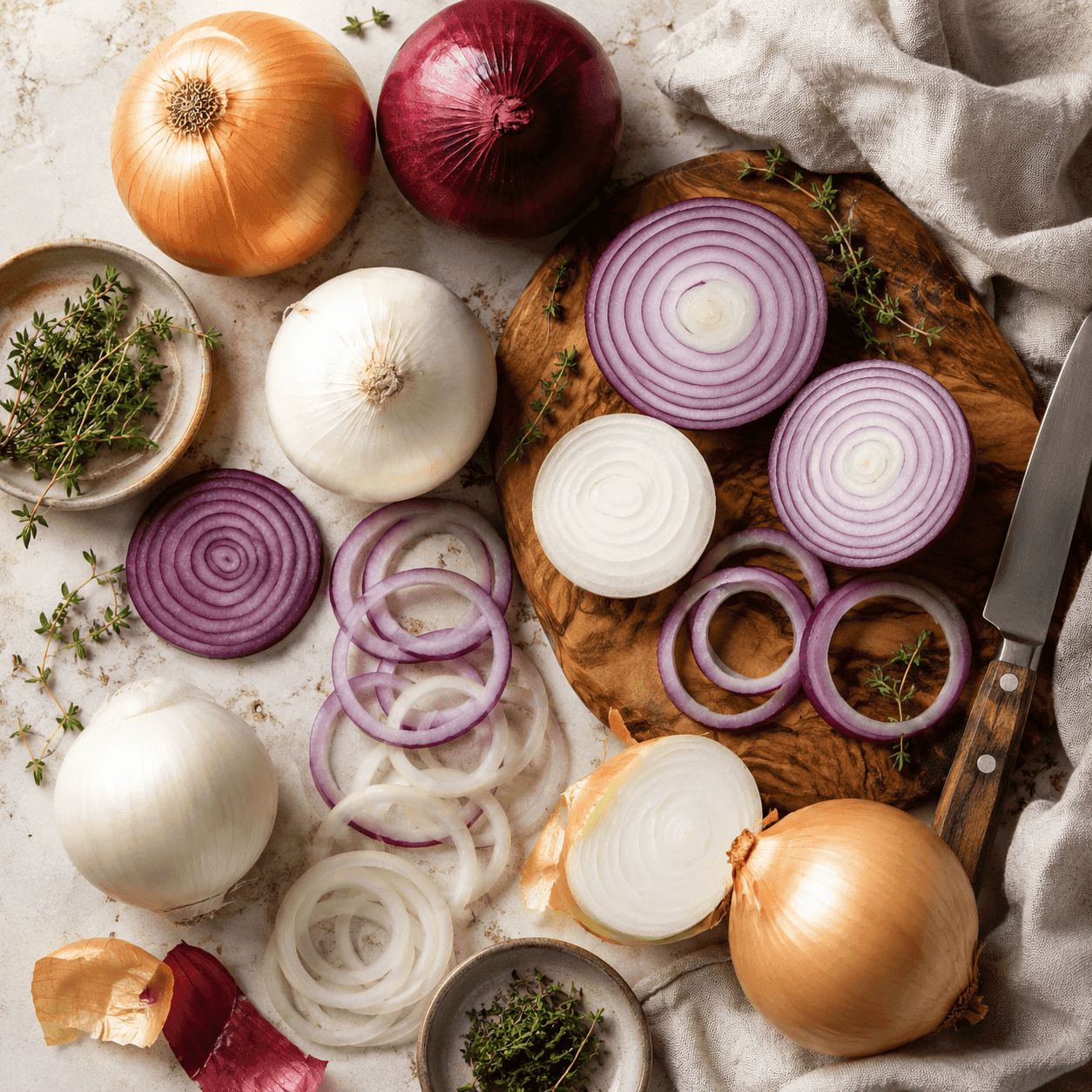
Colors matter
- Red onions — highest in quercetin and anthocyanins (the red pigments, which are themselves antioxidant). The default choice for medicinal use. Sweetest raw.
- Yellow onions — high in quercetin, more pungent than red, the standard cooking onion. Excellent for everyday use.
- White onions — lowest quercetin, sharpest flavor raw, popular in Mexican and Latin American cooking.
- Shallots — highest sulfur compound concentration per gram. Milder and sweeter than onion. Excellent in vinaigrettes and fish dishes.
- Green onions / scallions — less quercetin, more vitamin K and fresh chlorophyll. Useful as a finishing herb more than as the main onion in a dish.
- Leeks — cousin to onion. Lower in quercetin but high in inulin and gentler on the digestive system. A useful substitute during gut-repair phases.
Forms — raw, cooked, pickled, fermented
- Raw — highest quercetin retention, highest sulfur compound activity, sharpest flavor. Use in salads, salsas, on top of finished dishes.
- Lightly cooked (sautéed) — retains most of the quercetin and the cardiovascular benefits. The everyday form.
- Long-cooked / caramelized — sugars caramelize, some volatile sulfur compounds dissipate, prebiotic fibers partially broken down (easier on sensitive guts). Lower medicinal potency but excellent flavor.
- Pickled red onions — raw onions in vinegar with salt and herbs. The vinegar fermentation produces its own gut-friendly compounds, the quercetin is preserved, and the pungency softens. One of the easiest ways to eat onion daily.
- Lacto-fermented onion — raw onions fermented in salt brine with naturally occurring Lactobacillus bacteria. Adds probiotic benefit on top of the prebiotic inulin — one of the few foods that’s meaningfully both prebiotic and probiotic at the same time.
Traditional uses
Most of the traditional uses of onion are well-validated by modern science once you understand the chemistry:
- Onion poultice for chest congestion. Chopped raw onion wrapped in cloth, placed on the chest or under the feet (the “onion in the sock” traditional remedy for fever in children). The sulfur compounds are volatile and penetrate transdermally; the warming effect and the antimicrobial action together produce real symptomatic relief. The feet-overnight version was a near-universal European folk practice into the early 20th century.
- Onion syrup for cough. Sliced raw onion layered with raw honey or sugar in a jar overnight. The juices draw out, mix with the honey, and produce a syrup that’s remarkably effective for cough — the antimicrobial action of both ingredients plus the demulcent (throat-coating) effect of the honey.
- Onion juice for hair growth. Topical onion juice applied to the scalp has been studied in clinical trials for alopecia areata, with surprising positive results. The sulfur compounds appear to promote hair follicle activity. Smells like onion for a while; works for many people.
- Onion for insect bites. Cut a fresh slice, press it on the bite for a few minutes. The sulfur compounds reduce histamine response and the itching subsides quickly.
Where I buy onion
Fresh onions from any reasonable grocery store or farmers’ market. Look for firm bulbs with dry, papery skin and no soft spots. Skip pre-chopped or pre-diced — the quercetin and sulfur compounds degrade fast once cell walls are broken.
Storage: cool, dry, dark, well-ventilated. Not in the refrigerator (unless already cut). Not next to potatoes (each accelerates the other’s spoilage).
For when food alone isn’t enough:
- Thorne Quercetin Phytosome — quercetin in a phospholipid-bound form for better absorption. The standard alt-health quercetin product. Used in the seasonal-immune stack.
- NOW Foods Quercetin with Bromelain — the classic allergy-protocol combination. Quercetin stabilizes mast cells; bromelain (a pineapple enzyme) reduces inflammation and supports quercetin absorption. The combination beats either alone for seasonal allergies.
- NOW Foods Inulin Pure Powder — concentrated prebiotic fiber, mostly from chicory root. Useful for people who can’t tolerate large amounts of dietary inulin but want the microbiome benefit. Start with 1 teaspoon and build up; aggressive starting doses cause gas.
Where to start
A jar of thin-sliced red onion kept in red wine vinegar with salt and oregano in the refrigerator makes a simple daily delivery system — a handful onto every salad, grain bowl, or taco.
Pair that with one cooked onion in something most days — sautéed at the base of any soup, in eggs, with roasted vegetables. The cooked onion plus the raw pickled onion together cover most of what onion can do.
During allergy season, adding quercetin-with-bromelain for the few weeks it’s bad does what daily onion alone can’t reach at that dose.
Closing
The onion is one of the cheapest, most accessible, and most versatile medicinal foods in human history. It quietly delivers quercetin, sulfur compounds, and inulin every day, feeding the gut bacteria you want and dampening the inflammatory and allergic signals you don’t. The price is a few dollars a week and occasionally crying while chopping.
Eat the onion. Cooked, raw, pickled, fermented — all of them, daily, year-round.
Sources & further reading
Studies cited
- Eldin, I.M.T. et al. (2010). Preliminary study of the clinical hypoglycemic effects of Allium cepa (red onion) in type 1 and type 2 diabetic patients. Environmental Health Insights. — 100 g of raw red onion daily produced substantial fasting blood-glucose reduction in diabetic patients.
- Hertog, M.G. et al. (1993). Dietary antioxidant flavonoids and risk of coronary heart disease: the Zutphen Elderly Study. Lancet. — The foundational quercetin and cardiovascular study; high flavonoid intake (largely from onions and tea) tracked with substantially lower coronary mortality.
- Sharquie, K.E. & Al-Obaidi, H.K. (2002). Onion juice (Allium cepa L.), a new topical treatment for alopecia areata. Journal of Dermatology. — The hair-regrowth study on topical onion juice for alopecia areata; surprising positive results.
- Williamson, G. & Manach, C. (2005). Bioavailability and bioefficacy of polyphenols in humans. American Journal of Clinical Nutrition. — Standard reference on quercetin absorption and bioactivity from food versus supplement sources.
Authorities & further reading
- Dr. Michael Greger — NutritionFacts.org onion archive — Greger curates the published literature on onion accessibly; useful for following the evidence trail.
- Linus Pauling Institute Micronutrient Information Center — Flavonoids — Standard reference on quercetin biochemistry and dietary intake.