
Health · Protocol · ~10 min read
Rebounding — a trampoline does what most cardio can’t.
Why the mini-trampoline is the most efficient lymphatic pump available, the NASA study that started everything, and the protocol that fits in ten minutes a day.
By George Hinestrosa · Personal experience & independent research
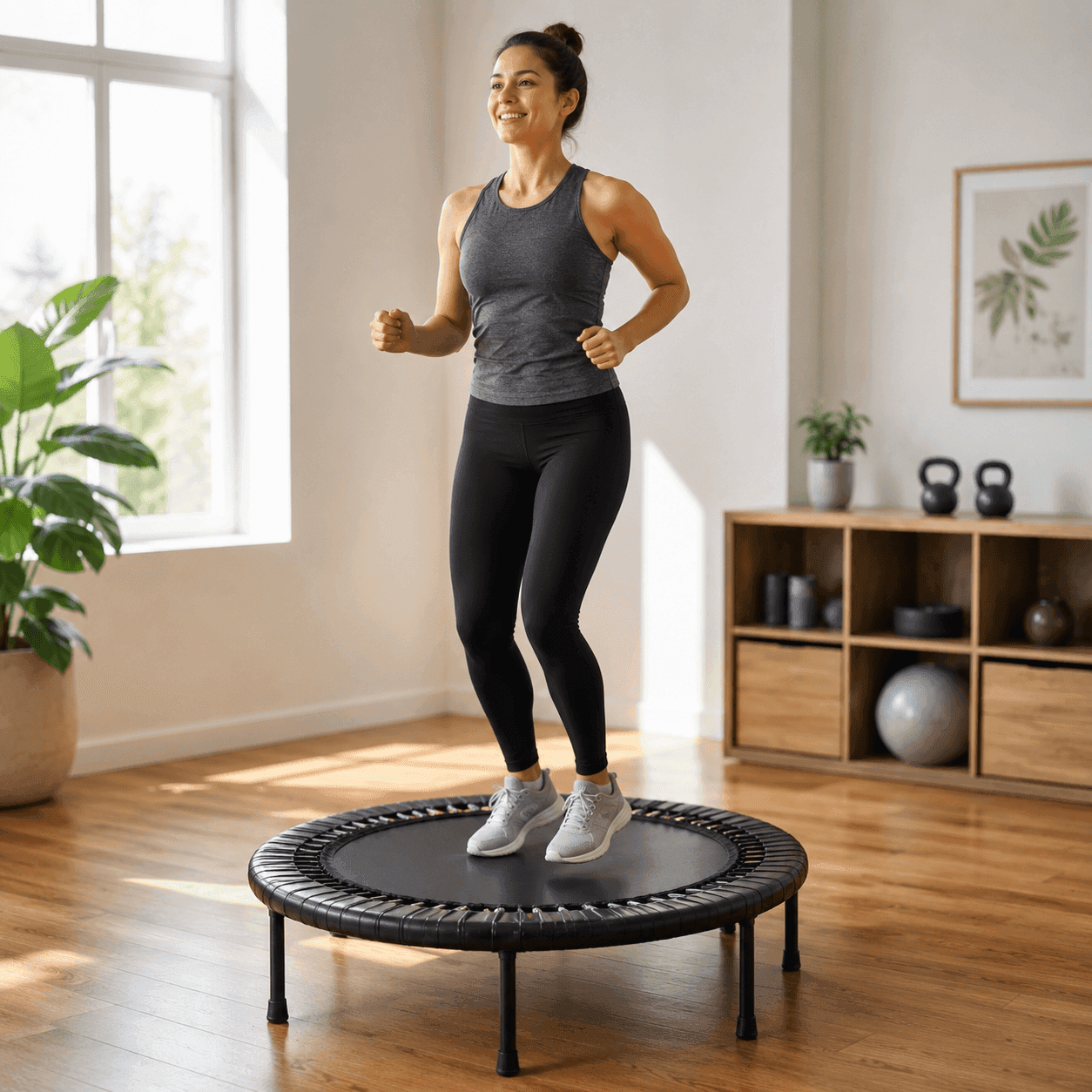
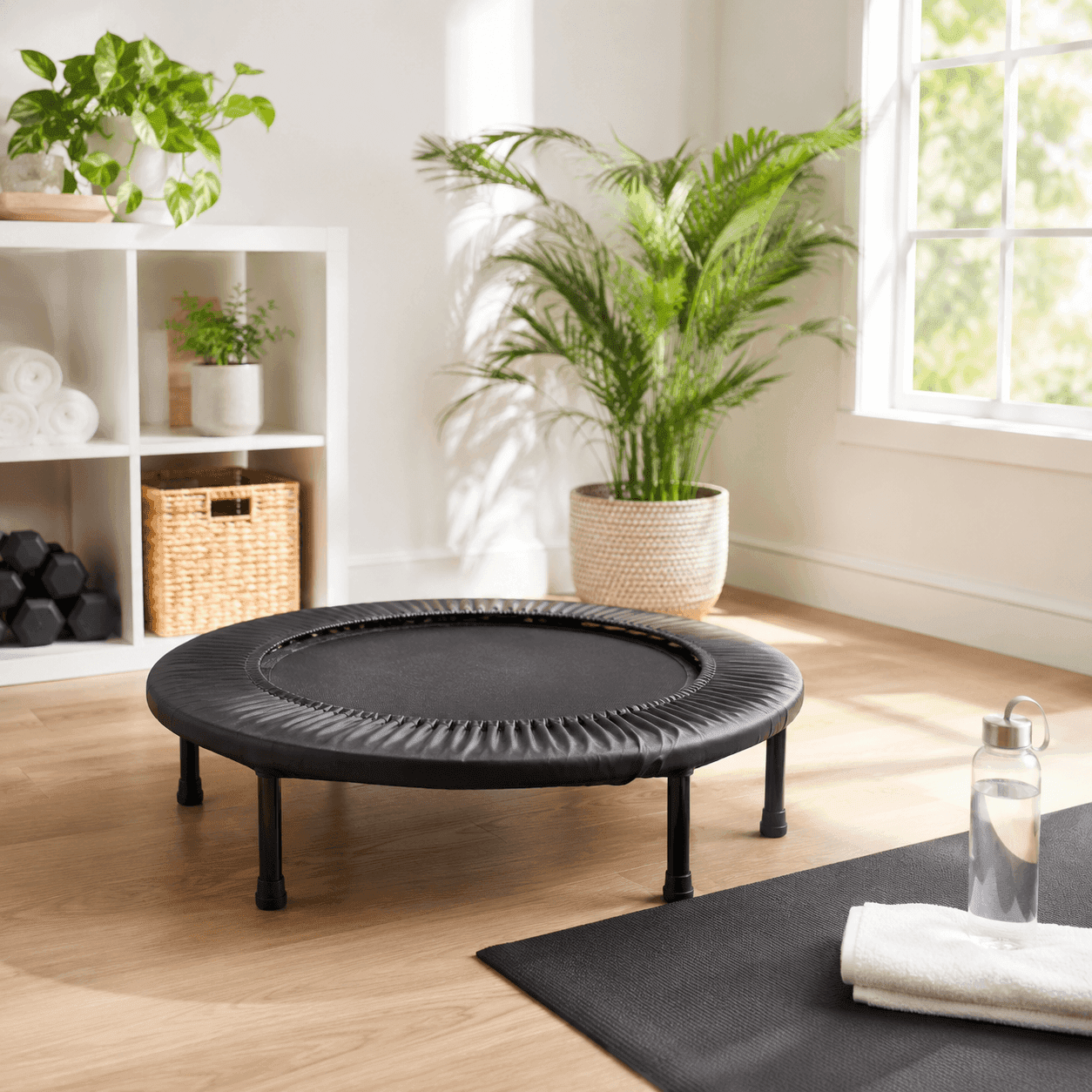
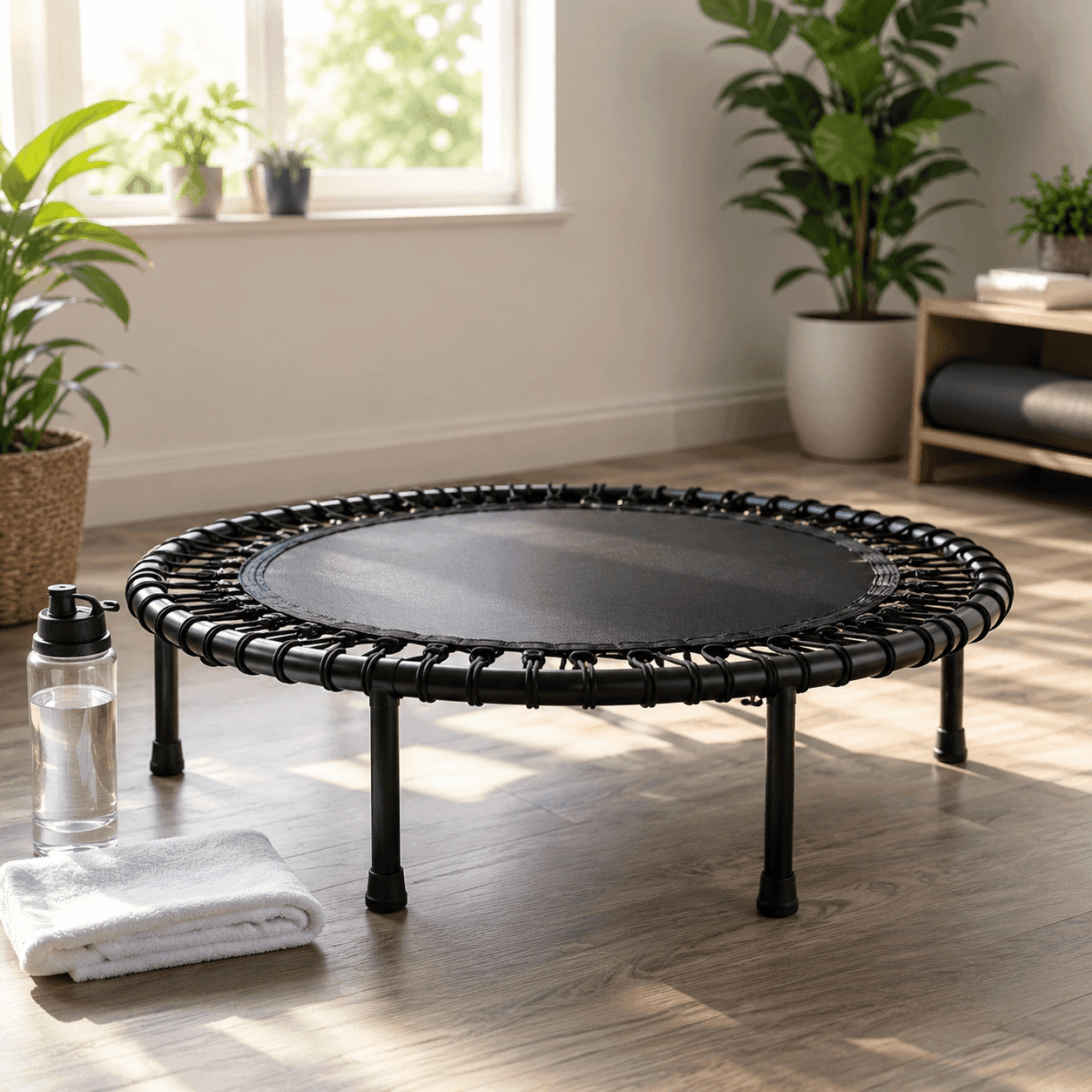
Rebounding is bouncing on a small trampoline. That simple description undersells what is one of the single most efficient cardiovascular and lymphatic interventions available, at a one-time cost of a few hundred dollars and a daily commitment of roughly ten minutes. It’s the practice that, once you understand the mechanism, is genuinely hard to argue with — and one that has stayed on the margins of mainstream fitness for reasons that have more to do with looking unusual than with the evidence.
This article walks through what rebounding actually does to the body (the lymphatic case in particular), the NASA study that quietly validated all of it in 1980, the joint-friendly cardiovascular case, the different rebounder constructions and what distinguishes the good ones from the cheap ones, and the daily protocol that produces the effect.
The lymphatic case — why bouncing works
The lymphatic system, as covered in the walking article, doesn’t have a pump. It relies on muscle contraction, breathing, and external pressure to circulate. Where walking moves lymph through rhythmic muscle contraction, rebounding does something walking can’t: it cycles the body through alternating G-force states roughly twice per second.
At the bottom of the bounce, the body experiences roughly 2-3G of force as the mat reverses direction. At the top of the bounce, there’s a brief moment of weightlessness — 0G — as the body floats. Every cell in the body experiences this cycle. Lymphatic valves — one-way valves that prevent backflow — open and close with the pressure changes. The result is a pump that moves lymph at roughly 10-15 times the rate of resting circulation, throughout the entire body, with very little perceived effort.
For people whose lymphatic systems are sluggish — which is most modern adults, given the sedentary baseline — this is a meaningful intervention. The puffiness, the heavy-leg feeling, the slow recovery from minor illness, the tendency to swell after a long flight: all of these are downstream of poor lymphatic flow, and all of them tend to improve on a few weeks of daily rebounding.
The NASA study
In 1980, NASA published a study in the Journal of Applied Physiology comparing rebounding to treadmill running across a range of cardiovascular and metabolic markers. The original interest was practical — NASA was looking for ways to help astronauts recondition their muscles and cardiovascular systems after extended periods in zero gravity, and rebounding’s G-force cycle was being tested as a possible substitute for normal gravitational loading.
The result, summarized in the paper’s most quoted line, was that for similar levels of oxygen uptake, the “magnitude of the biomechanical stimuli is greater with jumping on a trampoline than with running.” The popular shorthand for this finding — that rebounding is “68% more efficient than running” — is a simplification, but the underlying finding is real: rebounding delivers more cardiovascular and mechanical benefit per unit of perceived effort than running does, with a fraction of the joint load.
That single study, more than four decades later, is still the foundation of the rebounding case in the alternative-health space — partly because it’s the only large institutional study of its kind, and partly because the people who took it seriously (Albert Carter, Dave Hall, the broader rebounding community) have spent decades documenting the practical benefits in real users rather than waiting for more academic validation.
The joint-friendly cardiovascular case
Running is hard on knees, hips, and lower back. Every running stride lands roughly three times bodyweight on a single joint, repeated thousands of times per session. Over years, this accumulates into the cartilage degradation that drives the knee surgeries and chronic running injuries that the running population is famous for.
Rebounding inverts the load profile. The mat absorbs the downward force; the G-force loading happens through the body axially, distributed evenly across the whole skeleton, not concentrated on a single joint. You get the cardiovascular stimulus — heart rate up, breath rate up, oxygen demand up — without the joint destruction. For people with existing knee, hip, or back issues, this is often the only cardiovascular intervention they can sustain.
For older adults specifically, rebounding has a second benefit: the G-force loading is a form of mild bone-loading exercise, which over time supports bone density. Walking does some of this; rebounding does more, with less wear-and-tear elsewhere.
What rebounding does, beyond cardio and lymph
The downstream effects most consistent users report:
Lower-body strength. Continuous calf and quad engagement, balance recruitment from the small stabilizing muscles around the ankles and knees. After a few weeks, the difference is noticeable in stair-climbing and standing endurance.
Core engagement. Maintaining balance on an unstable surface recruits the deep core in a way that flat-ground cardio doesn’t. The effect compounds with twisting and lateral bounce variations.
Improved digestion. The vertical motion mechanically stimulates the gut, and the lymphatic improvement supports the gut-associated lymphoid tissue that handles digestive immune function. Many users report regularity improvements within a couple of weeks of starting.
Mood and energy. The combination of cardiovascular work, lymphatic drainage, and the genuinely playful quality of bouncing produces a meaningful mood effect. It’s difficult to bounce on a trampoline for five minutes and stay in a bad mood.
Vestibular and balance training. The inner-ear vestibular system, which handles balance, weakens with disuse. Rebounding trains it. For older adults specifically, this is a meaningful fall-prevention intervention.
The basic protocol
The minimum-effective protocol is ten minutes a day, every day. That is enough to produce the lymphatic benefit and a meaningful cardiovascular stimulus for anyone who isn’t already an elite athlete. Twenty minutes is better if you have the time. Beyond about thirty minutes, you’re moving into endurance training and should structure the session more deliberately.
The three foundational movements every protocol should include:
The health bounce. Feet never leave the mat. You simply shift your weight slightly up and down, letting the mat’s recoil produce a gentle vertical movement. This is the lowest-impact, most lymphatically-focused movement, and it’s where almost everyone should start. Even five minutes of the health bounce produces measurable lymphatic flow change.
The basic jog. Alternate lifting each foot a few inches off the mat, jogging in place. Heart rate climbs; cardiovascular stimulus increases. This is the workhorse movement for the bulk of any session.
The jumping jack. Standard jumping-jack motion on the mat. Brings in upper-body engagement and increases the cardiovascular intensity. Used in short bursts (30 seconds to a minute at a time) to spike heart rate.
A simple ten-minute session: two minutes health bounce to warm up, six minutes basic jog (alternate with thirty-second jumping jack bursts every two minutes), two minutes health bounce to cool down. Do this daily for two weeks and you will feel a difference in energy, swelling, sleep, and mood.
What separates a good rebounder from a cheap one
This is the area where buying the cheapest option you can find on Amazon will reliably waste your money. A poorly built rebounder fails on three dimensions: the mat tears, the springs sag and squeak within a few months, and the frame wobbles unsafely under any meaningful movement. People who try rebounding on a $50 rebounder often conclude rebounding doesn’t work; what doesn’t work is the $50 rebounder.
The dimensions that matter:
Spring or bungee construction. The two main options. Springs (the traditional design, used by Cellerciser and most lower-cost rebounders) provide a firmer, more responsive bounce and last for years if the steel is high-quality. Bungees (used by Bellicon and JumpSport’s higher-end models) produce a softer, deeper bounce that’s easier on joints but feels less athletic. Both work. Spring tension on the cheap models is what fails first.
Mat material. The mat itself takes the wear. Permatron and similar industrial-grade materials (used in premium rebounders) last for years of daily use. Cheap nylon mats stretch and tear within months.
Frame stability. Welded steel frames with proper crossbracing stay quiet and stable under load. Pressed-steel frames with screw connections develop wobble and squeak quickly. Listen for the noise on the demo videos — if it’s loud at the factory, it’ll be louder at your house.
Handrail option. Older users, post-injury users, and beginners often benefit from a stabilization bar. Most premium rebounders sell this as an add-on. For anyone with balance concerns, get the bar from the start.
Where to start
The whole protocol starts with placement: keep the rebounder somewhere in constant view — a corner of the office within sight of the desk. Out of sight means out of use, every time.
Two short sessions usually work better than one longer one. A five-minute session mid-morning — mostly a basic jog with a couple of jumping-jack bursts — makes a good circulation reset between cognitive blocks. Another five to ten minutes in the late afternoon, when energy would otherwise dip and coffee starts to tempt, gives an energy lift that lasts an hour or two — plenty to close out the workday without stimulants.
On under-the-weather days — the early hours of a cold, the day after a long flight, when joints feel puffy — ten to fifteen minutes of pure “health bounce” (no jog, no jumping jacks, just the gentle vertical motion that targets the lymphatic system) is the move. The recovery acceleration is one of the most consistent effects people report from any piece of equipment.
Products I’d recommend
The price range on rebounders is wide and the quality varies more than for almost any other piece of fitness equipment. The list below covers the spectrum honestly.
Cellerciser by Dave Hall is the rebounder most people in the alt-health world consider the gold standard. Dave Hall has been making them for over thirty years; the patented triple-spring system produces a firm, responsive bounce that holds up to daily use for a decade or more. Premium price. If you’re going to do this seriously and want one rebounder for life, this is the one.
Bellicon Classic Rebounder is the German-engineered premium option that uses bungee cords instead of springs. The bounce is softer and deeper — lower joint impact, more forgiving for people with existing knee or back issues. Comparable price to the Cellerciser, different feel. Worth trying both before you commit if you can.
JumpSport 350 Fitness Trampoline is the mid-tier option I’d recommend for most people. Bungee construction, US company, substantially less than Cellerciser or Bellicon, and the build quality is genuinely good. The 350 model is the entry into their lineup; the 550 and 570 step up the tension and durability if you want to invest more.
Stamina 36-Inch Folding Trampoline is the budget option I’d still recommend if cost is the main constraint. Spring-based, folds for storage, well-reviewed for the price. The bounce isn’t as nice and it won’t last ten years, but it’ll get you through several years of regular use and prove out whether rebounding is something you’ll stick with.
Sunny Health & Fitness 40″ Trampoline is the “just try it” option — cheapest of the genuinely usable rebounders. Won’t last forever, springs may squeak within a year of daily use, but it’s the lowest-friction way to test whether rebounding fits your life before committing to a premium one.
The bottom line
Rebounding is the most efficient lymphatic pump available, a joint-friendly cardiovascular workout that produces more benefit per minute than running, and a bone-loading practice that supports density without grinding cartilage. The NASA study validated it forty-five years ago; the alt-health community has been building on it ever since.
Put a decent rebounder in a place you walk past multiple times a day. Do ten minutes daily — a mix of health bounce and basic jog — for two weeks and see whether the energy, swelling, and mood effects show up. For most people they do, and once they do, the practice tends to stick.
One of the genuinely best dollar-per-benefit health investments available, and one of the most consistently under-recommended.
Sources & further reading
The NASA study and biomechanical case
- Bhattacharya A, McCutcheon EP, Shvartz E, Greenleaf JE. Body acceleration distribution and O2 uptake in humans during running and jumping. Journal of Applied Physiology. 1980;49(5):881-7. — the foundational NASA-led study.
Lymphatic flow and rebound exercise
- Lane K, Worsley D, McKenzie D. Exercise and the lymphatic system: implications for breast-cancer survivors. Sports Medicine. 2005;35(6):461-71.
- Olszewski WL, Engeset A. Intrinsic contractility of prenodal lymph vessels and lymph flow in human leg. American Journal of Physiology. 1980;239(6):H775-83. — mechanism of muscle-pump lymphatic flow.
Authority figures and tradition
- Carter A. The New Miracles of Rebound Exercise. National Institute of Reboundology and Health, 1988 — the foundational popular text on rebounding.
- Walker M. Jumping for Health: A Guide to Rebounding Aerobics. Avery Publishing, 1989.
- Hall D. Public teaching on rebounding mechanics and the Cellerciser system — Cellercise YouTube channel and instructional materials.
- Sircus M. Public commentary on rebounding as a lymphatic intervention alongside transdermal magnesium and detoxification protocols.