
Health · Protocol · ~12 min read
Sauna — heat-shock proteins, detoxification, and cardiovascular gains.
Why the Finnish sauna cohort data is the most consequential longevity research most people have never heard of, what heat-shock proteins actually do, and the protocol that gives you the benefit.
By George Hinestrosa · Personal experience & independent research
If you offered most American doctors a single intervention that, in a properly powered prospective cohort study, reduced all-cause mortality by 40% — cut cardiovascular death by half, cut dementia risk by two-thirds, and required no prescription — they would tell you they’d use it on every patient who could tolerate it. The intervention exists. It’s a sauna. The data is from a twenty-year prospective Finnish cohort published in JAMA Internal Medicine in 2015. And the reason it isn’t standard cardiology practice has more to do with cultural unfamiliarity in the US than with the strength of the evidence.
This article walks through what the Finnish sauna research actually showed, what heat-shock proteins do (the mechanism most of the benefit operates through), the honest case for sauna as a detoxification route, the difference between traditional and infrared saunas and where each one fits, the dose-response, and a daily protocol that captures most of the benefit.
The Finnish data — the most under-cited longevity research available
Finland has the world’s deepest cultural integration of sauna — one sauna for every two people in the country, and an average frequency of two to three sessions a week from childhood. In the 1980s, Jari Laukkanen and colleagues began following a cohort of over 2,300 middle-aged Finnish men, tracking their sauna habits in detail (frequency, duration, temperature) and then following their health outcomes for the next two decades.
The headline findings, published across several papers from 2015 onward:
All-cause mortality. Men using a sauna 4-7 times per week had a 40% lower all-cause mortality compared to those using it once per week. The dose response was clean: more sessions per week, lower mortality, all the way through the highest frequency category.
Cardiovascular mortality. 50% reduction in sudden cardiac death at 4-7 sessions per week. The strongest effect in the entire dataset, in a population where cardiovascular disease is the leading killer.
Dementia and Alzheimer’s. In a follow-up paper, 66% reduction in dementia risk and 65% reduction in Alzheimer’s specifically, at the 4-7 sessions per week dose.
Hypertension. Subsequent prospective work showed a 46% reduction in incident hypertension at high sauna frequency. Mechanism: regular heat exposure improves endothelial function and arterial compliance — the same things that exercise improves, through related but distinct pathways.
Anytime a single intervention shows mortality reductions of that magnitude in a prospective cohort of that size, it deserves attention. The effect size is comparable to, or larger than, statin therapy in primary prevention. And it’s a behavior, not a drug.
Heat-shock proteins — the mechanism most of this runs through
When body temperature rises — in a sauna, during fever, during hard exercise — cells respond by producing a family of molecules called heat-shock proteins (HSPs). These were first characterized in the 1960s and named for the heat-stress experiments that revealed them. They do something remarkable: they assist in folding other proteins correctly, refold misfolded proteins, escort damaged proteins to degradation pathways, and help cells survive a wide range of stresses they wouldn’t otherwise survive.
In other words, heat-shock proteins are the cellular quality-control system that keeps the protein-folding machinery clean. Misfolded proteins are central to neurodegenerative disease — amyloid-beta in Alzheimer’s, alpha-synuclein in Parkinson’s, tau in many dementias. They also accumulate in aging tissue more broadly. Anything that upregulates HSPs is, mechanistically, anti-aging in a literal sense.
Sauna upregulates HSPs dramatically. A single session of 30 minutes at 80°C (about 176°F) increases HSP-70 expression by roughly 50% for up to 48 hours afterward. Regular use produces a sustained baseline elevation. This is the molecular mechanism most likely responsible for the dementia and cardiovascular reduction in the Finnish data, though the cardiovascular benefit also involves direct vascular conditioning.
The cardiovascular conditioning effect
Sauna mimics moderate cardiovascular exercise. Heart rate climbs to 100-150 bpm in a hot session. Cardiac output increases substantially — comparable to a brisk walk or light jog. Peripheral blood vessels dilate to dissipate heat, which is the same vascular conditioning that aerobic exercise produces. Plasma volume expands. Endothelial function improves. Arterial stiffness decreases.
For people who can’t exercise — older adults with mobility limitations, people in recovery from injury, anyone with conditions that limit conventional cardio — sauna delivers a meaningful fraction of the cardiovascular conditioning effect of exercise. For people who do exercise, it stacks on top of it. The combination of exercise plus sauna shows additive benefits in the Finnish data: high-fitness, high-sauna men had substantially better outcomes than either alone.
The detoxification case — honest treatment
The alt-health space has long claimed that sweating in a sauna helps the body eliminate stored toxins — heavy metals, persistent organic pollutants, BPA and phthalates from plastics, residues from pesticide exposure. Mainstream medicine has been skeptical, often dismissing the claim as unscientific. The honest treatment lives between those positions.
The strongest evidence comes from Stephen Genuis’s work, published in a series of papers in Archives of Environmental Contamination and Toxicology and other journals from 2011 onward. Genuis and colleagues measured the same toxicant in blood, urine, and sweat from the same individuals, looking at heavy metals (arsenic, cadmium, lead, mercury), bisphenols, phthalates, and pesticides. In every category, certain compounds appeared in sweat at concentrations not predictable from blood levels — meaning sweat is acting as an elimination route distinct from kidney excretion, and for some compounds (notably bisphenol A) sweat was a more concentrated exit pathway than urine.
This is a real, measured phenomenon. The honest qualifier: the absolute quantity of toxicants eliminated through any one sauna session is small. Sauna isn’t a one-session detox; it’s an additional, slow exit pathway that, over years of regular use, contributes meaningfully to body burden reduction. Combined with the rest of the sauna’s effects, it’s a meaningful piece of the case — just not a standalone magic-bullet detox in the way some marketing implies.
Traditional vs infrared — the real differences
The two main categories of sauna work through different mechanisms, and which one suits you depends partly on what you’re after.
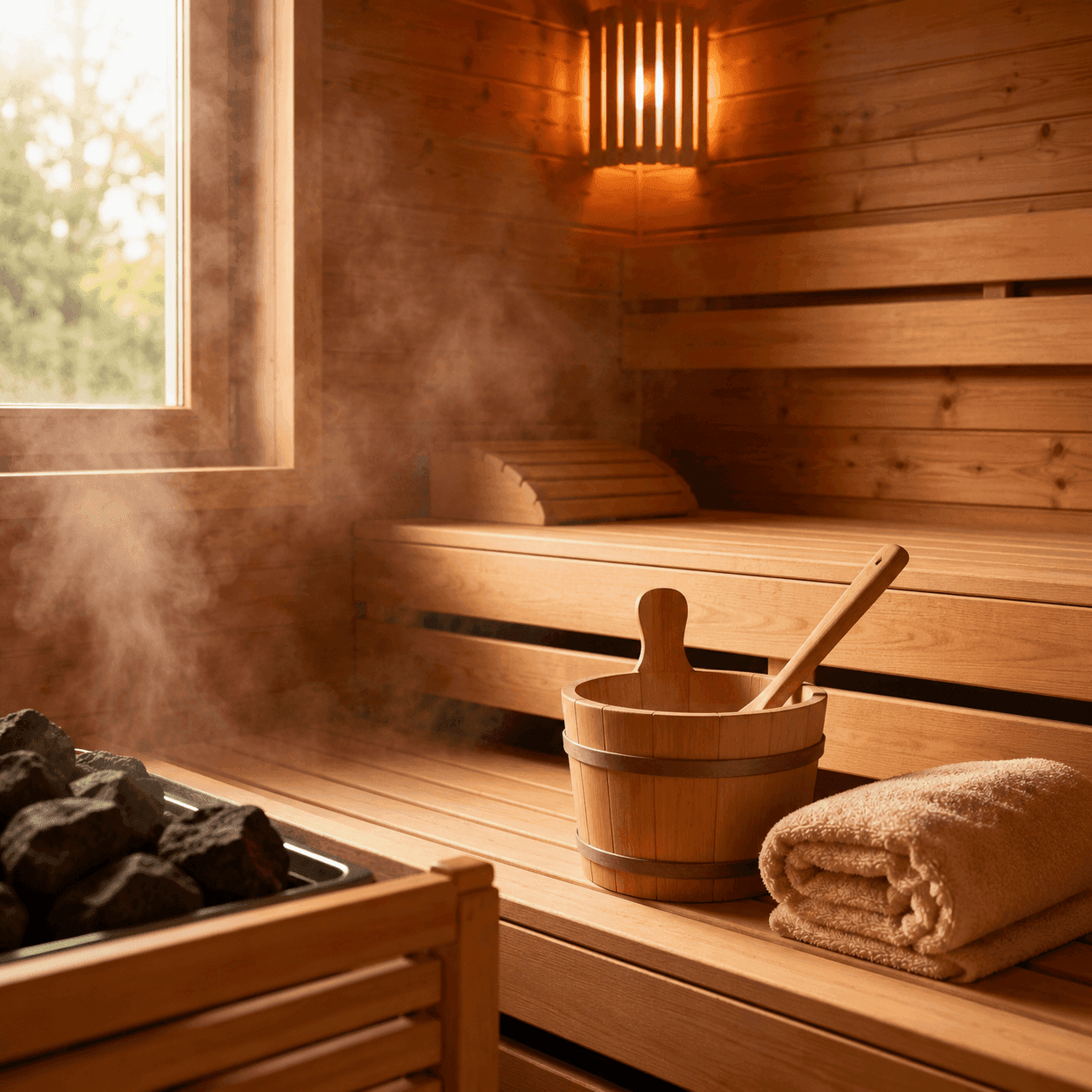
Traditional Finnish sauna. Heats the air to 80-100°C (176-212°F). Wood stove or electric heater, with optional water on stones to produce steam (the löyly that defines Finnish sauna culture). Air temperature is high; the body is heated indirectly through the hot air. Strong, fast sweat response. The Finnish cohort data is from traditional saunas at these temperatures, so this is the format with the strongest population-level evidence behind it.
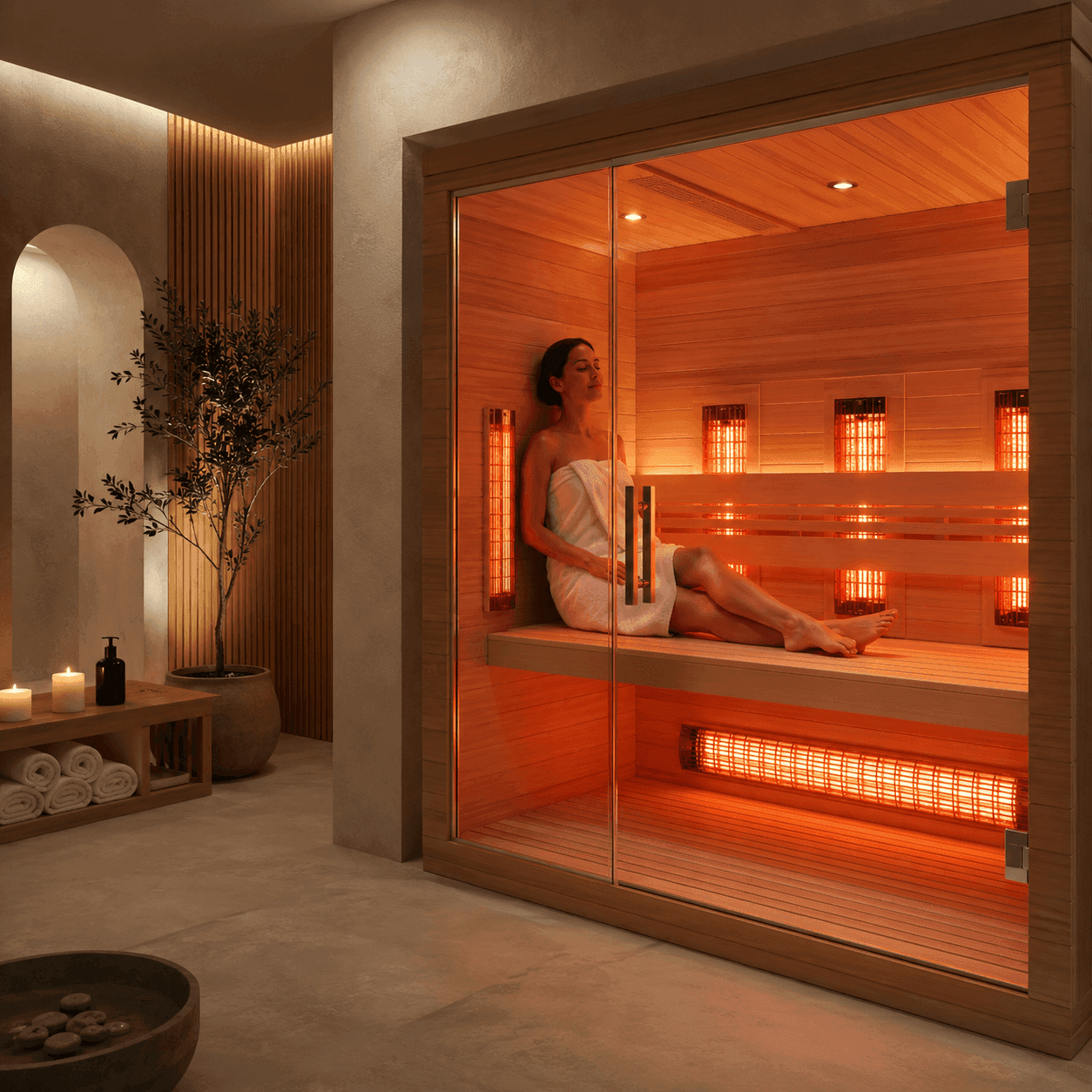
Infrared sauna. Heats the body directly with infrared radiation, while keeping the air at a much lower temperature (50-70°C, or 120-160°F). Different subjective experience — the air is breathable without the burn of traditional sauna, but the penetration into the body is deeper. The cardiovascular and HSP literature is thinner than for traditional sauna, but what exists is generally favorable. The detoxification data from Genuis’s work was largely conducted using infrared sauna and is some of the strongest evidence behind it.
Practically: traditional is the gold-standard format with the deepest evidence base, but requires a commercial sauna or a substantial home installation. Infrared is more accessible (portable tents, sauna blankets, smaller home units) and easier to use for longer sessions without the cardiovascular intensity. For most people not living in a sauna-culture country, infrared is the practical entry point.
The dose — what produced the Finnish results
The cohort data is clean enough to pull specific recommendations out of:
Frequency. 4 to 7 sessions per week. Two sessions per week shows some benefit; one shows little; daily shows the strongest. If you’re going to install or buy a sauna, the calculation only works if you’re going to use it most days.
Duration per session. 19+ minutes per session at sauna temperatures was associated with the strongest mortality reduction in the Finnish data. 11-19 minutes showed benefit but less. Under 11 minutes is not enough.
Temperature. The studied range is 79-99°C (175-210°F). Lower temperatures (infrared) require longer sessions to produce equivalent heat-shock-protein elevation. Roughly 30 minutes at 60°C (140°F) in an infrared sauna is comparable in effect to 20 minutes at 80°C in a traditional one.
The minimum-effective protocol that captures most of the benefit, then: four 20-minute sessions per week at traditional sauna temperatures, or four 30-minute sessions per week at infrared temperatures. Five or more sessions per week, if you can fit them in, shows additional benefit. The curve is monotonic; there’s no point at which more becomes harmful (within sensible safety limits).
Hydration and electrolytes
A 20-minute sauna session can produce a pound of sweat. That’s a substantial fluid loss and an even more substantial sodium, potassium, and magnesium loss. The fatigue, headache, and lightheadedness that some people associate with sauna are almost always electrolyte issues, not inherent intolerance to heat.
The simple intervention: drink electrolyte water during and after the session. The same options covered in the fasting article work here — Berg’s Electrolyte Powder, LMNT, or a pinch of Redmond Real Salt in a glass of water with a magnesium supplement. Replace the fluid lost (a pound of sweat is roughly 16 ounces) plus the sodium and minerals that went with it.
Sauna plus cold — the contrast protocol
The Finnish tradition pairs sauna with a cold plunge or a roll in the snow. The Russian tradition does the same. The Japanese onsen culture alternates hot and cold pools. There’s a reason multiple traditions converged on the pattern: the alternation produces a vascular response (vasodilation in heat, vasoconstriction in cold) that nothing else replicates, and the subjective effect on energy, mood, and recovery is difficult to describe to someone who hasn’t tried it.
For people who have access to both, the standard protocol is 20 minutes hot, 1-3 minutes cold, repeated 2-3 times. The cold can be a plunge, a cold shower, or just stepping outside in winter. The benefits over sauna alone include further increases in heat-shock proteins, additional release of cold-shock proteins (a parallel system with related benefits), substantial norepinephrine release (mood and focus), and what most people describe as an enduring sense of calm and well-being that lingers for hours afterward.
This isn’t required to capture the basic sauna benefits documented in the Finnish data — those used sauna alone. But it’s a real additional layer that’s worth knowing about for anyone with access to both.
Where to start
Not everyone has a built-in traditional sauna, so the realistic setup for most people is what’s accessible: an infrared sauna blanket at home for most sessions, supplemented by a traditional sauna at a local gym when the schedule allows.
A good target frequency is four or five sessions per week. Blanket sessions run 30-40 minutes at the top temperature setting, often in the evening while reading or listening to something quiet, with a full liter of electrolyte water before starting and another after finishing. Showering immediately afterward matters — it rinses off the toxicants that came out through sweat, which otherwise re-absorb.
Once or twice a week, weather and gym access permitting, a traditional sauna session with contrast cold — 20 minutes hot, two minutes cold (a cold shower works fine here), repeated three times — produces the most pronounced after-effect: energy, clarity, a lift in mood. It is the version most worth trying at least once for anyone with access.
One pattern many people come to rely on: a long sauna session at the first sign of an oncoming cold or flu, with extra electrolytes and rest. The combination of heat (mild antimicrobial effect, simulated fever), elevated heat-shock proteins, and immune support seems to abort or shorten a good share of colds that would otherwise take hold. Not a clinical claim — a consistent observation that aligns with the broader sauna-and-immunity literature.
Products I’d recommend
The right product depends on whether you’re looking for an accessible entry point, a serious daily home setup, or a commercial-grade installation.
The most accessible serious infrared option. Folds away when not in use, uses far-infrared heating elements at a meaningful intensity, third-party tested for low EMF. The default in the at-home space for good reason — build quality and heating performance are both real. The right starter product for most people.
The premium home cabin option for anyone committing to a built-in unit. Triple-wavelength infrared (near, mid, far), low-EMF construction, the brand most cited in the integrative-medicine community. A substantial investment, but the right product if this becomes a daily practice for a household.
The main alternative to Sunlighten in the premium home market — comparable quality, slightly different feature set, similar pricing, with a lifetime warranty on heaters. Worth comparing both if you’re shopping in the premium range.
The budget option for testing whether sauna fits your life before committing to a premium unit. A folding tent with a chair inside, infrared heating elements, head-out design. Build quality is what you’d expect at the price, but it’ll get you through several years of regular use and prove out the practice.
The practical electrolyte support — a pinch in a glass of water before, during, and after sessions covers the sodium loss without requiring a premade electrolyte mix. Combine with a magnesium supplement for the rest of the mineral profile.
The bottom line
The Finnish sauna cohort data is the most consequential longevity research most people have never heard of: 40% all-cause mortality reduction, 50% cardiovascular death reduction, 66% dementia reduction at 4-7 sessions per week. The mechanism runs largely through heat-shock proteins, with additional cardiovascular conditioning and a real (if modest) contribution to toxin elimination via sweat. Traditional sauna has the strongest evidence base; infrared is the practical entry point for most non-Finnish-cultural settings.
The protocol is straightforward: four or more sessions per week, 20+ minutes per session at traditional sauna temperatures (or 30+ at infrared), with adequate electrolyte replacement and the optional addition of cold-contrast for the further effects. Few interventions in this entire section have an evidence-to-effort ratio this favorable. If you can install one, or get consistent access to one, this is a practice that compounds over decades.
Sources & further reading
Finnish sauna cohort and cardiovascular outcomes
- Laukkanen T, Khan H, Zaccardi F, Laukkanen JA. Association between sauna bathing and fatal cardiovascular events and all-cause mortality. JAMA Internal Medicine. 2015;175(4):542-8. — the foundational paper.
- Laukkanen T, Kunutsor S, Kauhanen J, Laukkanen JA. Sauna bathing is inversely associated with dementia and Alzheimer's disease in middle-aged Finnish men. Age and Ageing. 2017;46(2):245-249.
- Zaccardi F, Laukkanen T, Willeit P, et al. Sauna bathing and incident hypertension: a prospective cohort study. American Journal of Hypertension. 2017;30(11):1120-1125.
- Laukkanen JA, Laukkanen T, Kunutsor SK. Cardiovascular and other health benefits of sauna bathing: a review of the evidence. Mayo Clinic Proceedings. 2018;93(8):1111-1121.
Heat shock proteins
- Krause M, Heck TG, Bittencourt A, et al. The chaperone balance hypothesis: the importance of the extracellular to intracellular HSP70 ratio to inflammation-driven type 2 diabetes, the effect of exercise, and the implications for clinical management. Mediators of Inflammation. 2015;2015:249205.
- Iguchi M, Littmann AE, Chang SH, et al. Heat stress and cardiovascular, hormonal, and heat shock proteins in humans. Journal of Athletic Training. 2012;47(2):184-90.
Detoxification through sweat
- Genuis SJ, Birkholz D, Rodushkin I, Beesoon S. Blood, urine, and sweat (BUS) study: monitoring and elimination of bioaccumulated toxic elements. Archives of Environmental Contamination and Toxicology. 2011;61(2):344-57.
- Genuis SJ, Beesoon S, Birkholz D, Lobo RA. Human excretion of bisphenol A: blood, urine, and sweat (BUS) study. Journal of Environmental and Public Health. 2012;2012:185731.
- Genuis SJ, Beesoon S, Lobo RA, Birkholz D. Human elimination of phthalate compounds: blood, urine, and sweat (BUS) study. The Scientific World Journal. 2012;2012:615068.
Authority figures and popularization
- Patrick R. Public commentary on Laukkanen sauna research, heat shock proteins, and integrative health — FoundMyFitness podcast and website.
- Huberman A. Sauna and heat protocols, contrast therapy — Huberman Lab podcast.
- Sircus M. Public writing on sauna therapy alongside transdermal magnesium and detoxification — drsircus.com.