
Health · Branded Products · ~9 min read
Tangy Tangerine — the case for full-spectrum mineral supplementation.
The Joel Wallach lineage, why his “90 Essential Nutrients” framework is more right than the mainstream nutrition establishment lets on, and where Tangy Tangerine actually fits.
By George Hinestrosa · Personal experience & independent research


Joel Wallach is one of the more polarizing figures in the alternative health space. A veterinarian and naturopathic doctor by training, he spent much of his career performing autopsies on animals at the St. Louis Zoo, documenting consistent patterns of mineral deficiency he argued were driving the same diseases he saw in the human population. His 1994 lecture Dead Doctors Don’t Lie — an hour-long argument that mineral deficiency is the underappreciated root of most chronic disease — became one of the most widely circulated alt-health audio recordings of its era. The supplement company he founded, Youngevity, built much of its flagship product line around his “90 Essential Nutrients” framework. Beyond Tangy Tangerine, a powdered multimineral drink, is the most popular of those products.
Wallach’s claims about specific diseases range from defensibly directional to substantially overreaching. The honest reader needs to distinguish them. This article does that. The case for full-spectrum mineral supplementation holds up on its own merits without needing to endorse every disease-reversal story Wallach has associated with his protocols.
What follows is a walk through the soil-depletion argument that genuinely grounds the case, the limitations of the standard multivitamin landscape that Tangy Tangerine and similar products are responses to, what’s actually in the product, the honest treatment of where Wallach overreaches, and the alternative products in the same category worth knowing about.
The soil-depletion case
The strongest part of Wallach’s argument is the one about soil. Modern industrial agriculture optimizes for three macronutrients in fertilizer — nitrogen, phosphorus, potassium (NPK) — because these are what plants need most for growth and what farmers can most directly trade for yield. The wider mineral spectrum that pre-modern soils contained — selenium, zinc, magnesium, chromium, manganese, boron, molybdenum, copper, and the broader trace elements — isn’t replenished by NPK fertilization. Over decades of intensive farming, the mineral content of the soil progressively depletes.
This isn’t a fringe claim. USDA data comparing the mineral content of common vegetables in 1950 versus 1999 (Davis 2004 in the Journal of the American College of Nutrition) showed measurable declines across calcium, iron, phosphorus, riboflavin, and vitamin C in the same crops grown in the same regions. A 2007 review by Marles in the Journal of Food Composition and Analysis reached similar conclusions about a broader mineral spectrum. The numbers vary by study, but the direction is consistent: a tomato today contains substantially fewer minerals than a tomato in 1950 did.
Combine soil mineral depletion with the modern shift away from organ meats (which traditionally supplied concentrated minerals), away from bone broth and traditional preparations, away from naturally mineral-rich foods like seaweed and shellfish (which alt-health framing complicates, see the clean/unclean foods article), and toward processed foods stripped of most of their original mineral content — the modern diet has a measurable mineral problem at the population level.
This is the foundation Wallach builds on. The specific claim that mineral deficiency is the primary driver of every chronic disease is overreach. The broader claim that modern minerals intake is widely insufficient and that supplementation makes sense for many people is well-supported.
The 90 Essential Nutrients framework
Wallach’s “90 essential nutrients” count breaks down as 60 minerals, 16 vitamins, 12 essential amino acids, and 3 essential fatty acids. The mineral count is the most expansive part of his framework and the most controversial. Mainstream nutrition science recognizes roughly 16-20 essential minerals depending on the source — the others on Wallach’s list are either considered non-essential (manganese, vanadium, chromium are at the edge), trace contaminants (cadmium, lead would not be on most lists), or interesting but not established (boron is a good example of a mineral with strong functional arguments but no formal essentiality designation).
The honest read: Wallach’s count includes some minerals (chromium, boron, selenium) that mainstream nutrition has subsequently substantially upgraded in importance. It also includes some that probably don’t need supplementation in healthy individuals. The general principle — that a broader mineral spectrum than NPK-fed conventional produce delivers is worth supplementing — is sound. The specific number 90 is more rhetorical than scientific.
What’s actually in Tangy Tangerine
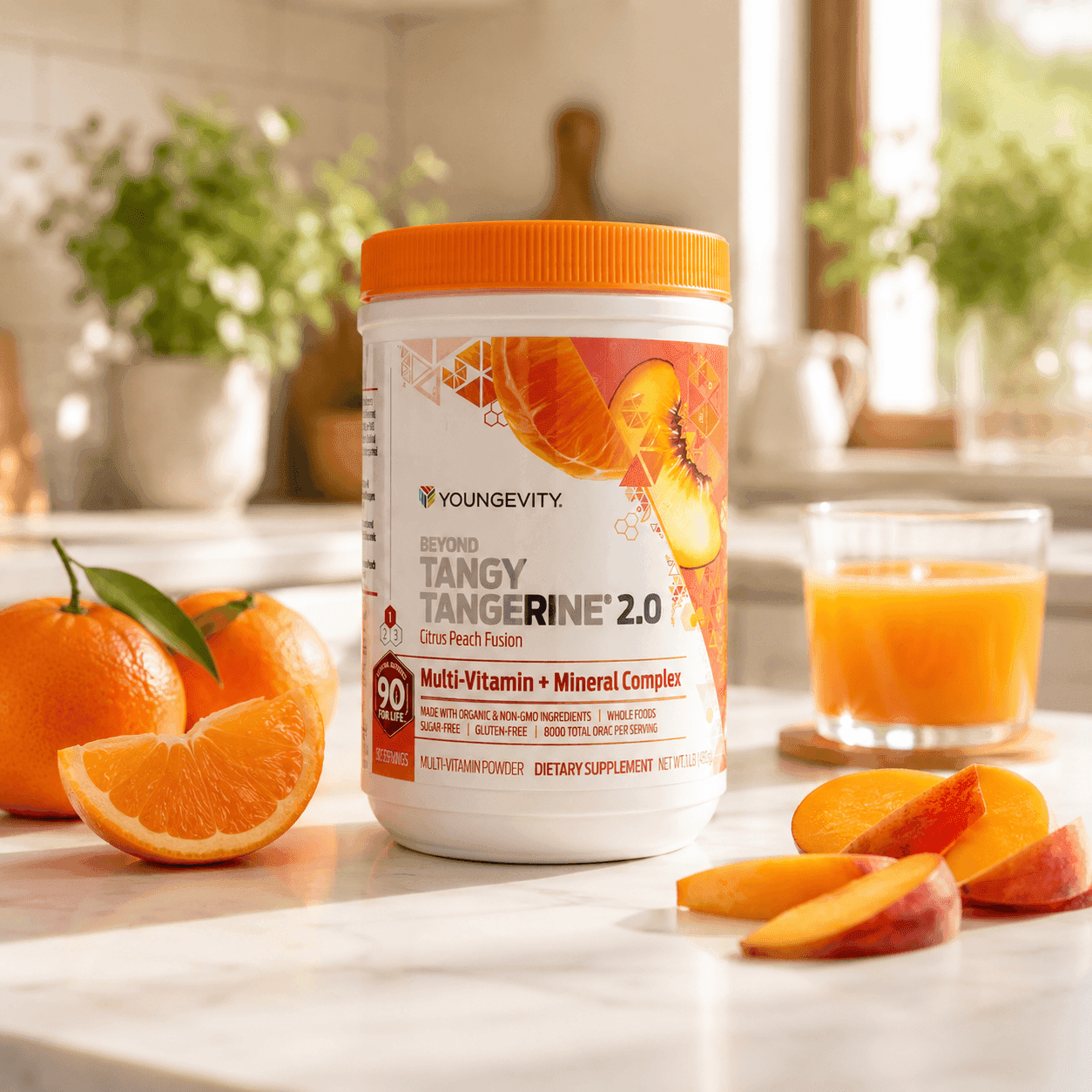
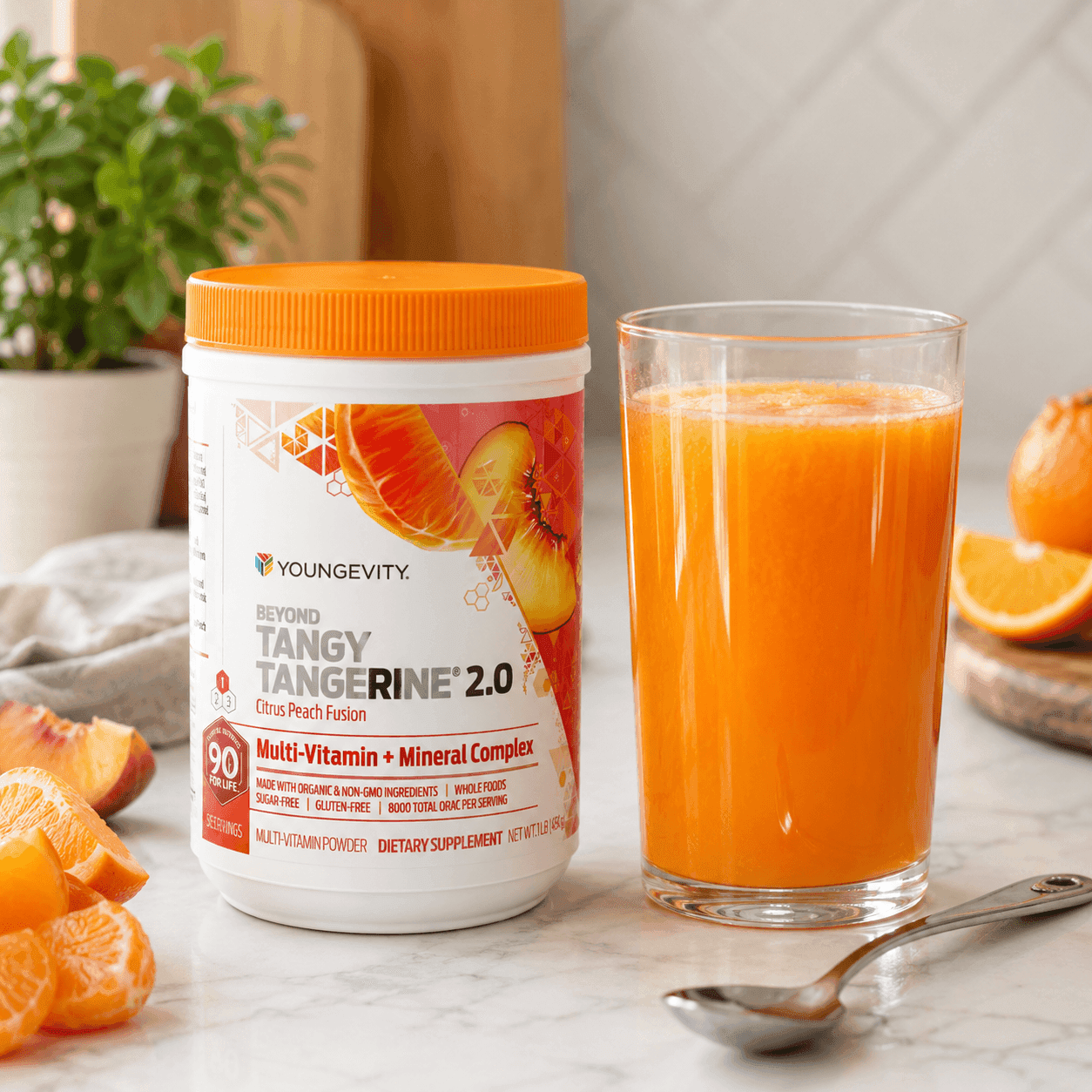
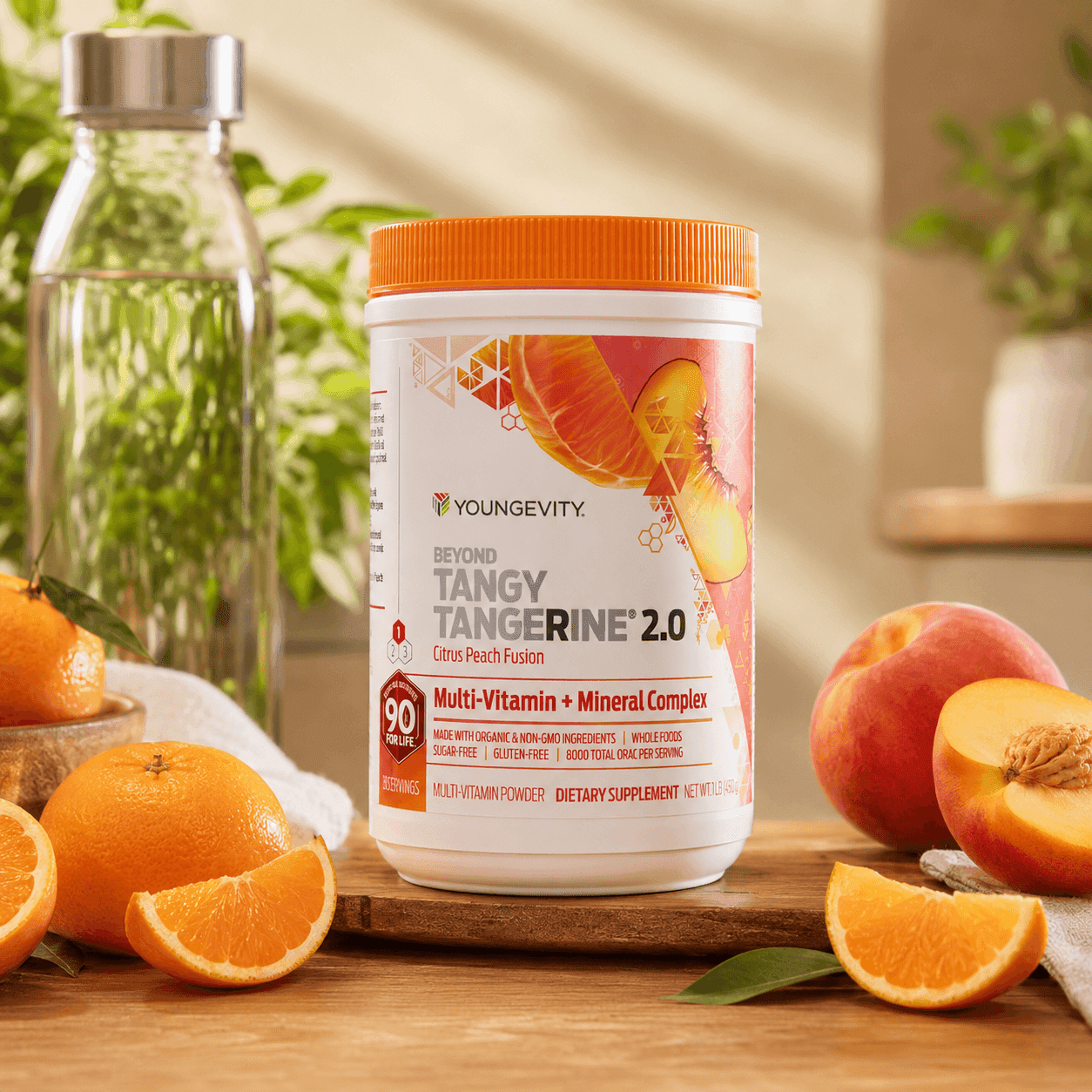
Beyond Tangy Tangerine 2.0 is a powdered multivitamin/multimineral drink mix that combines:
A wide spectrum of trace minerals derived from plant sources (the “plant-derived” angle is part of Wallach’s positioning — the argument being that minerals in plant matrices are more bioavailable than the inorganic mineral salts in most multivitamins). The full panel of major B vitamins. Vitamin C at meaningful doses. Vitamin D, vitamin E, vitamin K. Magnesium, calcium, and the other major minerals. A collection of amino acids. Various plant-derived antioxidants and phytonutrients. Natural citrus flavoring with stevia for sweetening.
The taste is the product’s most distinctive feature — a strong tangerine flavor that users tend to either love or find too intense. One scoop in 6-8 oz of cold water is the standard dose, taken once or twice daily.
The case for the product: it delivers a broad mineral and vitamin spectrum in a single daily dose, in a form that’s actually palatable (which matters for adherence over years), with mineral sources that may be more bioavailable than the cheaper synthetic forms in supermarket multivitamins. It’s been on the market for decades with a stable formulation, which is its own kind of vote of confidence.
The case against: it’s sold through a network marketing model (Youngevity is structured as an MLM), which means the retail price reflects the multi-level commission structure rather than the cost of the ingredients alone. Comparable mineral and vitamin coverage can be assembled from non-MLM brands at lower total cost.
Where Wallach overreaches
The honest assessment requires naming the parts of Wallach’s positioning that don’t hold up:
The claim that mineral deficiency is the primary cause of essentially every chronic disease — type 2 diabetes, cardiovascular disease, Alzheimer’s, autoimmune conditions, cancer — is overreach. Mineral status is one factor among many in chronic disease etiology. Supplementing minerals helps with the deficiency component; it does not reverse advanced disease states the way some of Wallach’s lecture content claims.
The specific anecdotes about disease reversal in the popular lectures rarely come with documented case histories that would meet clinical evidentiary standards. They’re persuasive as rhetoric, less so as evidence.
The MLM distribution model has its own dynamics that have nothing to do with whether the product works. Network marketing structures incentivize recruitment and aggressive testimonial generation, which means the surrounding promotional ecosystem tends to amplify claims beyond what the underlying product supports.
None of these are reasons to dismiss the soil- depletion argument or the case for broad-spectrum mineral supplementation. They are reasons to engage with the underlying argument on its merits rather than through the layered marketing it arrives in.
Where Tangy Tangerine fits
For someone who’s already addressing the major mineral targets individually — magnesium glycinate at night, zinc with dinner, boron daily, iodine on protocol, vitamin D seasonally, salt with electrolytes during exercise and fasting — Tangy Tangerine is largely redundant. The individual mineral approach offers more control over specific doses and is generally more cost-effective at the same total intake.
For someone who isn’t doing the individual mineral protocol, who wants a single daily convenience product that covers the broad spectrum, and who finds the taste acceptable, Tangy Tangerine is a reasonable choice. It does what it claims to do: deliver a wide mineral and vitamin spectrum in one daily drink.
The honest sequence for most people: build the foundation with food (organ meats occasionally, grass-finished beef, pasture-raised eggs, mineral-rich vegetables, seaweed if you tolerate it, real salt). Add the specific targeted supplements covered throughout this section (magnesium glycinate, zinc, boron, iodine, vitamin D). Use a broad-spectrum product like Tangy Tangerine if it fits your life and you want the insurance-policy effect of additional trace minerals, knowing that you’re paying for convenience and the MLM markup.
Products I’d recommend
The product itself, plus the alternatives in the same category that are worth knowing about.
Youngevity Beyond Tangy Tangerine 2.0 is the original Wallach-protocol product. Plant- derived mineral spectrum, full vitamin coverage, amino acids, citrus flavoring with stevia. Premium price reflects the MLM structure. If you want the original protocol, this is the original protocol.
Dead Doctors Don’t Lie by Joel Wallach is the foundational text laying out the framework. Read it understanding the overreach noted above — Wallach is more right about soil depletion and mineral importance than the mainstream lets on, and more wrong about specific disease reversal than the popular framing claims. Worth reading critically; the soil-depletion argument is the durable core.
Pure Encapsulations O.N.E. Multivitamin is the conventional-pharmacy alternative for broad-spectrum coverage in capsule form. Third- party tested, well-formulated, no MLM markup. Less comprehensive on trace minerals than Tangy Tangerine, more rigorous on the included nutrients.
Thorne Basic Nutrients 2/Day is the more affordable practitioner-grade option. Two capsules per day cover the vitamin and major mineral spectrum with bioavailable forms (methyl folate, P-5-P for B6, methylcobalamin for B12). Doesn’t hit as many trace minerals as Tangy Tangerine but is a sensible foundation for most people.
Ancestral Supplements Beef Organs is the food-based alternative for trace mineral and fat-soluble vitamin coverage. Freeze-dried grass-fed liver, kidney, heart, pancreas, and spleen in capsules. Organ meats were the ancestral mineral source; for people who can’t bring themselves to eat actual liver weekly, this is the workaround. Different mechanism from Tangy Tangerine (whole food matrix rather than plant- derived minerals) but addressing the same gap.
The bottom line
Joel Wallach’s framework is right about more than the mainstream nutrition establishment credits and wrong about more than the popular alt-health framing acknowledges. The soil- depletion case is solid. The 90-nutrient catalogue is rhetorical but directionally useful. The specific disease-reversal claims tied to the Youngevity product line are overreach.
Tangy Tangerine is a legitimately broad-spectrum mineral and vitamin product delivered in a palatable daily drink format. For the right person — not already on a comprehensive individual mineral protocol, comfortable with the MLM purchasing model, willing to pay the premium for convenience — it’s a defensible choice. For most readers of this section, who’ve already addressed the major minerals individually, it’s redundant.
The underlying truth Wallach was pointing at — that the modern diet, even when ostensibly healthy, often runs short on the broader mineral spectrum the body actually requires — is the durable insight worth carrying forward. Whether you address it through Tangy Tangerine, through individual mineral supplementation, through organ meats and bone broth, or through some combination, the gap is real and worth filling.
Sources & further reading
Soil mineral depletion
- Davis DR, Epp MD, Riordan HD. Changes in USDA food composition data for 43 garden crops, 1950 to 1999. Journal of the American College of Nutrition. 2004;23(6):669-82.
- Marles RJ. Mineral nutrient composition of vegetables, fruits and grains: The context of reports of apparent historical declines. Journal of Food Composition and Analysis. 2017;56:93-103.
- Thomas D. The mineral depletion of foods available to us as a nation (1940-2002): A review of the 6th Edition of McCance and Widdowson. Nutrition and Health. 2007;19(1-2):21-55.
Wallach and the Youngevity lineage
- Wallach JD. Dead Doctors Don't Lie. 1994 (audio lecture and subsequent book editions). The foundational presentation of the framework.
- Wallach JD, Lan M. Rare Earths: Forbidden Cures. Wellness Publications, 1994. The book-length version of the case.
Mainstream multivitamin literature
- Mursu J, Robien K, Harnack LJ, et al. Dietary supplements and mortality rate in older women: the Iowa Women's Health Study. Archives of Internal Medicine. 2011;171(18):1625-33.
- Gaziano JM, Sesso HD, Christen WG, et al. Multivitamins in the prevention of cancer in men: the Physicians' Health Study II randomized controlled trial. JAMA. 2012;308(18):1871-80.