
Health · Whole Food · ~10 min read
Turmeric — curcumin, inflammation, and the piperine trick.
Why curcumin barely absorbs without help, what black pepper does to that problem, and the recent liver-tox concern honest people in this space should know about.
By George Hinestrosa · Personal experience & independent research
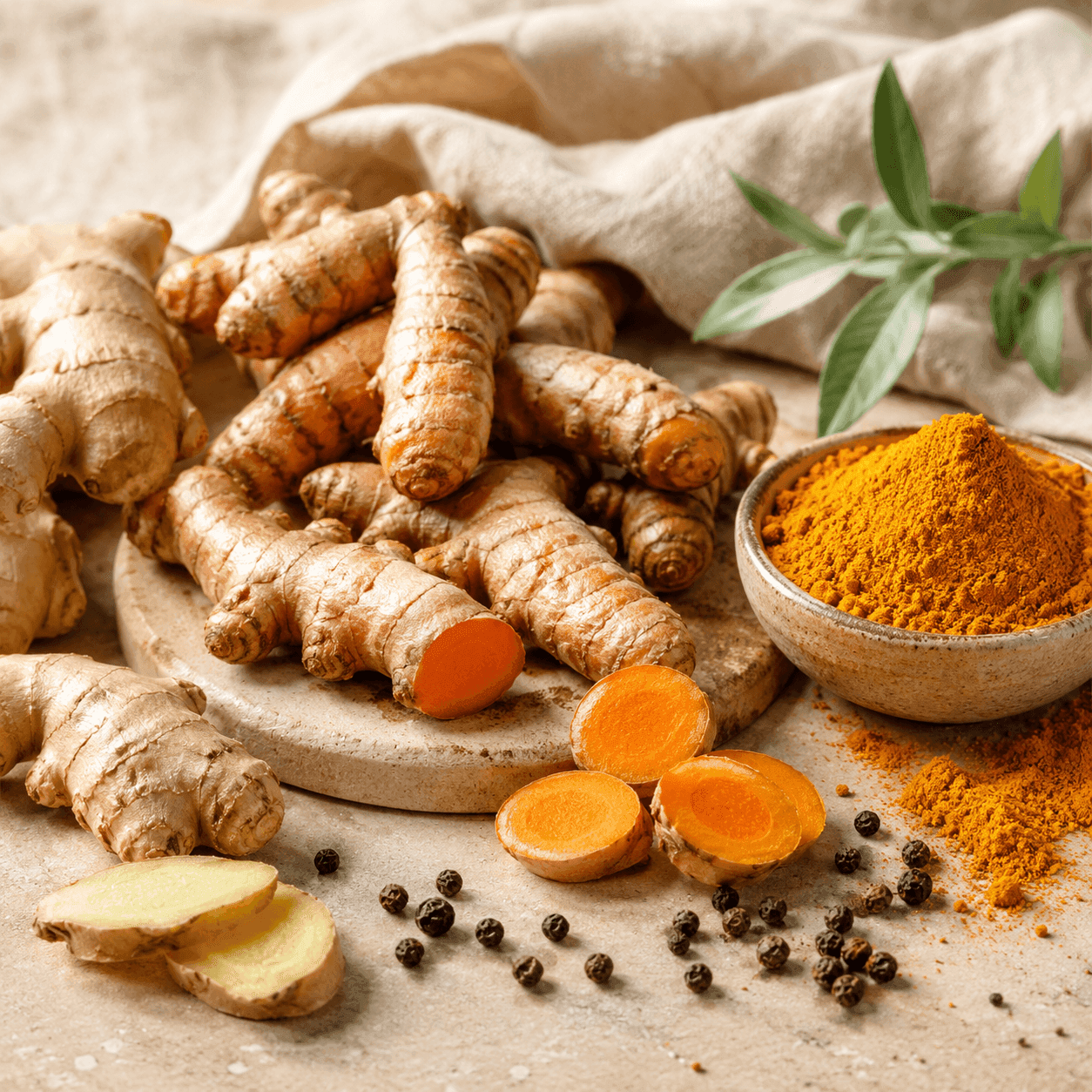
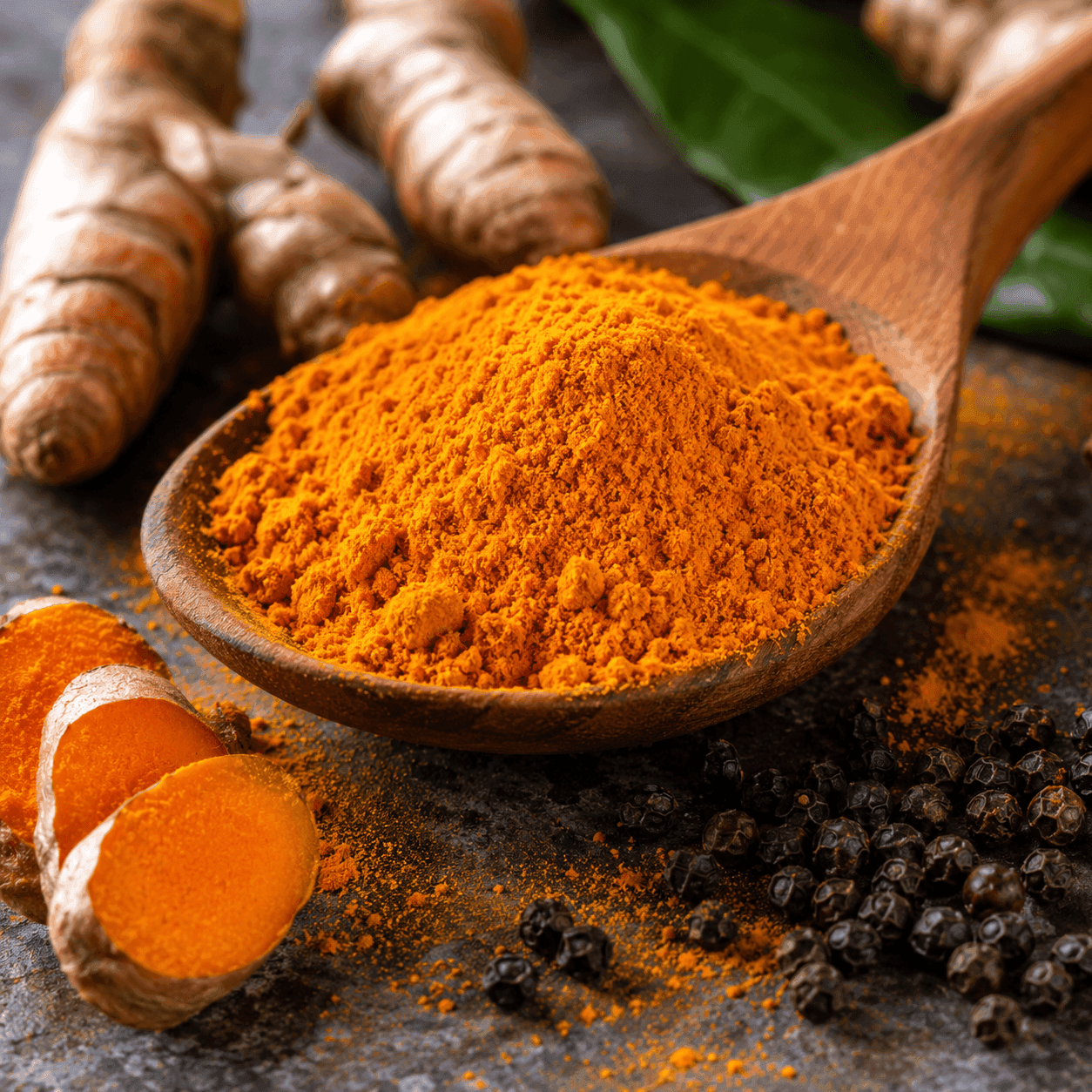
Turmeric is the rhizome that gives curry its color, that Ayurveda has used for four thousand years, and that modern Western research has spent the last two decades slowly catching up to. Most of the clinical literature converges on a small family of compounds called curcuminoids — primarily curcumin, the yellow-pigmented molecule responsible for nearly all of turmeric’s medicinal activity.
Curcumin is one of the most-studied natural compounds in human nutrition. Anti-inflammatory through multiple independent mechanisms. Antioxidant. Anti-cancer in cell and animal models. Documented neurological protection. Cardiovascular support. Liver protection at appropriate doses (and liver stress at inappropriate ones). The therapeutic potential is real.
The catch is that curcumin is one of the worst-absorbed nutrients in the entire food supply. The bioavailability from plain turmeric is roughly 1–2% — meaning 98% of what you eat or swallow leaves the body unused. Almost the entire story of how to actually benefit from turmeric is the story of how to solve that absorption problem.
What curcumin does
- Selective COX-2 inhibition. The same anti-inflammatory mechanism as ginger and quercetin (and as ibuprofen, but without the COX-1 collateral damage). The basis for curcumin’s joint-pain and arthritis applications.
- NF-kB pathway modulation. NF-kB is the master transcription factor for inflammation; chronic activation drives most modern inflammatory disease. Curcumin downregulates it broadly.
- Antioxidant action. Direct free-radical scavenging plus upregulation of the body’s endogenous antioxidant enzymes (superoxide dismutase, catalase, glutathione peroxidase).
- Anti-cancer mechanisms. In vitro and animal-model studies have documented effects on apoptosis induction, angiogenesis inhibition, and metastasis suppression across multiple cancer cell lines. Human trial data is preliminary but growing.
- Neuroprotection. Crosses the blood-brain barrier. Inhibits the amyloid plaque formation associated with Alzheimer’s disease in animal models. The striking Indian epidemiology — significantly lower Alzheimer’s rates than the U.S. — is partly attributed to lifelong curcumin intake from daily curry.
- Liver support. At appropriate doses, curcumin upregulates phase II detoxification enzymes and protects against several hepatotoxins. (At inappropriate doses, see the disclaimer.)
- Cardiovascular. Improved endothelial function, modest cholesterol effects, anti-platelet action.
- Mood and depression. Multiple randomized trials have shown high-dose curcumin comparable to standard antidepressants for moderate depression, with fewer side effects.
The bioavailability problem — and the piperine trick
Plain curcumin is poorly absorbed in the gut, rapidly metabolized by the liver, and quickly excreted. Even substantial oral doses produce only modest plasma concentrations. This was the central frustration of curcumin research through the 1990s — the in-vitro effects were stunning, the in-vivo human effects were modest, and the gap traced almost entirely to absorption.
In 1998, Indian researchers (Shoba et al.) published the landmark finding: combining curcumin with piperine — the active alkaloid in black pepper — increased curcumin’s bioavailability by 2,000%. The mechanism is dual: piperine inhibits the glucuronidation enzymes in the liver that normally metabolize curcumin into excretable forms, and it slows intestinal transit slightly, giving the gut more time to absorb.
This single finding transformed turmeric supplementation. Almost every modern curcumin product on the market is either:
- Combined with piperine (often branded as Bioperine)
- Phospholipid-encapsulated (Meriva phytosome) for membrane absorption
- Combined with turmeric’s native essential oils (BCM-95)
- Formulated as colloidal nanoparticles (Theracurmin)
- Solid-lipid encapsulated (Longvida)
Each of these approaches achieves 10–50x improved bioavailability over plain curcumin. The differences between them matter less than the difference between any enhanced curcumin and plain turmeric powder you sprinkle on rice.
The traditional approach — fat plus heat plus pepper
What the alt-health community sometimes forgets is that Indian cooking has been solving the curcumin absorption problem for four thousand years without knowing the biochemistry. The traditional preparation involves three elements that each independently improve bioavailability:
- Fat. Curcumin is fat-soluble. Cooked into ghee, coconut oil, or tempered into a curry base with oil, absorption rises substantially.
- Heat. Brief cooking (a minute or two in hot oil) appears to increase the bioavailability of the curcuminoids relative to raw consumption.
- Black pepper. Almost every traditional Indian dish containing turmeric also contains black pepper. The combination isn’t culinary coincidence — it’s the piperine effect Shoba et al. characterized in 1998.
Daily curry, in other words, is one of the most bioavailable curcumin delivery systems ever developed. The traditional preparation is the original enhanced formulation. Modern supplements just concentrate and standardize what Indian cooking has always done.
Clinical applications worth knowing
- Osteoarthritis. Multiple randomized trials have shown curcumin at 500–1,500 mg daily comparable to ibuprofen or diclofenac for knee osteoarthritis pain, with substantially fewer GI side effects. The effect builds over 4–8 weeks; this isn’t acute relief.
- Rheumatoid arthritis. Smaller trials suggest curcumin can complement conventional treatment for symptom reduction.
- Depression. A 2013 Phytotherapy Research trial compared 1,000 mg curcumin per day to fluoxetine (Prozac) for major depression; the curcumin group’s response was statistically equivalent, with fewer side effects. Multiple replications since.
- Ulcerative colitis. The 2015 Lang et al. trial showed curcumin substantially improved remission rates when added to standard treatment, suggesting genuine value in inflammatory bowel disease.
- Type 2 diabetes prevention. A 9-month Thai trial in prediabetic adults showed curcumin prevented progression to diabetes in 0% of the treatment group vs 16% of the placebo group. Striking numbers in a small but well-controlled study.
- Cardiovascular. Improvements in endothelial function comparable to moderate aerobic exercise in older adults.
- Post-exercise recovery. Reduces delayed-onset muscle soreness in athletic populations, similar in mechanism to ginger’s effect.
- Topical use. Turmeric paste has traditional Ayurvedic use for minor wounds, skin infections, and inflammatory skin conditions. The yellow stain on skin and fabric is the famous drawback.
Forms
- Fresh turmeric root. Most flavorful, mildest in pungency, easy to grate into curries, smoothies, juices. Looks like ginger with bright orange flesh. Increasingly available in grocery stores. Stains everything yellow.
- Dried turmeric powder. The standard kitchen spice form. Versatile, shelf-stable, deeply versatile in cooking. Lower per- gram bioavailability than fresh because the essential oils are diminished, but still useful as the daily-curry baseline.
- Standardized curcumin extract. Concentrated curcumin (typically 95% curcuminoids), the supplement-form. Always combine with absorption enhancement, either built-in or from the meal you take it with.
- Enhanced-absorption extracts. The current generation of curcumin supplements (Meriva, BCM-95, Theracurmin, Longvida) use various technologies to dramatically improve bioavailability. See the next section.
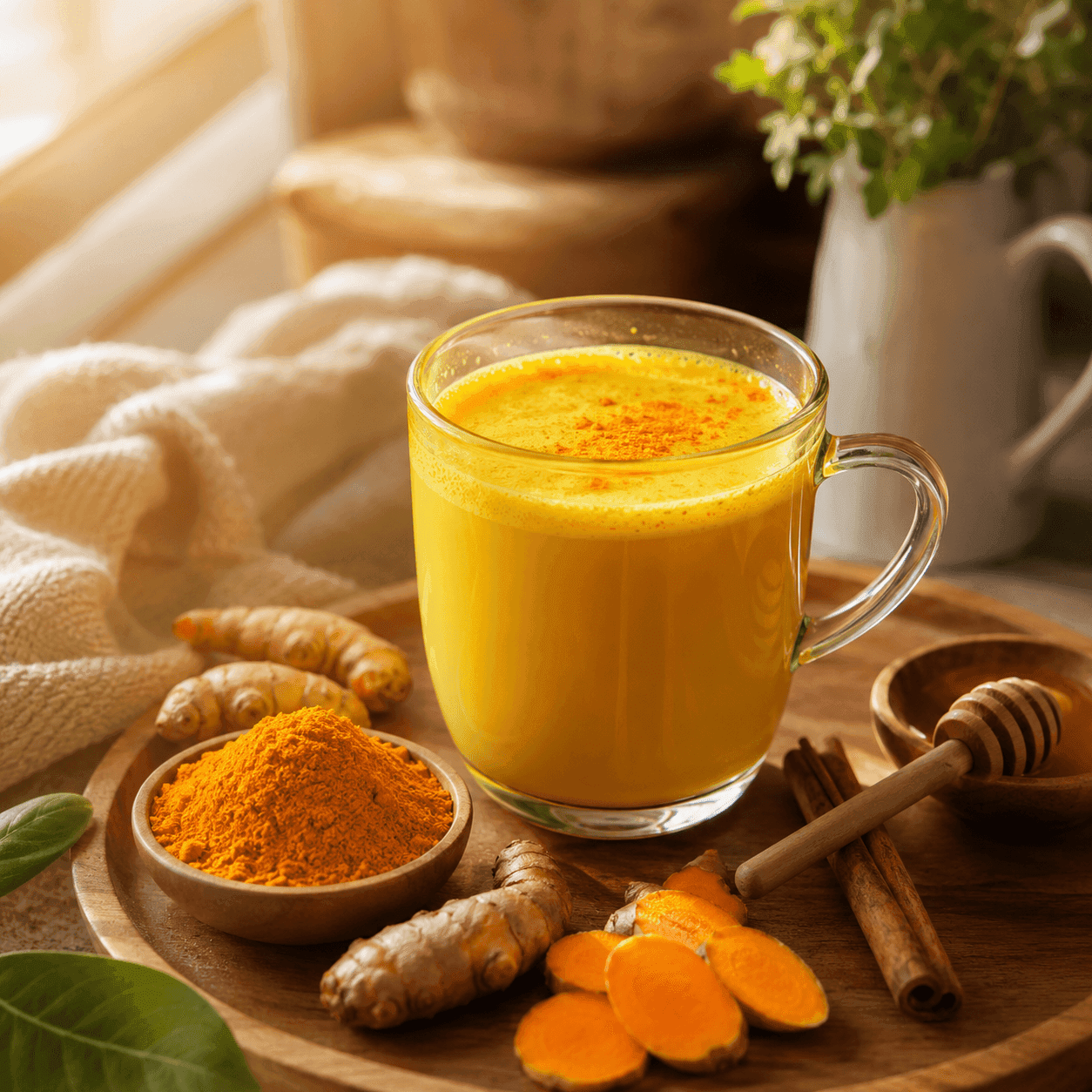
- Golden milk (turmeric latte). The traditional Ayurvedic preparation: turmeric powder simmered in milk (or coconut milk) with cracked black pepper, ginger, cardamom, and sometimes honey. The combination delivers all three absorption enhancers (fat, heat, pepper) plus additional anti-inflammatory cofactors. One of the most pleasant ways to take turmeric daily.
Enhanced-absorption supplements
- Curcumin + Bioperine (piperine). The original enhanced formulation. Piperine (5–20 mg) added to a curcumin (500–1,000 mg) dose. Achieves the 2,000% bioavailability boost. The cheapest enhanced approach, widely available. Note: the piperine enhancement is also the source of the liver-tox concerns covered in the disclaimer; rotate with non-piperine forms for long-term use.
- Meriva (Curcumin Phytosome). Curcumin bound to phosphatidylcholine in a phospholipid complex. Roughly 30x bioavailability vs plain curcumin without using piperine. Well-studied clinically. Thorne’s Meriva-SR is the standard product. The form to use for long-term daily supplementation given the absence of piperine.
- BCM-95 (Curcugreen). Curcumin combined with turmeric’s native essential oils (turmerones). 7–10x bioavailability, good clinical track record. Doctor’s Best is the most accessible brand.
- Theracurmin. Colloidal nanoparticle technology. Roughly 27x bioavailability over plain curcumin. Higher cost but well-validated.
- Longvida. Solid-lipid curcumin particles. 65x bioavailability in some studies. Particularly studied for neurological applications (Alzheimer’s research).
Dosing
- Culinary daily use: 1–3 grams of turmeric powder daily, in cooking, ideally with fat and black pepper. The everyday baseline that traditional Indian diets deliver.
- Anti-inflammatory / arthritis: 500–1,500 mg of enhanced-absorption curcumin extract daily, divided into two doses, taken with meals.
- Acute / depression / IBD: Up to 1,000–2,000 mg of enhanced curcumin daily under practitioner guidance, with periodic liver-enzyme monitoring.
- Topical: Mix turmeric powder with honey or coconut oil to form a paste; apply to skin issues, minor wounds, or inflammatory skin conditions. Will stain temporarily.
The liver-toxicity concern — in plain English
This deserves its own treatment because the alt-health community has historically downplayed it, and that’s not honest. Over the past few years, dozens of cases of curcumin-associated liver injury have been published in the medical literature, including a small number of hospitalizations and at least one death (though confounding factors complicate that case).
The pattern in most of these cases:
- High-dose curcumin supplements (typically >1,500 mg daily)
- Enhanced-absorption formulations, particularly piperine-containing ones
- Long-term use (months to years)
- Sometimes specific HLA-B*35:01 genetic variant (predisposes to drug-induced liver injury)
The mechanism appears to be that the piperine boost pushes curcumin to plasma concentrations the liver handles less well, particularly in genetically susceptible individuals. The risk is small (well under 1% of users) but it’s real and it’s growing with the popularity of high-dose enhanced products.
Practical implications:
- Culinary turmeric and fresh turmeric are not the concern. The cases involve concentrated supplements.
- If you take enhanced curcumin daily, get periodic liver enzyme tests (ALT, AST, ALP, GGT). Every 6 months is reasonable.
- Consider rotating between piperine and non-piperine formulations (Meriva, Theracurmin) for long-term use.
- Discontinue if you develop unexplained fatigue, dark urine, jaundice, or right-upper-quadrant discomfort. Get liver enzymes checked.
- Don’t combine high-dose curcumin with other hepatotoxic supplements (kratom, niacin in very high doses, etc.).
The lead contamination problem
Separate from the supplement question: turmeric powder itself has had documented lead contamination problems from certain origin regions. The mechanism is lead chromate — a bright yellow industrial pigment — being added to dried turmeric to enhance its yellow color, particularly for export markets. Investigative reporting and Stanford University research (Forsyth et al.) have documented this in turmeric from Bangladesh, India, and Pakistan.
The implications are real. Lead is a developmental neurotoxin with no safe level of exposure. Children should not be regularly eating lead-contaminated turmeric.
Practical sourcing rules:
- Buy from brands that publish heavy-metal test results (Frontier Co-op, Simply Organic, Vermont Organics, Spicely, Mountain Rose Herbs).
- U.S.-grown turmeric (Hawaii, Florida, some Pacific Northwest) is virtually never contaminated and is increasingly available.
- For high-grade culinary use, fresh turmeric root from a reputable produce supplier sidesteps the issue entirely.
Where I buy turmeric
- Frontier Co-op Organic Turmeric Powder — the everyday culinary spice. Organic, heavy-metal tested, reasonable price. Bulk option available.
- Simply Organic Turmeric Powder — alternative everyday culinary brand. Same quality tier as Frontier.
- Thorne Meriva-SR Curcumin Phytosome — the long-term-use supplement form I’d default to given the piperine-tox concerns. 30x bioavailability without piperine. Sustained-release format.
- Doctor’s Best High Absorption Curcumin (BCM-95) — alternative non-piperine enhanced form. Also well-studied, slightly less expensive than Meriva.
- Pure Encapsulations Curcumin 500 with Bioperine — the piperine-enhanced form. Useful for short- term acute use; for long-term daily, rotate with the non-piperine options above and monitor liver enzymes.
Where to start
A half teaspoon of turmeric powder added to scrambled eggs cooked in olive oil with a generous grind of black pepper, several mornings a week, is an easy baseline. Cooking it with fat and pepper is the classic absorption protocol; the yellow color is the visual cue that the curcumin made it into the food.
A cup of golden milk (turmeric, ginger, black pepper, cardamom, and raw honey in warm coconut milk) several evenings a week works well too, particularly after harder training days or in cold weather.
For active joint pain or inflammatory flares, a high-absorption curcumin like Meriva-SR at 500 mg twice daily, with food, for as long as the symptoms warrant. It is better used for acute or seasonal needs than as an indefinite daily supplement — curcumin from food daily, the supplement for the flares.
Closing
Turmeric is one of the most genuinely useful medicinal foods in the alt-health repertoire, with one of the most carefully-documented evidence bases. The bioavailability problem is real and solvable. The piperine trick works as advertised. The traditional Indian preparation has been quietly delivering bioactive curcumin for four thousand years before any of the modern formulations existed.
The honest caveats: high-dose enhanced supplements carry a real if small liver-tox risk, and the lead contamination issue with poor-quality turmeric powder is a real sourcing concern. Both are manageable. Both need to be acknowledged.
Daily curry. Daily black pepper. Daily fat. Bioavailable curcumin without supplements at all, the way the tradition intended. Save the enhanced extracts for specific therapeutic situations. The body knows what to do with the rest.
Sources & further reading
Studies cited
- Shoba, G. et al. (1998). Influence of piperine on the pharmacokinetics of curcumin in animals and human volunteers. Planta Medica. — The foundational paper documenting the 2,000% bioavailability increase from combining curcumin with piperine.
- Sanmukhani, J. et al. (2014). Efficacy and safety of curcumin in major depressive disorder: a randomized controlled trial. Phytotherapy Research. — Curcumin 1,000 mg/day compared with fluoxetine for major depression; statistically equivalent response, fewer side effects.
- Daily, J.W. et al. (2016). Efficacy of turmeric extracts and curcumin for alleviating the symptoms of joint arthritis: a systematic review and meta-analysis of randomized clinical trials. Journal of Medicinal Food. — Comprehensive meta-analysis confirming curcumin's efficacy comparable to NSAIDs for osteoarthritis.
- Lang, A. et al. (2015). Curcumin in combination with mesalamine induces remission in patients with mild-to-moderate ulcerative colitis. Clinical Gastroenterology and Hepatology. — Curcumin substantially improved remission rates in ulcerative colitis when added to standard treatment.
- Forsyth, J.E. et al. (2019). Sources of lead exposure in Bangladesh: investigation of lead chromate adulteration of turmeric. Environmental Research. — Stanford research that documented the lead-chromate-adulteration practice in Bangladeshi turmeric.
Authorities & further reading
- Linus Pauling Institute Micronutrient Information Center — Curcumin — Standard biochemistry and clinical reference on curcumin.
- NutritionFacts.org — turmeric video archive — Dr. Michael Greger’s ongoing curated review of the curcumin literature, including safety updates.
- Healing Spices — Dr. Bharat Aggarwal — Aggarwal is the MD Anderson researcher who published much of the foundational curcumin oncology work; the book is the comprehensive lay reference.