
Health · Whole Food · ~9 min read
Wheatgrass — the densest food you can grow on a windowsill.
What Ann Wigmore figured out, what’s actually inside that intense little shot, and why chlorophyll is sometimes called “the blood of plants” for good reason.
By George Hinestrosa · Personal experience & independent research
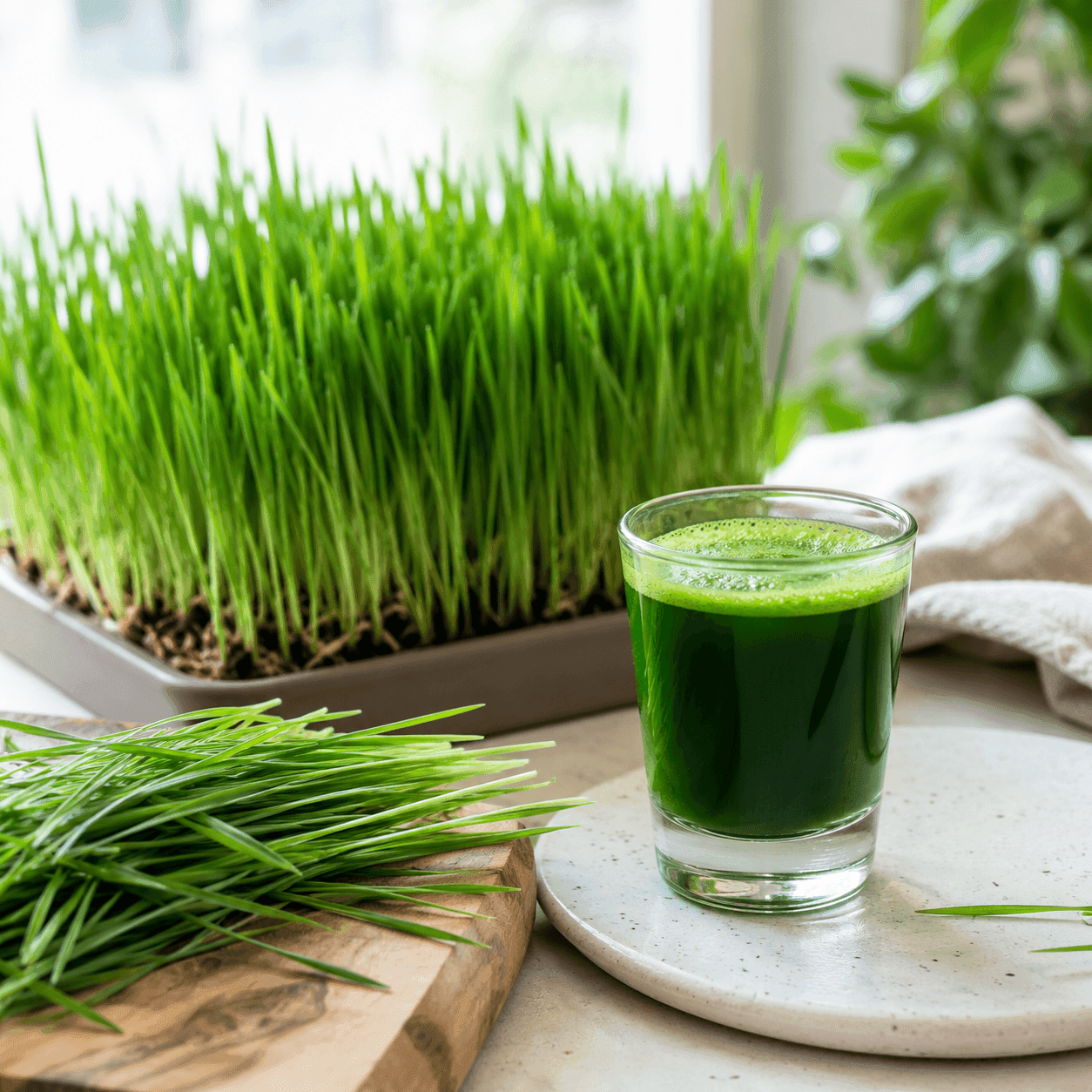
Wheatgrass is the young shoot of the common wheat plant, cut at about ten days old and juiced. At that stage it’s grass, not grain — the photosynthetic engine of the plant at peak activity, before any of the grain’s starches or gluten proteins develop. What gets pressed out is one of the most chlorophyll-dense liquids on earth, packed with minerals the young plant has pulled out of the soil, enzymes still active, and vitamins that cooking would otherwise destroy.
The reason wheatgrass exists as a category at all is mostly thanks to one person: Ann Wigmore, a Lithuanian immigrant who founded the Hippocrates Health Institute in Boston in the 1960s. She built a movement around raw foods, fasting, and the daily wheatgrass shot — and two generations of alt-health practitioners have been building on her work since.
Ann Wigmore and the wheatgrass story
Wigmore’s story is the kind of origin story mainstream medicine has a hard time crediting. By her account, she had advanced gangrene in both legs and was facing amputation when she started juicing wheatgrass and switching her diet. Within months the gangrene had reversed. She lived another fifty years on a raw-foods and wheatgrass protocol, founded the Hippocrates Health Institute (still operating today as a wellness retreat in West Palm Beach), trained thousands of practitioners, and died in 1994 at 84.
The clinical literature on wheatgrass that exists today owes most of its impetus to Wigmore’s work and the patients who came through the Institute over decades. The mainstream wellness world picked up the cup-of-green-juice ritual from Wigmore’s lineage, often without knowing where it came from.
What’s actually in it
- Chlorophyll. About 70% of the dry matter in fresh wheatgrass is chlorophyll. Almost nothing else in the food world comes close. The chlorophyll molecule is structurally identical to hemoglobin except that hemoglobin has iron at the center of its porphyrin ring and chlorophyll has magnesium. Wigmore called chlorophyll “the blood of plants” for this reason.
- Minerals. Iron, calcium, magnesium, potassium, plus the trace elements the young plant pulled out of the soil it was grown in. The mineral density per ounce is unusually high.
- Vitamins. Vitamin A as beta-carotene, vitamin C, vitamin E, vitamin K, and most of the B-complex. Fresh juice retains the heat- sensitive vitamins that cooking destroys.
- Enzymes. Fresh wheatgrass juice is rich in live enzymes — superoxide dismutase (an antioxidant enzyme), P4D1, and dozens of others. The enzymes are destroyed by heat, which is why fresh-juiced is emphasized over shelf-stable products.
- Amino acids. The full complement of essential amino acids in small but real quantities — about 17% of dry weight is amino acids. Vegan-friendly protein density.
The chlorophyll story
The hemoglobin-chlorophyll resemblance isn’t just a poetic observation. The body can use the building blocks in chlorophyll-rich foods to support red-blood-cell production in real, measurable ways. Anemia of various kinds — particularly the iron-deficiency anemia common in women and the megaloblastic anemia associated with B12 deficiency — often responds to daily green juice alongside the obvious specific interventions.
Chlorophyll itself acts as a mild chelator. It binds certain heavy metals (mercury, lead) and certain carcinogens in the gut, reducing their absorption and promoting excretion. This is the mechanism behind the heavy-metal-detox claims that have always followed wheatgrass — the chelation isn’t as aggressive as a pharmaceutical chelator, but it’s real, gentle, and daily.
Chlorophyll is also alkalizing, supports the liver’s phase II detoxification pathways, has antimicrobial properties (it was used topically in field hospitals before antibiotics for wound infections), and supports healthy oral and gut microbiomes through its action on anaerobic bacteria.
What it actually does, day to day
People who drink fresh wheatgrass daily for a few months consistently report some combination of:
- Steadier energy through the day
- Clearer skin, particularly in people who’d had chronic acne or dullness
- Better digestion
- Reduced bad breath and body odor (chlorophyll is a natural deodorizer)
- Improved exercise recovery
- Better sleep
- Mental clarity
- Reduced frequency of colds and minor illnesses
None of these are wheatgrass-specific miracles. They track with the same patterns people report from any sustained green-juice habit — dense daily exposure to a wide range of vitamins, minerals, and plant compounds that the standard diet doesn’t deliver. Wheatgrass is among the densest forms of that exposure.
The healing crisis (the first-time response)
Many people don’t feel great the first few times they take wheatgrass. Headache, nausea, fatigue, an unusually intense bowel movement — the typical first-week experience for someone whose body has accumulated more toxins than it normally processes in a day. Wigmore called this the “healing crisis” and treated it as evidence that the protocol was working.
The right response isn’t to stop. It’s to scale back and build up. Start with half an ounce of wheatgrass juice diluted in water, once a day. Hold there for three or four days. Move to a full ounce when the response settles. Then 1–2 ounces daily as maintenance. Drink plenty of water through the adjustment to support the kidneys in flushing what gets mobilized.
The healing-crisis response is the same physiological pattern that shows up with iodine (bromide detox), chelation protocols, fasting, and any other intervention that mobilizes stored toxins. It typically passes within a week.
Forms — juice, powder, tablets, growing your own
- Fresh-juiced wheatgrass. The gold standard. Maximum chlorophyll, maximum enzymes, maximum nutrient retention. Requires either a juice bar nearby, a masticating juicer at home, or your own indoor wheatgrass garden. The most potent and the most work.
- Frozen wheatgrass shots. Flash-frozen at peak nutrient density and stored at freezer temperature. Retains most of the fresh profile, including enzymes. The most practical form for people who want fresh-quality without daily juicing. Evergreen Juices and a few other brands ship these direct.
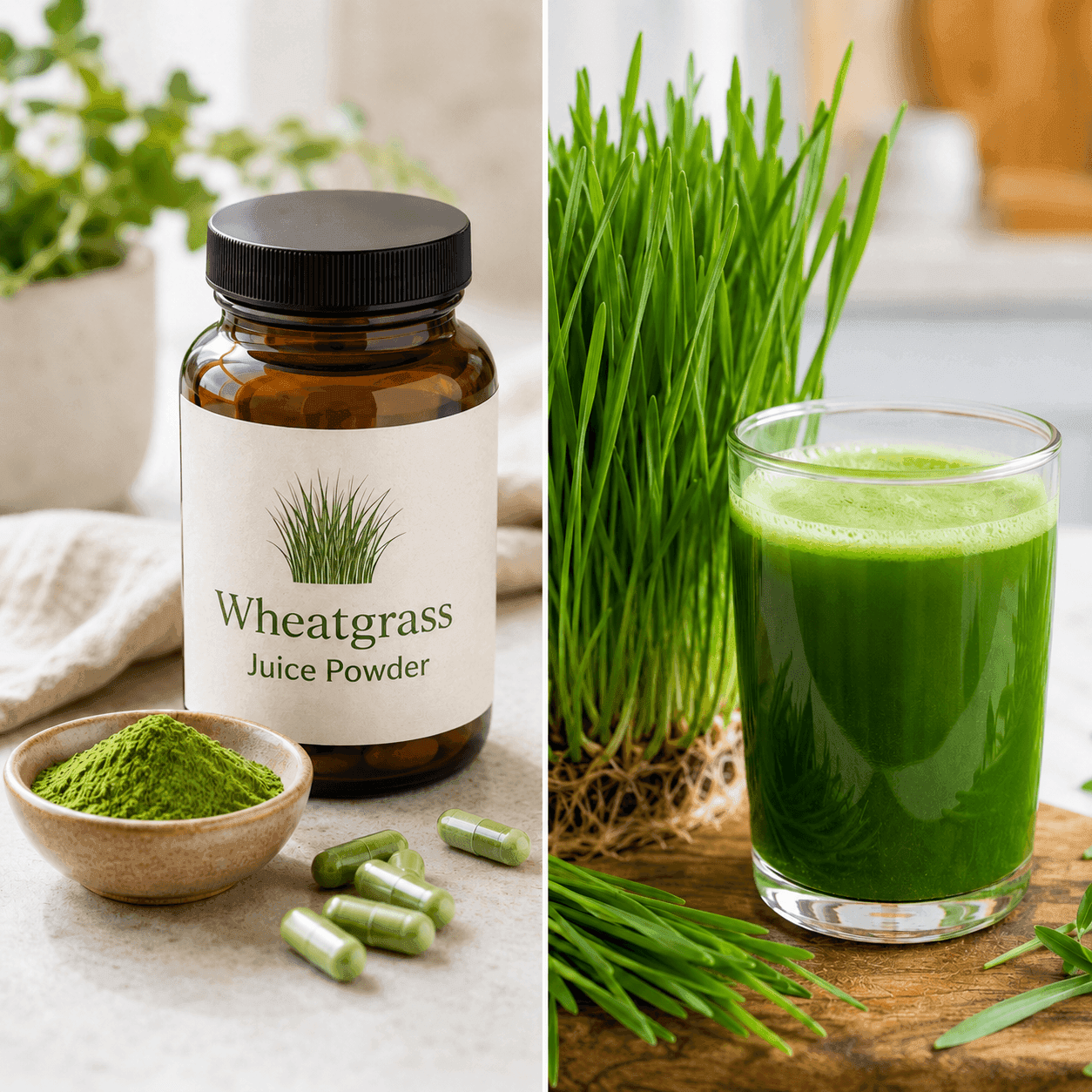
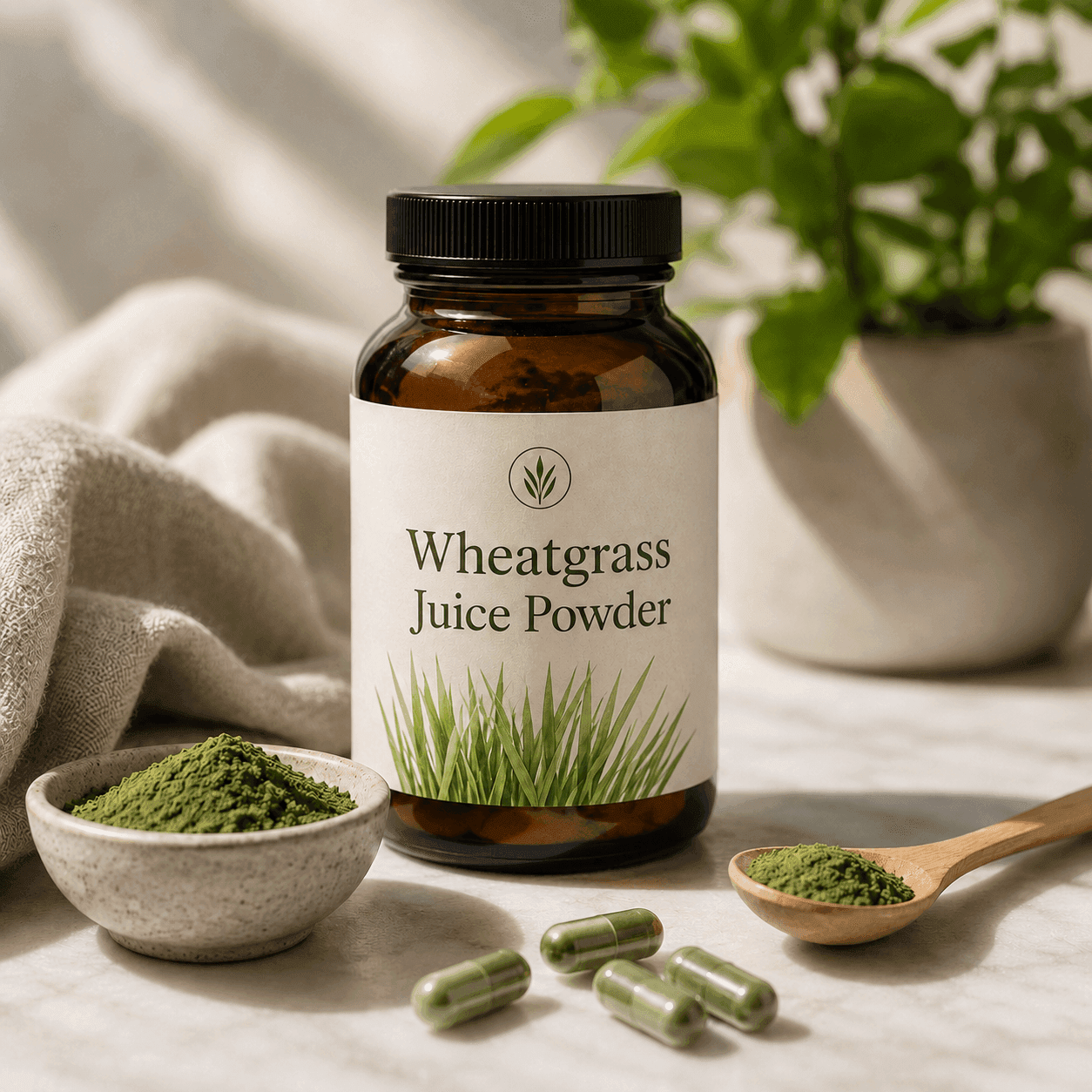
- Wheatgrass powder. Spray-dried at low temperature. Retains chlorophyll, minerals, and most vitamins. Enzymes are largely destroyed in the drying process. Convenient, shelf- stable, mixes into smoothies or water. The everyday compromise form.
- Wheatgrass tablets. The most convenient and least potent. Useful for travel or as supplementation alongside other forms; not the primary product if you can get something fresher.
Growing your own: wheatgrass is one of the easiest things to grow indoors. Soak wheat berries overnight, spread them in a shallow tray of soil, keep moist, harvest with kitchen scissors at about ten days when the grass is roughly 7 inches tall. Total cost: a few dollars in seeds, a couple of trays, and a sunny window. The Wigmore tradition treats this as the baseline.
Taste and how to drink it
Wheatgrass is famously intense. It tastes like grass looks. The chlorophyll dominates the palate, and there’s a sweetness underneath that the standard description (“it’s pretty rough”) doesn’t capture.
Three things help most people get it down:
- Chase it with a squeeze of lemon or a slice of orange. The acidity cuts the grassiness.
- Drink it as a shot, not a glass. Toss it back, breathe through your nose, done in three seconds.
- Or dilute it in 4–8 oz of water with a squeeze of lemon and drink it like a green water through the morning. Slower, gentler.
After a few weeks the taste actually stops being unpleasant. Some people grow to look forward to it. The human palate adapts to nearly anything if it gets a consistent return.
Where I buy wheatgrass
- Evergreen Juices Frozen Wheatgrass Shots — flash-frozen 1 oz shots, shipped on dry ice. The closest thing to fresh-juiced without a juicer at home. Pricey per shot but convenient.
- Amazing Grass Wheatgrass Powder — organic, U.S.-grown, low-temperature dried. The everyday powder I default to when I want wheatgrass in a smoothie.
- Pines Wheatgrass Tablets — one of the oldest U.S. wheatgrass brands. Tablets travel well; useful as a backup when juice or powder isn’t practical.
- Omega NC900HDC Masticating Juicer — the standard home juicer that handles wheatgrass without burning it (centrifugal juicers shred wheatgrass without extracting; you need a masticating juicer for leafy greens). Also juices celery, leafy greens, and the rest of the green-juice lineup. The single biggest equipment upgrade for a serious green-juice practice.
Where to start
A 1-ounce fresh-juiced shot most mornings is the ideal, where a juice bar is accessible. When it isn’t — travel, busy weeks — a scoop of a quality wheatgrass powder mixed into 8 oz of water with a squeeze of lemon, or into a morning smoothie, fills the gap; frozen wheatgrass shots kept in the freezer are another way to get fresh without making it.
On heavier weeks — more stress, more travel, more processed food than ideal — doubling up works well: one shot in the morning, one in the afternoon.
Closing
Wheatgrass is a niche food with a strange origin story and a lineage of practitioners most people have never heard of, but the underlying logic is simple: concentrated chlorophyll, mineral density, live enzymes, and the full vitamin spectrum, in one ounce, every morning. The body has receptors and pathways for nearly all of it. The cost is a couple of dollars a day. The return is the kind of steady-state improvement that isn’t flashy but compounds.
Ann Wigmore figured this out in a brownstone in Boston sixty years ago. The wheatgrass has been waiting on the windowsill ever since.
Sources & further reading
Authorities cited
- Ann Wigmore (1909–1994) — Lithuanian-American holistic-health pioneer; founder of the Hippocrates Health Institute in Boston (1968). Originator of the modern wheatgrass-juice protocol.
- Hippocrates Health Institute — The institute Wigmore founded; continues to operate as a wellness retreat in West Palm Beach, Florida.
- Dr. Eric Berg — Standing voice on chlorophyll-rich foods, including wheatgrass and other green juices.
Books & reading
- Why Suffer? — Ann Wigmore — Wigmore's autobiography and the foundational text on the wheatgrass-and-raw-food protocol.
- The Wheatgrass Book — Ann Wigmore — The practical manual on growing, juicing, and using wheatgrass at home.
- Ben-Arye, E. et al. (2002). Wheatgrass juice in the treatment of active distal ulcerative colitis. Scandinavian Journal of Gastroenterology. — Randomized double-blind trial showing wheatgrass reduced disease activity in active ulcerative colitis.