

Health · Hormones · ~11 min read
Women’s cycle & PMS — the cycle as a health signal.
Why the menstrual cycle is the fifth vital sign, what “normal” PMS actually reveals about the underlying hormonal pattern, and what to do before the default is hormonal birth control.
By George Hinestrosa · Personal experience & independent research
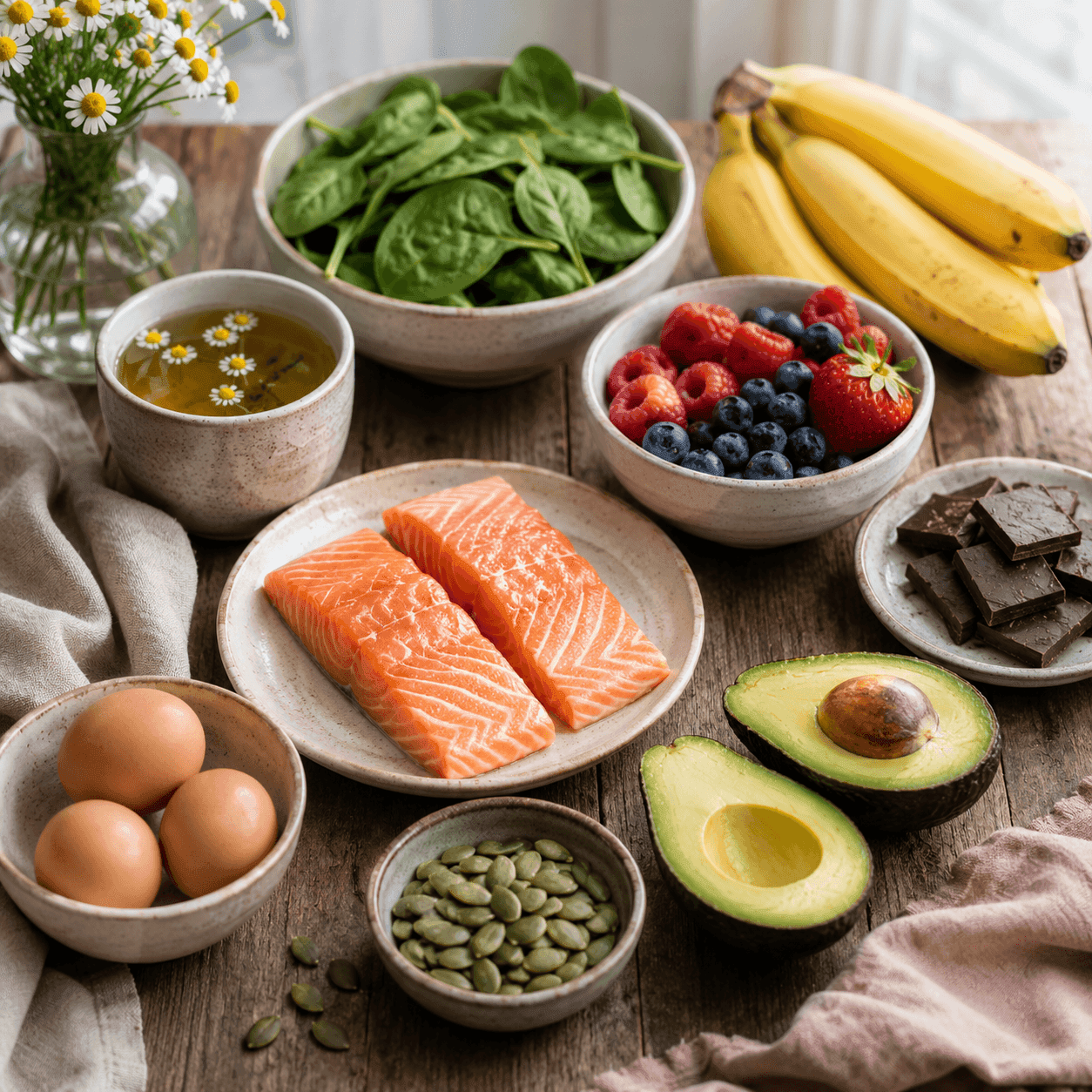

The menstrual cycle is a vital sign. The American College of Obstetricians and Gynecologists formally recognized it as such in 2015 — on par with heart rate, blood pressure, respiratory rate, and temperature as a baseline indicator of underlying physiology. A regular, predictable, ovulatory cycle with manageable symptoms is the signature of a well-functioning endocrine system. Anything else — severe PMS, heavy bleeding, missed periods, pain that requires medication, cycles that vary wildly from month to month — is information about what’s happening underneath. Treating the symptoms without reading the signal is treating the fire alarm.
The mainstream gynecological default for nearly every cycle complaint — PMS, PMDD, irregular cycles, acne, painful periods, perimenopausal symptoms — is hormonal birth control. The pill, the patch, the IUD, the implant. The intervention is real and works in many cases, but it works by suppressing the cycle entirely — replacing the woman’s natural hormone production with a constant low-dose synthetic signal that prevents ovulation. The symptoms go away because the underlying cycle that was producing them goes away. The diagnostic information about what was driving the symptoms goes away too. And many women find themselves on the pill from age 16 to 40 without ever knowing what their actual hormonal pattern looks like.
This article walks through what a healthy cycle actually looks like, why “normal” PMS is often a measurable deficiency state, the specific interventions (magnesium, B6, vitex, iodine, vitamin D) that move the needle on cycle-related symptoms, and the framework popularized by Dr. Lara Briden in Period Repair Manual and Lisa Hendrickson-Jack in The Fifth Vital Sign that orients women toward addressing the root cause rather than masking the signal.
What a healthy cycle looks like
The mainstream definition of “normal” is 21-35 days. The functional medicine target is tighter: 26-32 days, with substantial regularity month over month. The cycle has four phases:
Menstruation (days 1-5). Bleeding lasts 3-7 days. Total blood loss typically 30-80 mL across the period. Pain should be manageable without prescription-strength medication; cramping that requires bed rest or time off work is a signal, not a normal feature.
Follicular phase (days 1-13). Estrogen rises as the body prepares an egg. Energy and mood generally lift. Cervical fluid patterns change. This is the phase where cognitive performance and physical capacity peak for many women.
Ovulation (around day 14). An egg is released. Body temperature rises by about 0.4-1.0°F and stays elevated through the luteal phase. Many women experience brief mid-cycle pain (mittelschmerz). Ovulation is the event that produces progesterone — the hormone most responsible for whether PMS will be mild or severe.
Luteal phase (days 14-28). Progesterone rises and then falls. Estrogen also shifts. This is the phase where PMS symptoms cluster. A healthy luteal phase with adequate progesterone production has minimal symptoms; an unhealthy luteal phase produces the range of symptoms popularly labeled “PMS.”
The single most underrated indicator that a cycle is healthy is that ovulation is happening. Many women on hormonal birth control don’t ovulate at all (that’s how the contraception works). Many women not on birth control still don’t ovulate every month for various reasons. Without ovulation, no progesterone is produced, and the entire luteal phase is destabilized. This is one of the most common quiet drivers of severe PMS.
Why “normal” PMS is actually a deficiency state
The cultural framing of PMS treats severe premenstrual symptoms — mood swings, bloating, breast tenderness, cravings, headaches, irritability, fatigue, anxiety — as a normal feature of female biology. Lara Briden’s framing inverts this: severe PMS is a signal that the luteal phase isn’t producing adequate progesterone relative to estrogen. It’s a deficiency state, not a biological inevitability.
The drivers of inadequate progesterone production are well-characterized:
Anovulatory or weakly ovulatory cycles. If ovulation doesn’t happen, or happens weakly, the corpus luteum doesn’t form properly and progesterone production is inadequate. Stress is the single most common cause — chronic cortisol elevation preferentially shunts the precursor pregnenolone toward cortisol production rather than progesterone (the “pregnenolone steal”).
Magnesium deficiency. Magnesium is a cofactor in over 300 enzymatic reactions including those involved in steroid hormone synthesis. Magnesium-deficient women consistently show worse PMS symptoms, and magnesium supplementation has been shown in multiple randomized trials to substantially improve premenstrual symptoms.
B6 deficiency. Vitamin B6 is required for neurotransmitter synthesis (serotonin, dopamine, GABA) and for estrogen metabolism. B6 supplementation (50-100 mg daily) has reasonable evidence for PMS symptom reduction.
Iodine insufficiency. Iodine deficiency affects thyroid function, which affects the entire endocrine cascade. Iodine deficiency specifically is linked to breast tenderness, fibrocystic breast changes, and cycle irregularity. Dr. Mark Sircus’s work on iodine has been making this case for years, and the iodine article in this section covers it in more detail.
Vitamin D insufficiency. Vitamin D acts as a steroid hormone in its own right and is involved in ovarian function. Women’s with adequate vitamin D status have measurably better cycle health and lower PMS symptom scores than vitamin D-deficient women.
Estrogen dominance. The flip side of inadequate progesterone is elevated estrogen relative to progesterone. The modern endocrine-disruptor exposure (xenoestrogens from plastics, personal care products, agricultural chemicals) pushes the system toward estrogen dominance. Heavy bleeding, breast tenderness, and severe PMS are typical signs.
The interventions that actually work
For mild-to-moderate PMS and cycle irregularity, the following interventions have the strongest evidence base behind them and are the first things to try before the hormonal-birth-control conversation:
Magnesium glycinate, 300-400 mg daily. The single most studied supplement for PMS. The Facchinetti 1991 trial and several subsequent studies show substantial reductions in mood symptoms, bloating, and breast tenderness within two to three cycles. The night dose also supports sleep architecture, which feeds back into the broader hormonal picture.
B6 (pyridoxal-5-phosphate), 50-100 mg daily. The activated form (P5P) rather than plain pyridoxine. Reasonable evidence for mood symptoms specifically. Don’t exceed 200 mg per day chronically — B6 toxicity at high sustained doses produces peripheral neuropathy.
Vitex (chasteberry), 200-400 mg daily. Standardized extract of Vitex agnus-castus has real evidence for premenstrual symptom reduction and for mild ovulation support in luteal phase defects. Effect takes 2-3 cycles to manifest. Standard recommendation in functional gynecology.
Iodine, properly dosed. See the iodine article for the broader case. For women with fibrocystic breast changes or iodine-pattern symptoms, this is often the most consequential intervention. Start lower than the high-dose protocols and ramp.
Vitamin D with K2, 2,000-5,000 IU daily. Particularly during fall and winter months when sun exposure is inadequate. Check 25-hydroxy vitamin D levels if possible; target the 50-70 ng/mL range rather than the lower “sufficient” threshold.
Iron, if heavy bleeding has produced deficiency. Heavy menstrual bleeding is one of the most common causes of iron deficiency in women of reproductive age. Iron status is worth checking (serum ferritin is the best single marker) before assuming PMS-pattern fatigue is purely hormonal.
Reducing endocrine disruptor exposure. Glass food storage instead of plastic. Filtered water. Paraben- and phthalate-free personal care products. This is a slow lever but a real one, particularly for women on the estrogen-dominance pattern.
What about seed cycling?
Seed cycling — alternating flax and pumpkin seeds in the follicular phase and sunflower and sesame seeds in the luteal phase — has become popular in the cycle-health space. The theoretical mechanism is that the specific phytoestrogens and minerals in each seed preferentially support the dominant hormone of each phase.
Honest read on the evidence: it’s thin. There are no quality randomized trials supporting seed cycling specifically. The mechanism is plausible but not well-demonstrated. Eating ground flax, pumpkin, sunflower, and sesame seeds is genuinely good (fiber, lignans, magnesium, zinc, healthy fats) regardless of cycle phase. If a woman finds the structure useful for consistent intake, fine. If she’s waiting for it to be the breakthrough fix for severe PMS, it’s probably not the right priority.
Body composition and the cycle
Both ends of the body composition spectrum disrupt the cycle. Body fat below roughly 17-18% in women typically produces hypothalamic amenorrhea — the brain shuts down ovulation because energy availability is too low to support pregnancy. Many lean athletic women, dancers, and women with restrictive eating patterns end up here. Recovery requires gaining weight, not just supplementing.
On the other end, obesity and metabolic syndrome disrupt the cycle through different mechanisms: insulin resistance affects ovarian function (polycystic ovarian syndrome is the textbook case), adipose tissue produces excess aromatase converting androgens to estrogen, and the hormonal environment overall shifts toward anovulation.
The functional middle — roughly 20-28% body fat for most reproductive-age women, with adequate muscle mass and good metabolic markers — is where cycles tend to run cleanest. The rest of this section — walking, lifting, fasting, sleep — supports landing there.
Tracking the cycle
One of the most undervalued health interventions available to women is consistent cycle tracking. The data — cycle length, bleeding patterns, basal body temperature, cervical fluid, mood and symptom patterns — over six to twelve months provides clinical information no doctor visit can replicate. Whether the cycle is ovulating, when it’s ovulating, whether the luteal phase is adequate (typically 12-14 days with sustained temperature elevation), how symptoms cluster across the phases — all of this is visible from tracking and invisible without it.
Methods range from simple journaling to dedicated apps to fertility-tracking thermometers like Daysy that handle the basal body temperature math automatically. The fertility awareness method (FAM) is the formal framework and is well-covered in Lisa Hendrickson-Jack’s book and the classic Taking Charge of Your Fertility by Toni Weschler. The simpler version (basal body temperature plus symptom notes) gets you most of the information without the steep learning curve.
The honest framing on hormonal birth control
Hormonal birth control is a real medical intervention with real benefits in specific situations. It’s genuinely useful for pregnancy prevention when chosen freely with full information. It can be the right answer for severe endometriosis pain, certain medical conditions, and short-term cycle management in specific contexts.
What it shouldn’t be is the casual default for every cycle complaint. The honest downsides that deserve disclosure before prescription:
It suppresses ovulation entirely. The native cycle, with its information content and its production of natural progesterone, is replaced with a low-dose synthetic signal. Women on hormonal birth control are not having “regular periods” — they’re having scheduled withdrawal bleeds that have no informational content about underlying hormonal health.
Mood effects. The 2016 Skovlund study in JAMA Psychiatry documented substantial increases in depression risk among adolescent women starting hormonal contraception. The effect is real and probably under-discussed in clinical encounters.
Long-term post-discontinuation effects. Many women coming off hormonal birth control after years on it experience a period of cycle chaos — sometimes months of irregular cycles, severe PMS, or absent periods — as the native HPO axis re-engages. This is the phenomenon Briden labels “post-pill syndrome,” and it’s often the moment women realize they don’t actually know what their natural cycle looks like.
Nutrient depletion. Hormonal contraception is associated with depletion of B vitamins (particularly B6, B9, and B12), zinc, magnesium, and selenium, and with altered gut microbiome composition.
None of this is a blanket argument against hormonal birth control. It’s an argument that the decision should be made with full information, not as the reflex first move when a woman presents with cycle complaints.
The framework summarized
For a woman with PMS, cycle irregularity, or related complaints, the sensible order of operations is:
First, track. Three to six months of cycle data before making major intervention decisions. Cycle length, bleeding pattern, basal body temperature, symptom clusters.
Second, address the foundation. Sleep, stress management, nutrient repletion (magnesium, B6, vitamin D, iodine, iron if indicated), endocrine-disruptor exposure reduction. Body composition if it’s extreme in either direction.
Third, targeted herbal support. Vitex for luteal-phase support and mild cycle regulation. Ashwagandha for stress-driven anovulation patterns. These take 2-3 cycles to show effect.
Fourth, medical evaluation if symptoms persist. Hormone panels (estradiol, progesterone, LH, FSH, testosterone, DHEA-S, thyroid panel, prolactin) timed correctly within the cycle. Pelvic ultrasound if structural concerns. The goal at this point is diagnosis, not just symptom management.
Fifth, only then, the prescription conversation. Whether that’s hormonal birth control, bioidentical progesterone, thyroid medication, or something else, it’s a decision made after the diagnosis rather than as a default treatment for unexplored symptoms.
Products and books I’d recommend
The supplement protocol is straightforward; the books are the leverage.
Period Repair Manual by Dr. Lara Briden is the single most useful book in this entire article. Briden is a naturopathic doctor with decades of clinical experience treating cycle- related issues without leading with hormonal birth control. The book covers PMS, PCOS, endometriosis, perimenopause, post-pill recovery, and adolescent cycle establishment with specific actionable protocols. If you read one thing on women’s cycle health, read this.
The Fifth Vital Sign by Lisa Hendrickson-Jack is the deeper dive into cycle tracking and what the data actually means. Reads more clinically than Briden’s book but is the better reference for women who want to understand the biology in depth.
Pure Encapsulations Magnesium Glycinate is the standing magnesium recommendation. For cycle support specifically, 300-400 mg in the evening across the entire cycle, not just the luteal phase. Continuous baseline support outperforms cycle-timed dosing for PMS.
Pure Encapsulations Vitex is the standardized chasteberry extract at the therapeutic dose. Take consistently for at least three cycles before evaluating effect. Vitex works through pituitary signaling so the half-life of the clinical effect is longer than the half-life of the molecule itself.
Daysy Fertility Tracker is the basal body temperature thermometer with built-in cycle analysis. Premium price but the workflow is much lower-friction than manual charting, which means more women actually stick with it for the six-plus months that produce useful data. Not a contraceptive in itself in most regulatory regimes; treat it as a tracking tool, not a birth control method.
The bottom line
The menstrual cycle is the fifth vital sign and a window into a woman’s underlying endocrine health. Severe PMS, cycle irregularity, painful periods, and the cluster of symptoms popularly normalized as part of being female are largely symptoms of correctable deficiency states — magnesium, B6, iodine, vitamin D, progesterone — against a background of modern endocrine- disruptor exposure and lifestyle factors that push the system toward dysfunction.
The foundation interventions — magnesium glycinate, B6, iodine, vitamin D, body composition optimization, stress management, endocrine- disruptor reduction — reliably move symptoms in the right direction over two to four cycles for most women. Vitex adds targeted herbal support for luteal phase issues. Cycle tracking provides the data that makes informed decisions possible.
Hormonal birth control as the first-line answer to cycle complaints suppresses the signal rather than addressing the underlying state. It has its place — informed pregnancy prevention, some specific medical indications — but the casual prescription pattern for any woman presenting with PMS deserves to be questioned. The cycle is information. The right move is usually to read it, not to silence it.
Sources & further reading
The cycle as vital sign
- ACOG Committee Opinion No. 651: Menstruation in girls and adolescents: using the menstrual cycle as a vital sign. Obstetrics & Gynecology. 2015;126(6):e143-6.
- Hendrickson-Jack L. The Fifth Vital Sign: Master Your Cycles & Optimize Your Fertility. Fertility Friday Publishing, 2019.
Nutrient interventions for PMS
- Facchinetti F, Borella P, Sances G, et al. Oral magnesium successfully relieves premenstrual mood changes. Obstetrics & Gynecology. 1991;78(2):177-81.
- Wyatt KM, Dimmock PW, Jones PW, Shaughn O'Brien PM. Efficacy of vitamin B-6 in the treatment of premenstrual syndrome: systematic review. BMJ. 1999;318(7195):1375-81.
- Bertone-Johnson ER, Hankinson SE, Bendich A, et al. Calcium and vitamin D intake and risk of incident premenstrual syndrome. Archives of Internal Medicine. 2005;165(11):1246-52.
Vitex and herbal support
- Schellenberg R. Treatment for the premenstrual syndrome with agnus castus fruit extract: prospective, randomised, placebo controlled study. BMJ. 2001;322(7279):134-7.
- Cerqueira RO, Frey BN, Leclerc E, Brietzke E. Vitex agnus castus for premenstrual syndrome and premenstrual dysphoric disorder: a systematic review. Archives of Women's Mental Health. 2017;20(6):713-719.
Hormonal birth control honest treatment
- Skovlund CW, Mørch LS, Kessing LV, Lidegaard Ø. Association of hormonal contraception with depression. JAMA Psychiatry. 2016;73(11):1154-1162.
- Palmery M, Saraceno A, Vaiarelli A, Carlomagno G. Oral contraceptives and changes in nutritional requirements. European Review for Medical and Pharmacological Sciences. 2013;17(13):1804-13.
Books and authority figures
- Briden L. Period Repair Manual: Natural Treatment for Better Hormones and Better Periods. 2nd edition, 2018.
- Weschler T. Taking Charge of Your Fertility. Harper, 20th anniversary edition 2015.
- Sircus M. Public writing on iodine and women's hormonal health — drsircus.com.