
Health · Mineral · ~10 min read
Zinc — immune, testosterone, prostate, skin.
The mineral you’ve definitely heard of, probably don’t get enough of, and almost certainly haven’t balanced properly with copper.
By George Hinestrosa · Personal experience & independent research
Zinc is the trace mineral almost everyone has heard of and almost no one tests. It’s in lozenges at the drugstore during cold season. It’s in multivitamins. It’s on the supplement-fact panel of half the products in the wellness aisle. And the median Western intake still falls short of what the body actually needs to function at full capacity — particularly in men, who lose zinc through seminal fluid in quantities the RDA was never designed to replace.
Zinc is required for over three hundred enzymatic reactions, for DNA synthesis, for the production of testosterone, for the maintenance of the prostate, for immune-cell signaling, for taste and smell, and for the wound healing that converts injury back into intact tissue. None of those run at full capacity in a body that’s short on it.
What zinc does in the body
- Immune function. Zinc is required for the development and function of T cells, natural killer cells, and the cytokine cascade that orchestrates an immune response. The reason zinc lozenges shorten colds (Linus Pauling Institute and Cleveland Clinic research, replicated multiple times) is that ionic zinc in the throat actually interferes with rhinovirus replication on contact, on top of the systemic immune support.
- Testosterone. The enzymes that synthesize testosterone in the Leydig cells of the testes are zinc-dependent. Low zinc, low T. The relationship is so reliable that zinc deficiency is one of the first things a thoughtful clinician will check on a man with low testosterone before prescribing replacement therapy.
- Prostate health. The prostate concentrates zinc more than any other organ in the body — roughly ten times higher than elsewhere. Zinc levels in the prostate fall with age and with disease (BPH, prostatitis, prostate cancer). Restoring zinc is the foundational alt-health prostate protocol.
- Skin and wound healing. Tissue repair is zinc-intensive. Slow-healing wounds, chronic acne, recurrent skin issues, and brittle hair and nails are common zinc-deficiency signals. Topical zinc oxide has been used for skin healing for over a century.
- Taste and smell. Zinc is required for the carbonic anhydrase enzyme that maintains taste-bud and olfactory function. Loss of taste or smell, in the absence of an obvious infection, is a classic zinc-deficiency sign. The COVID era brought this back into public awareness for a while.
- Sperm and fertility. Sperm production requires significant zinc, and seminal fluid carries a measurable amount of it out with each ejaculation. Male fertility almost always benefits from ensuring zinc sufficiency before more exotic interventions.
- Insulin function. Insulin is stored in pancreatic beta cells as a zinc-insulin complex. Zinc is required for both the storage and release of insulin. Low zinc compromises blood-sugar control.
- DNA repair and cell division. The zinc-finger proteins that bind DNA during transcription and repair are exactly what they sound like — structural zinc holding the protein in the shape that lets it do its job.
What deficiency looks like
- Frequent colds and slow recovery from illness
- Slow wound healing
- Persistent acne
- Hair thinning or hair loss
- White spots on fingernails
- Loss of taste or smell
- Low libido, low testosterone
- Prostate complaints in men — BPH, prostatitis
- Fertility issues (men and women)
- Brain fog, mood low
- Compromised blood sugar control
- Recurrent skin infections, eczema, dermatitis
The taste test
One of the more useful crude tests for zinc deficiency doesn’t require a lab. It’s the zinc taste test — sometimes called the Bryce-Smith test, after the British chemist who developed it.
You hold a small amount of liquid zinc sulfate solution (about 5–10 ml) in your mouth for 10 seconds, then swallow. The response falls into one of four categories:
- Tastes like water: significant zinc deficiency. The taste receptors that detect zinc are themselves zinc-dependent, and when they’re depleted they can’t register the mineral.
- Slightly metallic or dry: moderate deficiency.
- Strong metallic, somewhat unpleasant: mild deficiency.
- Strongly unpleasant, immediate metallic / bitter: zinc sufficient.
Joel Wallach popularized this test in the alt-health community decades ago. It’s not a perfect lab measurement, but it’s a useful directional indicator and you can repeat it monthly to track repletion. Liquid zinc sulfate (often sold as “Zinc Tally” or generic zinc sulfate solution) is the standard testing material.
Dosing
- Maintenance: 15–20 mg per day, taken with food. The everyday floor for adults.
- Repletion: 25–30 mg per day for two to three months, then drop to maintenance.
- Acute illness: 30–50 mg per day during the first 48–72 hours of a cold or flu, along with zinc lozenges that deliver ionic zinc directly to the throat. Drop back to maintenance once recovery is underway.
- Upper limit: 40 mg per day chronic without copper supplementation. Above that, the copper-deficiency risk is real.
Take zinc with food. On an empty stomach it causes nausea in many people. Some sources recommend taking it at night, but anytime with a meal works.
Forms — which to choose
- Zinc picolinate — bound to picolinic acid. Highly absorbed, the alt-health default. Thorne’s formulation is the one most often pointed to.
- Zinc bisglycinate / glycinate chelate — gentle on the stomach, well-absorbed, and the glycine adds a mild calming effect.
- Zinc citrate — well-absorbed, decent price, common in clean formulations.
- Zinc gluconate — the lozenge form. Absorbs decently orally; the point of the lozenge is local action in the throat against rhinoviruses, not systemic supplementation.
- Zinc oxide — poor oral absorption (around 7%). Skip it for repletion. It’s the active ingredient in mineral sunscreens and diaper-rash creams, which is where it earns its keep.
- Zinc sulfate — the form used in the taste test; not the form to take orally for repletion.
The copper question
Zinc and copper compete for absorption in the gut and for transport into cells. Sustained high-dose zinc without copper depletes copper stores over time, leading to a distinct set of symptoms: anemia that doesn’t respond to iron, peripheral neuropathy, hair depigmentation, immune dysfunction.
The standard alt-health correction is a zinc-to-copper ratio of about 10:1 to 15:1. Several quality zinc products include copper for this reason. Jarrow Formulas Zinc Balance is the most accessible — 15 mg zinc and 1 mg copper per capsule. If you take a zinc-only product, either rotate in a copper-containing zinc product every few weeks, or take a separate small copper supplement (2–3 mg copper bisglycinate per day) when you’ll be on zinc for more than a couple of months.
This isn’t a hypothetical concern. Copper deficiency from chronic zinc supplementation is well-documented and avoidable. Get the balance right.
Foods that deliver
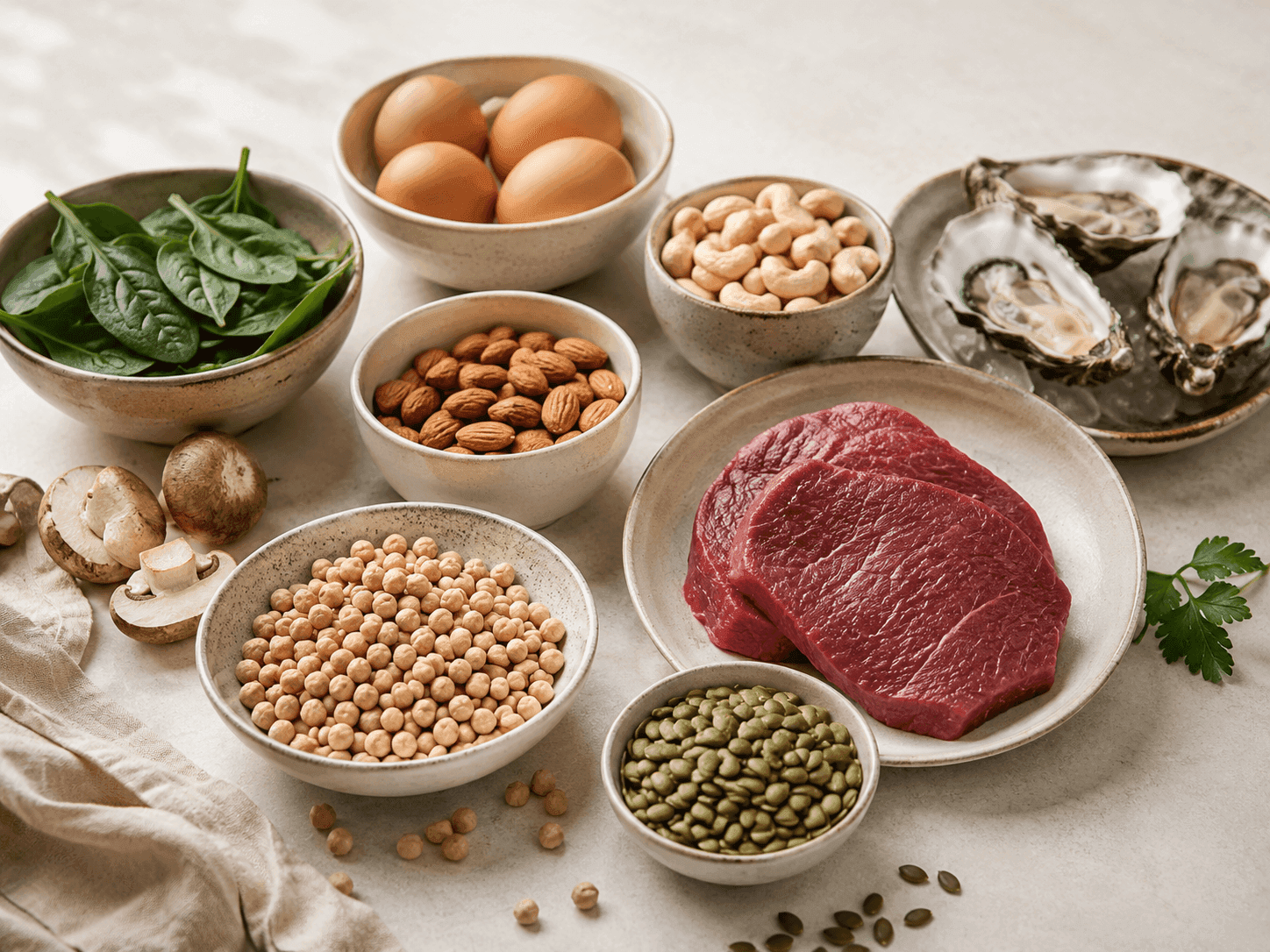
- Oysters — by far the highest food source. 30–50 mg per 3 oz serving. A few oysters covers a week.
- Beef and lamb — 5–8 mg per 3 oz portion. Red meat is the everyday zinc workhorse.
- Pumpkin seeds — 2.2 mg per ounce, plus magnesium and zinc-helpful fats.
- Beef liver — ancestral organ meat; high in zinc, copper, vitamin A, B12, and iron simultaneously.
- Sesame seeds and tahini — 1.5 mg per ounce.
- Cashews — 1.6 mg per ounce.
- Eggs — 1 mg per large egg.
- Hard cheeses — 1 mg per ounce.
Vegetarians and vegans run the highest risk of zinc deficiency, both because plant zinc is less bioavailable and because phytates in grains and legumes bind zinc and reduce absorption. Soaking and sprouting grains and beans helps. Supplementation is often necessary.
Where I buy zinc
- Jarrow Formulas Zinc Balance — 15 mg zinc + 1 mg copper per capsule, the copper-balanced product I default to for chronic use. No need to manage two bottles.
- Thorne Zinc Picolinate, 30 mg — clean, highly absorbed, the standard recommendation for higher-dose repletion. Pair with copper separately.
- Pure Encapsulations Zinc Citrate — clean formulation, well-absorbed, reasonable alternative to picolinate.
- Now Foods Zinc Glycinate — budget option, still high-quality. Glycinate chelate, gentle on the stomach.
Where to start
A common baseline is around 15 mg of a well-formulated zinc (a balanced zinc-copper formula is ideal) with breakfast most days, plus a few oysters or some beef liver when they’re available at the market, and pumpkin seeds on salads, in smoothies, or by the handful.
At the onset of a cold, a typical short protocol is 30 mg of zinc picolinate for two to three days alongside a zinc lozenge every couple of waking hours. The cold often resolves in 36–48 hours instead of a week — the kind of result that tends to make people keep zinc lozenges on the shelf permanently.
Closing
Zinc is one of the easier wins in nutritional medicine. The deficiency is widespread, the symptoms are specific enough to recognize, the supplementation is inexpensive, the testing (even the crude taste test) is workable, and the response is usually quick. The one thing to get right is the copper balance. Get that right, and zinc does its work quietly in the background for the rest of your life.
For men over forty in particular — testosterone, prostate, immune resilience — zinc is one of the five or six minerals worth getting on and staying on.
Sources & further reading
Authorities cited
- Dr. Joel Wallach — Veterinarian and naturopathic physician; popularized the zinc taste test in the alt-health community via his Dead Doctors Don't Lie lectures.
- Dr. Linus Pauling (1901–1994) — Two-time Nobel laureate; the Linus Pauling Institute at Oregon State University remains a primary research source on zinc and immune function.
- Dr. Derek Bryce-Smith (1926–2011) — British chemist; developed the zinc sulfate taste test that bears his name.
Books & reading
- The Mineral Fix — DiNicolantonio, Land — Strong zinc and copper-balance coverage.
- Linus Pauling Institute Micronutrient Database — The standard online reference on zinc biochemistry, dosing, and interactions.
- Hemilä, H. (2017). Zinc lozenges and the common cold: a meta-analysis. JRSM Open. — The replicated finding that zinc lozenges shorten cold duration when taken in the first 24 hours of symptoms.