
Bible · Law & Worship · ~18 min read
The table God set.
Didn’t Jesus declare all foods clean? Wasn’t the clean and unclean line just a Jewish rule nailed to the cross? The Bible’s answer is older and steadier than that — a line drawn before there was a single Jew, before the Flood, reaching all the way back to the first menu in Eden — and never once recorded as lifted.
By George Hinestrosa · Personal study & research
Almost everyone has heard the two answers. The first: clean and unclean was a Jewish thing — ceremonial law for ancient Israel, with no claim on anyone today. The second: Jesus declared all foods clean, so the whole question was settled at the cross. They’re repeated so confidently that few people ever go back and read the text. This study is an invitation to read it — calmly, from Scripture itself. And the line, it turns out, is older than Moses, older than Israel, and older than the Flood. It goes back to the very first thing God ever set on a table.
The first menu
Before there was any question of clean or unclean meat, there was no meat at all. The first diet God gave the human family was not a compromise or a suggestion; it was the design, spoken on the same day He made us:
“And God said, Behold, I have given you every herb bearing seed, which is upon the face of all the earth, and every tree, in the which is the fruit of a tree yielding seed; to you it shall be for meat.”
— Genesis 1:29, KJV
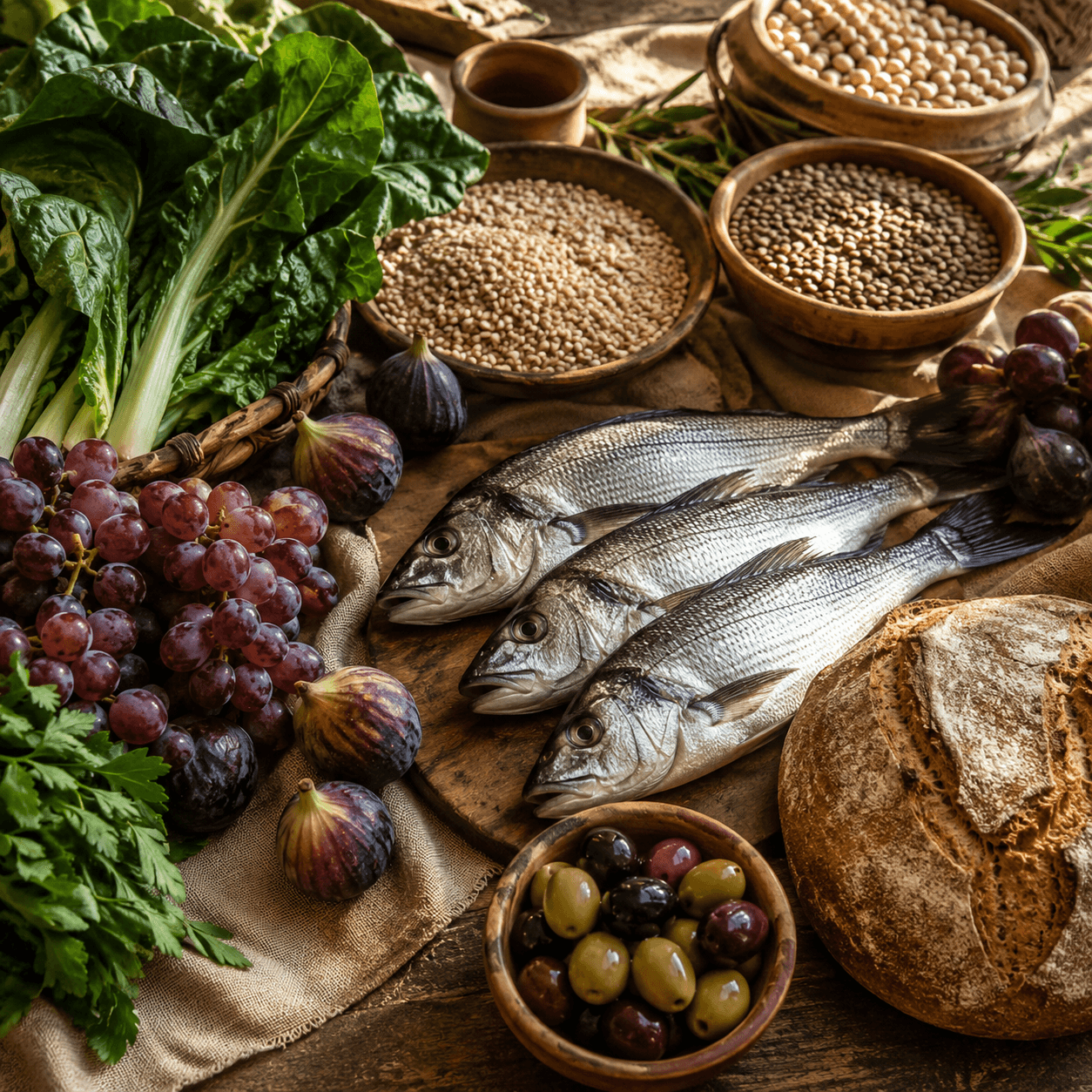
Seed-bearing herbs and fruit — that was the original table. Grains, legumes, nuts, fruit, and (after sin entered) “the herb of the field” (Genesis 3:18), the vegetables. Not one animal is on that first menu. Whatever else is said in this study, it begins here: the diet God designed for us was a plant diet, and the body was built to run on it.
A line older than Moses
If clean and unclean were merely Jewish ceremonial law, the distinction should appear no earlier than Moses. It appears far earlier — in the account of the Flood, before there was a Hebrew on the earth, when God gave Noah his instructions for the ark:
“Of every clean beast thou shalt take to thee by sevens, the male and his female: and of beasts that are not clean by two, the male and his female.”
— Genesis 7:2, KJV
Notice what is simply assumed. God does not pause to define “clean” for Noah; He uses the terms as a vocabulary Noah already has. The distinction was common knowledge centuries before Sinai. And when the waters fell, Noah acted on it:
“And Noah builded an altar unto the LORD; and took of every clean beast, and of every clean fowl, and offered burnt offerings on the altar.”
— Genesis 8:20, KJV
Clean beasts to sacrifice, taken by sevens; unclean by twos, only enough to keep the kind alive. Moses would write the list down in Leviticus much later, but the line he recorded was not one he invented. It was older than the nation he led — the same pattern we find with the Sabbath, which was also kept “before there was a Jew,” set apart at creation (traced in The Day the Church Set Aside). What God established at the beginning, He did not quietly assign to one nation and one era.
After the Flood, a permission — within the line
So where did eating animals come from at all? After the Flood, with the earth stripped bare and no garden to live from, God widened what people were allowed to eat:
“Every moving thing that liveth shall be meat for you; even as the green herb have I given you all things.”
— Genesis 9:3, KJV
This is the verse usually read as if the line had been erased — every moving thing. But read it in its own world. The clean and unclean distinction already existed (Genesis 7:2); Noah had just stepped off the ark knowing it cold. A permission to eat flesh, given to a man who had spent a year sorting animals into clean and unclean, was never going to mean “the categories you just used no longer apply.” It meant the table was widened to include flesh — flesh understood within the line already drawn. Permission to eat animals is not the same as permission to eat every animal, any more than “you may eat the herbs of the field” was permission to eat hemlock.
So the shape of it is this. Plants were the first design. Flesh was a post-Flood permission, granted to a fallen, harsher world. And the permission ran inside the clean and unclean line that was already in place. Three things, in order — and none of them cancels the one before it.
The line itself
When Moses finally writes the distinction down, it is plain enough that a child can apply it. For the land animals:
“Whatsoever parteth the hoof, and is clovenfooted, and cheweth the cud, among the beasts, that shall ye eat.”
— Leviticus 11:3, KJV
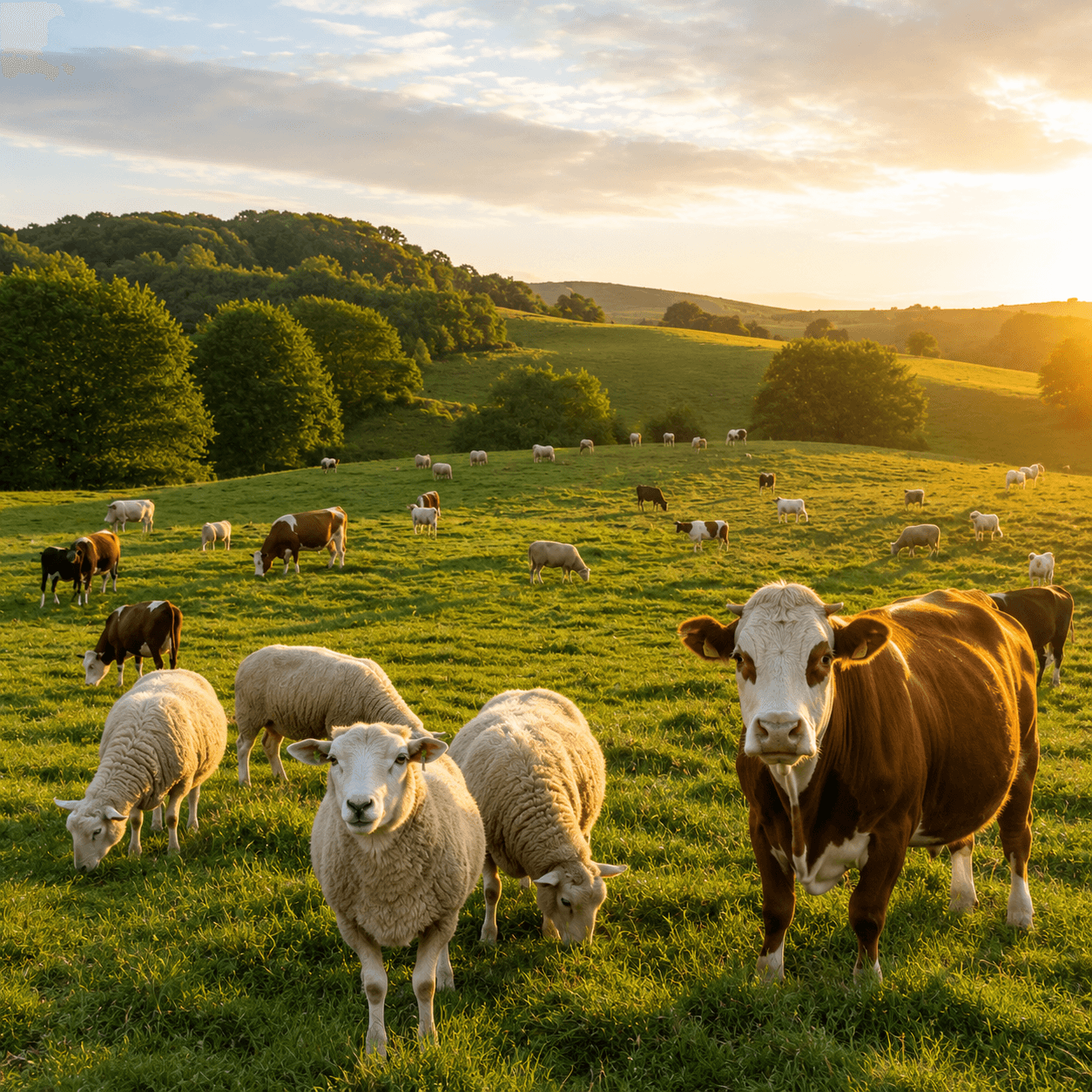
Both marks together — a split hoof and chewing the cud. That keeps the cattle, sheep, goats, deer, and their kind, and it sets aside the swine, which parts the hoof but does not chew the cud (Leviticus 11:7). For the waters, the same two-part test: “whatsoever hath fins and scales… them shall ye eat” (Leviticus 11:9) — and everything without both is called an abomination. The birds are given as a list (Leviticus 11:13–19), and read down it once: eagle, vulture, kite, raven, hawk, owl, cormorant, pelican — every one a bird of prey or a scavenger. The same line is repeated for the whole people, not merely the priests, in Deuteronomy:
“Thou shalt not eat any abominable thing.”
— Deuteronomy 14:3, KJV
Why these, and not those
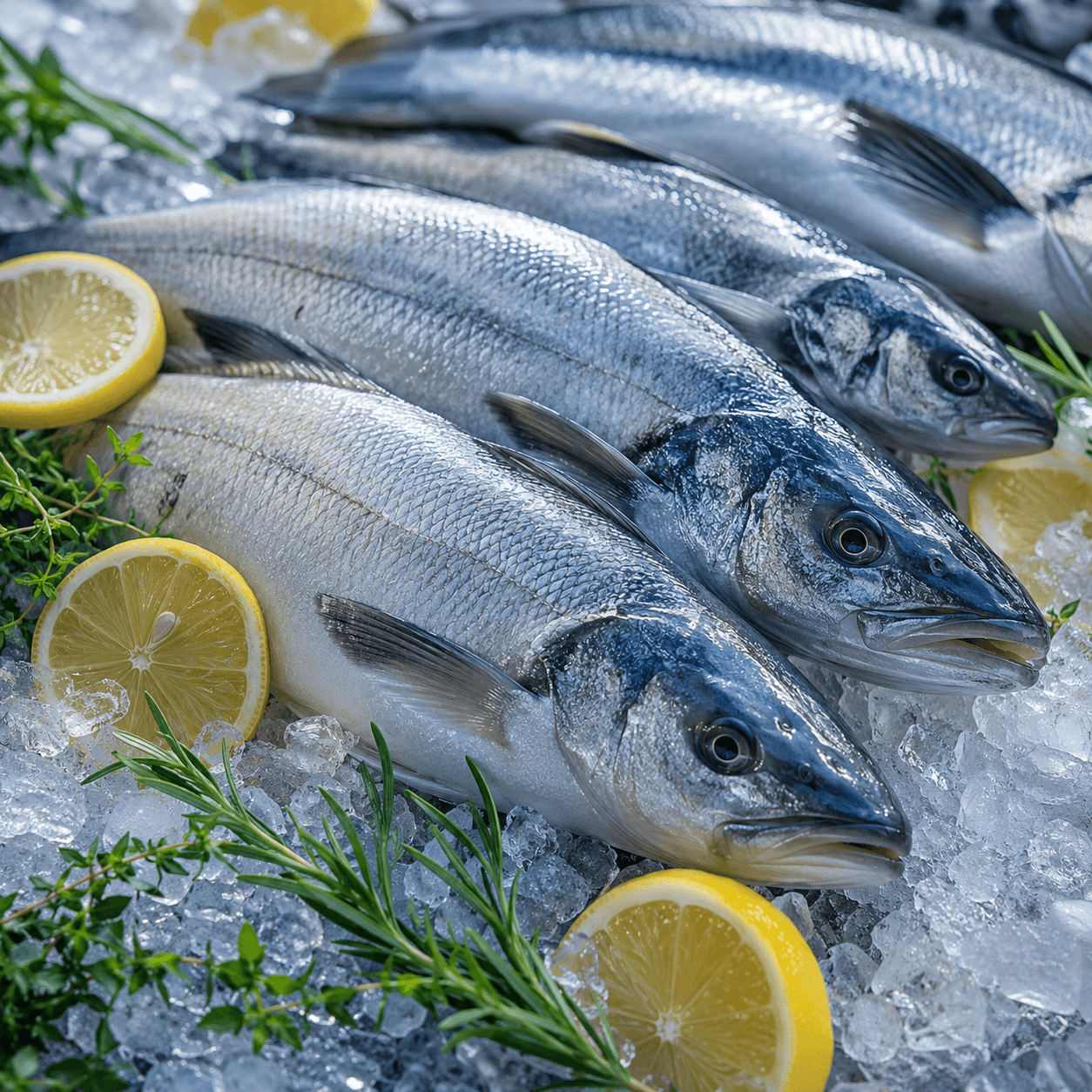
Scripture draws the line without ever stopping to argue biology — God simply names what is food and what is not. But where we can check the reasons, they hold together with a consistency that’s hard to miss. The clean land animals are, almost without exception, cud-chewing plant-eaters that live near the bottom of the food chain. The clean fish are the true fish, built with fins and scales. And the unclean list, read as a whole, is a catalogue of the scavengers, the predators, and the filter-feeders — the very creatures God designed to clean up a fallen world rather than to be eaten from it.
The pig is the plain example: an omnivore that will eat nearly anything, carcasses and waste included, and which carries parasites — trichinae among them — that ordinary cooking does not always reach.
It carries two problems past that. The first is viral. Swine are close enough to us biologically to act as a living mixing-bowl in which animal viruses recombine and learn to cross into people — mainstream virology calls the pig a reassortment host for influenza; the Nipah virus jumped from pigs to farmers in Malaysia in 1998; the H5N1 bird flu killed roughly half of the human cases the World Health Organization was able to record; and even the medical effort to transplant pig organs into people keeps running into the viruses carried in the tissue. The second is a cluster of inflammatory compounds the German physician Hans-Heinrich Reckeweg labelled “sutoxins,” after Suidae, the pig family — histamine and inflammatory fats he held the body tries to push out through the skin as hives and eczema. That framework comes from alternative medicine, but its core is verifiable: pork, and especially aged and processed pork, runs high in histamine and in arachidonic acid, the very fat the body turns into inflammation.
The shellfish and the filter-feeders — oysters, mussels, clams, shrimp, lobster, crab — are the kidneys of the sea, straining and concentrating whatever passes through the water, which is why a single bad tide can make them lethal. Sharks and the scaleless scavenger fish sit at the top of the same toxic ladder. And the line is exact rather than loose: even among the cud-chewers the camel is shut out — one suggested reason being the desert animal’s water-thrift, which makes it hold and recycle its waste rather than flush it. The line spares us the animals built to absorb decay.
None of this is fringe. Even the modern health authorities have quietly circled back to it: in 2015 the World Health Organization’s cancer agency classified processed pork — bacon, ham, sausage — as a Group 1 carcinogen, the same category as tobacco smoke. The ancient line and the new data are pointing the same direction. The Maker, it seems, knew the machine He had made.
The rule sailors still use
There is a striking footnote to all this. The same fins-and-scales test resurfaces, thousands of years later, as survival wisdom on the open water. Take away a person’s kitchen and grocery store and set them adrift, and the rule of thumb taught for surviving at sea is the one Moses wrote down: if a sea creature has fins and scales, it is almost always safe to eat; if it does not, leave it. The scaleless bottom-feeders and the shellfish are precisely the ones that concentrate the toxins of the water around them — and the single most lethal animal in the sea, the pufferfish, whose poison still has no antidote, wears no scales at all. A line handed to a desert people long ago still tells a stranded sailor which fish will feed him and which will kill him.
“But didn’t the New Testament lift it?”
Four passages carry almost the entire case that the line was abolished, and each one deserves an honest, unhurried reading. The first is the one most quoted — Mark 7, where Jesus is said to have “declared all foods clean.” But look at what the chapter is actually about. The Pharisees have not objected to what the disciples ate; they have objected that the disciples ate “with unwashen hands” (Mark 7:2–5). The whole dispute is ceremonial hand-washing, not the menu. And the King James, translating the verse plainly, keeps the point in view:
“…Whatsoever thing from without entereth into the man, it cannot defile him; because it entereth not into his heart, but into the belly, and goeth out into the draught, purging all meats.”
— Mark 7:18-19, KJV
What “purges” the food is the body itself — the ordinary process by which the stomach takes in food, draws out what nourishes, and carries the rest away. Jesus’ lesson is stated in His own next breath: it is not what goes into a man that defiles him but “the things which come out of him” — “evil thoughts, adulteries… murders… pride” (Mark 7:21–23). The defilement in view is moral, from the heart. Tellingly, Matthew’s account of the same scene ends, “to eat with unwashen hands defileth not a man” (Matthew 15:20) — the disputed clause about food simply isn’t there. Eating unwashed bread was never going to turn a pig into dinner; the subject was hands, and Jesus left it there.
The second passage is Peter’s vision in Acts 10 — the sheet let down from heaven full of unclean creatures, and the voice, “Rise, Peter; kill, and eat.” It is read as God cancelling the food law. Yet Peter, who was there, did not read it that way at all. He refused three times — “I have never eaten any thing that is common or unclean” (Acts 10:14) — years after the cross, which by itself tells us Jesus had never taught him the line was gone. And Peter tells us plainly what the vision meant once he understood it:
“…God hath shewed me that I should not call any man common or unclean.”
— Acts 10:28, KJV
Any man. The vision was God opening the gospel to the Gentiles — the “unclean” outsiders a Jew would not enter a house with — and Peter walks straight from the rooftop to the home of Cornelius, a Gentile, to preach. The sheet full of animals was the picture; the people were the point. Retelling it later, Peter still says, “nothing common or unclean hath at any time entered into my mouth” (Acts 11:8). To make the vision about lunch is to miss the one interpretation its own eyewitness gives it.
The third is Paul’s warning in 1 Timothy 4 about a coming apostasy that forbids marriage and commands “to abstain from meats, which God hath created to be received with thanksgiving” (1 Timothy 4:3). Read to the end of the thought and it defends the clean line rather than dissolving it:
“For every creature of God is good… if it be received with thanksgiving: For it is sanctified by the word of God and prayer.”
— 1 Timothy 4:4-5, KJV
Sanctified by the word of God — the food set apart as good is the food God’s own word already sets apart, the clean. A thanksgiving prayer was never a tool for turning what God called an abomination into dinner; you cannot pray a thing clean that the Word names unclean. The verse blesses the food the Word blesses.
The fourth is the cluster about “meat” in Romans 14 and 1 Corinthians 8 and 10. But these chapters never raise the clean and unclean line at all; their subject is meat that may have been offered to idols, and the conscience of the “weak” believer over it. That is why Paul can say, “Whatsoever is sold in the shambles, that eat, asking no question for conscience sake” (1 Corinthians 10:25) — the question he is waving off is not is this clean? but was this sacrificed to an idol? The meat assumed in the marketplace of a Jewish-Christian world was already clean. Colossians 2:16 — “let no man therefore judge you in meat, or in drink… or of the sabbath days” — belongs to the same world of ceremonial feast-day observances and idol-food disputes, the “shadow of things to come,” not to the creation line of clean and unclean. (The sabbath half of that verse is answered in The Day the Church Set Aside.)
A line Scripture carries to the very end
If the distinction were an expired relic of the old covenant, we would not expect to find it in a prophecy of the last day. Yet there it is, at the Lord’s coming in fire to judge the whole earth:
“They that sanctify themselves… eating swine’s flesh, and the abomination, and the mouse, shall be consumed together, saith the LORD.”
— Isaiah 66:17, KJV
Isaiah sets swine’s flesh beside idolatry — people who “sacrifice in gardens… which eat swine’s flesh, and broth of abominable things” (Isaiah 65:3–4) — and names it in a scene of final judgment. Whatever else this is, it is not a rule the Bible itself treats as quietly retired. The line that opened before the Flood is still standing when the book reaches the end of the age.
The first menu and the world we live in
Put the pieces back together and a practical shape emerges. The plant table was the original design; flesh was the later, harder-world permission; and the longest-living, least-diseased peoples on earth still eat mostly the way Eden did — plants first, flesh sparingly. As a pattern, the closer the plate sits to that first menu, the better it has tended to go.
But honesty requires one wrinkle, because we do not live in Eden’s world. The plants a person can buy today are not the plants of the garden. Industrial farming has worked the same ground so hard, for so long, that the soil itself is depleted; the produce grown in it carries a fraction of the minerals it once did. So in the world we actually live in, a plate of poorly-grown, mineral-thin vegetables is not automatically the healthier choice — and a purely plant-based diet, eaten carelessly or without real attention to what the depleted food no longer supplies, can leave a body quietly short. For many people, fresh, well-raised, organic clean meat — from animals on good pasture — delivers minerals and complete nourishment that a thin or unsupplemented plant diet misses entirely.
None of that overturns the design; it stewards it inside a fallen agriculture. Eat low and close to the first menu where the food is genuinely rich; lean on real, nutrient-dense plants; and where flesh is on the table, keep it clean by the line of Leviticus 11, well-raised, and real. The practical side of all this — soil, minerals, what to actually buy — is its own subject, taken up in the health resources. The doctrine simply draws the line; wisdom walks it out in the world we’ve got.
You cannot eat your way to heaven
It needs saying plainly, because it is the thing most easily misheard: none of this is how a person is saved. We are “saved by grace through faith… not of works” (Ephesians 2:8–9). No one ever ate their way into the kingdom, and no plate of vegetables ever atoned for anything. The cross does that, and only the cross.
Why care about the table at all, then? For the same reason a person looks after a gift they’ve been entrusted with. The body is not ours to use up as we please:
“Know ye not that ye are the temple of God, and that the Spirit of God dwelleth in you?… for the temple of God is holy, which temple ye are.”
— 1 Corinthians 3:16-17, KJV
The body is a temple because God Himself, by His own Spirit, dwells in His people — His presence, not a tenant we entertain. To eat “to the glory of God” (1 Corinthians 10:31) is simply gratitude wearing an apron: caring for the dwelling because of who has chosen to live there. That is the whole motive. Not fear, not earning — thankfulness.
A note on what is being critiqued
Nothing here is aimed at the millions of sincere Christians who have never been shown any of this and eat, in good conscience, exactly what they were handed. The overwhelming majority were taught that the cross ended the matter, and they believed it because they trusted the people who told them — out of genuine love for God. The quarrel in this study is with a teaching that set aside a line God drew, never with the people who inherited the teaching. If pork or shellfish has been on your table your whole life, you are not the target of a single sentence here. You are only being invited to read the text for yourself, the way anyone who loves the truth would want to.
The table is still set
The line was never Jewish, and it was never lifted. It was drawn at the beginning, carried through the Flood, written down by Moses, kept by Christ and His apostles, and named again in the Bible’s last pages. Underneath it lies something gentler than a rule: a Maker Who knew exactly what the body He built would thrive on, and set the table accordingly — plants first, clean flesh within the line, the whole of it received with thanksgiving. It is still set. The invitation is only to sit down at it.
Sources & further reading
Older than Moses, older than Israel
- Genesis 1:29; 3:18 — the original diet: seed-bearing herbs, fruit, and (after sin) the herb of the field. No animal on the first menu.
- Genesis 7:2; 8:20 — clean and unclean assumed as common knowledge at the Flood; Noah sacrifices clean beasts — centuries before Sinai.
- Genesis 9:3 — flesh permitted after the Flood, within the clean/unclean line already in place; permission to eat animals, not to eat every animal.
The line itself
- Leviticus 11:3, 7, 9-19 — land animals (cloven hoof AND chews the cud), water creatures (fins AND scales), and the listed unclean birds (birds of prey and scavengers).
- Deuteronomy 14:3-8 — the same distinction repeated for the whole people: 'thou shalt not eat any abominable thing.'
The texts said to lift it
- Mark 7:1-23 (with Matthew 15:20) — the dispute is ceremonial hand-washing; 'purging all meats' is the body's own process; defilement is from the heart. Matthew's parallel has no food-cleansing clause.
- Acts 10:9-28; 11:8 — Peter's vision, interpreted by Peter himself: 'call no man common or unclean.' He had never eaten anything unclean, years after the cross.
- 1 Timothy 4:1-5 — the food 'sanctified by the word of God' is the food the Word already sanctions; thanksgiving blesses the clean, it does not reclassify the unclean.
- Romans 14; 1 Corinthians 8; 10:25-28; Colossians 2:16 — about meat offered to idols and ceremonial feast-days, not the creation line of clean and unclean.
Carried to the end of the age
- Isaiah 65:3-4; 66:15-17 — swine's flesh set beside idolatry and named in a scene of final judgment; the line is not treated as retired.
Grace, not earning
- Ephesians 2:8-9 — saved by grace through faith, not works; no one eats their way into the kingdom.
- 1 Corinthians 3:16-17; 10:31 — the body as God's temple, indwelt by His own Spirit; eat to His glory out of gratitude, not fear.
Where the reasons can be checked
- The unclean list as scavengers, predators, and filter-feeders — creatures built to absorb decay (pigs and parasites; shellfish concentrating water-borne toxins).
- Pigs as a viral 'mixing vessel' — influenza reassortment host; Nipah virus (Malaysia, 1998); H5N1 bird flu (~half of WHO-recorded human cases); porcine viruses in pig-to-human transplantation.
- 'Sutoxins' — Hans-Heinrich Reckeweg's homotoxicology term for inflammatory pork compounds (hives / eczema); the verifiable core is pork's high histamine and arachidonic-acid load.
- Fins-and-scales as open-water survival wisdom — scaleless bottom-feeders and shellfish concentrate toxins; the deadliest, the pufferfish, has no scales.
- World Health Organization / IARC (2015) — processed meats (bacon, ham, sausage) classified Group 1 carcinogens.