
Health · Mineral · ~12 min read
Salt — the most slandered mineral on the table.
We spent forty years being told to fear the one mineral the body cannot run without — while the industrial version that replaced real salt quietly stripped out everything that made it worth eating.
By George Hinestrosa · Personal experience & independent research
Sodium and chloride are not optional. Every nerve impulse, every muscle contraction, every heartbeat, the fluid balance of every cell, the acid your stomach makes to digest food, the signal that fires when you think a thought — all of it runs on salt. There is no biochemistry of life without it. A body deprived of salt for long enough doesn’t get healthier; it cramps, fatigues, and eventually fails.
And yet for two generations the public-health message was to cut it, fear it, and treat the salt shaker as a slow weapon. That advice was built on a thin foundation, it has aged badly, and the cost — in chronic dehydration of the tissues, in adrenal strain, in the bland diet of people quietly under-mineralized — has been real.
The wrong villain
The low-salt era traces back to a small amount of mid-century research — most famously Lewis Dahl’s rat studies, where the animals were fed the human equivalent of roughly 500 grams of salt a day to produce hypertension. That is not a diet; it’s a poisoning. From dose-response extremes like that, an entire population was told to keep sodium under 2,300 mg, and ideally under 1,500.
When researchers actually went looking at real intakes across real populations, the line didn’t hold. The data keeps coming back as a U-shaped curve: the people with the worst outcomes are at the very low end and the very high end, and the broad, healthy middle — roughly 3,000 to 6,000 mg of sodium a day — sits in the safe trough. Cut too low and the body responds the way it responds to any perceived scarcity: it raises renin, aldosterone, and adrenaline, stiffens the stress response, and ironically can worsen the very markers low-salt diets were meant to fix.
Dr. James DiNicolantonio laid this case out in detail in The Salt Fix — that for most people salt isn’t driving hypertension, that sugar and refined carbohydrate are the better-fitting culprits, and that aggressive salt restriction has its own measurable harms. You don’t have to accept every claim to notice the obvious thing: the simple story we were sold (“salt bad”) was too simple.
What table salt actually is
Here is the part that matters most, and it has almost nothing to do with sodium. The white powder in the blue cylinder is not the same substance as salt pulled from the sea or mined from an ancient seabed. It has been industrially refined down to 99.9% pure sodium chloride — and “pure” here means everything else has been removed.
Real salt carries dozens of trace minerals alongside the sodium and chloride. Refining strips them out and sells them off, leaving a single isolated compound. Then, because pure sodium chloride clumps and because the manufacturers want it to pour, a short list of industrial additives goes back in:
- Anti-caking agents — commonly sodium aluminosilicate or sodium ferrocyanide. Compounds whose job is to keep the powder free-flowing, not to do anything good in a human body.
- Dextrose (sugar) — yes, there is sugar in iodized table salt. A small amount is added to stabilize the added potassium iodide, which would otherwise oxidize and discolor.
- Bleaching and heat processing — the product is dried at high temperature and whitened so it looks clean and uniform.
So the trade most people made without ever being asked: give up a whole-spectrum mineral and accept an isolated chemical plus a few flow agents. That’s the “fake” salt — not because the sodium is fake, but because everything that made salt a food has been engineered out of it.
The added-iodine question
Iodine was added to table salt starting in the 1920s for a genuinely good reason: to wipe out goiter and the developmental damage of severe iodine deficiency in inland populations. That public-health win was real. So the point here isn’t that iodine is bad — it’s the opposite. Iodine is one of the most important minerals most people are short on.
The point is that iodized table salt is a poor way to get it, and a poor reason to keep eating a refined product. The dose is small and inconsistent, iodine is volatile — it degrades with humidity, light, and time in the box, and a good portion cooks off with heat — and to hit a meaningful iodine intake through table salt you’d have to eat salt at a level no one recommends. It was always a blunt delivery vehicle, designed to clear a deficiency floor, not to saturate tissue.
The cleaner separation: get your salt from real unrefined salt for the sodium, chloride, and full mineral spectrum — and get your iodine, if you’re restoring it deliberately, from a dedicated source like Lugol’s solution or Iodoral, the way the iodine protocol describes. Don’t stay married to industrial salt for an iodine dose it barely delivers.
What real salt actually is
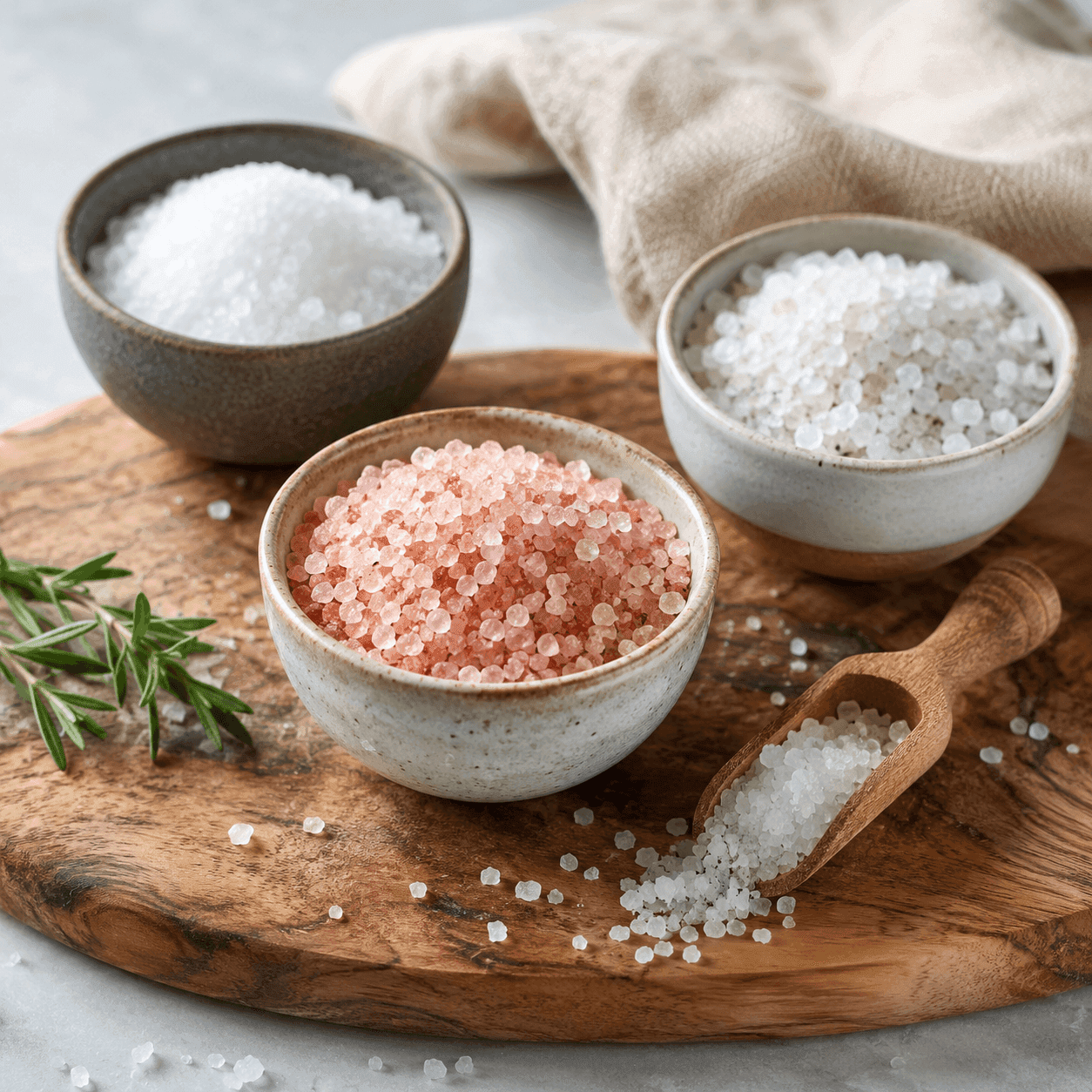
Unrefined salt — whether evaporated from seawater or mined from the dried bed of an ancient ocean — is sodium chloride plus the rest of the minerals the ocean carries. Depending on the source, that’s 60 to 90+ trace elements: magnesium, potassium, calcium, and a long tail of micro-minerals in roughly the proportions seawater (and, not coincidentally, the fluid around your own cells) holds them in.
That’s why good Celtic salt is faintly grey and damp. That color and moisture are the retained minerals and trace brine — the exact things refining removes to make a product bone-dry and bright white. The “dirty”-looking salt is the more complete food. The pristine white one is the stripped one.
The mineral quantities in a few shakes of salt are not large — nobody should pretend salt is a magnesium supplement. But the difference in kind matters: you’re eating a food the body recognizes, in mineral balance, instead of an isolated chemical. And the sodium itself does real work — it’s the backbone of your electrolyte balance, working in tandem with potassium and magnesium to run hydration, nerve signaling, and adrenal function.
The real salts worth using
Four good options, with honest notes on each. The best one is mostly the one you’ll actually use every day.
- Celtic sea salt (light grey) — hand-harvested off the coast of Brittany, France, using methods that go back centuries. Damp, grey, and the most mineral-rich of the common sea salts. The classic choice for a reason. Selina Naturally is the long-standing brand.
- Redmond Real Salt — mined from an ancient seabed in Utah, sealed away underground long ago, so there is no plastic and no modern industrial pollution in it. Pink-flecked, clean-tasting, American-sourced, and easy to find. My default recommendation for most people.
- Baja Gold sea salt — harvested from a protected estuary in Baja California, marketed on its unusually broad mineral profile (90+ trace minerals). Moist, mineral-forward, a favorite of the mineral-supplementation crowd.
- Himalayan pink salt — mined in Pakistan from another ancient deposit. The most widely available unrefined salt and perfectly good; its trace-mineral content is real but often slightly overstated in marketing. A fine everyday choice.
One nuance worth knowing on modern sea salt specifically: because today’s oceans carry microplastic, evaporated sea salts can carry trace amounts too. It’s a small exposure relative to other sources, but it’s the one real argument for favoring ancient-seabed salts — Redmond, Baja Gold’s protected source, Himalayan — which were laid down long before plastic existed.
How much, and how to use it
For most healthy, active people the workable range is the middle of that U-shaped curve — roughly 3,000 to 6,000 mg of sodium a day, which is something like 1.5 to 3 teaspoons of salt across the day’s food. The honest instruction is the old one your grandmother used: salt your food to taste. A body that isn’t broken is fairly good at regulating sodium when you give it real salt and let thirst and appetite do their job.
A few practical notes:
- If you eat mostly whole, home-cooked food, you almost certainly need to add salt — you’re not getting the hidden industrial load that processed-food eaters get.
- Salt needs are higher when you sweat — heat, exercise, sauna, hard physical work. Under-salting an active life is a common, fixable cause of cramps, lightheadedness, and afternoon fatigue.
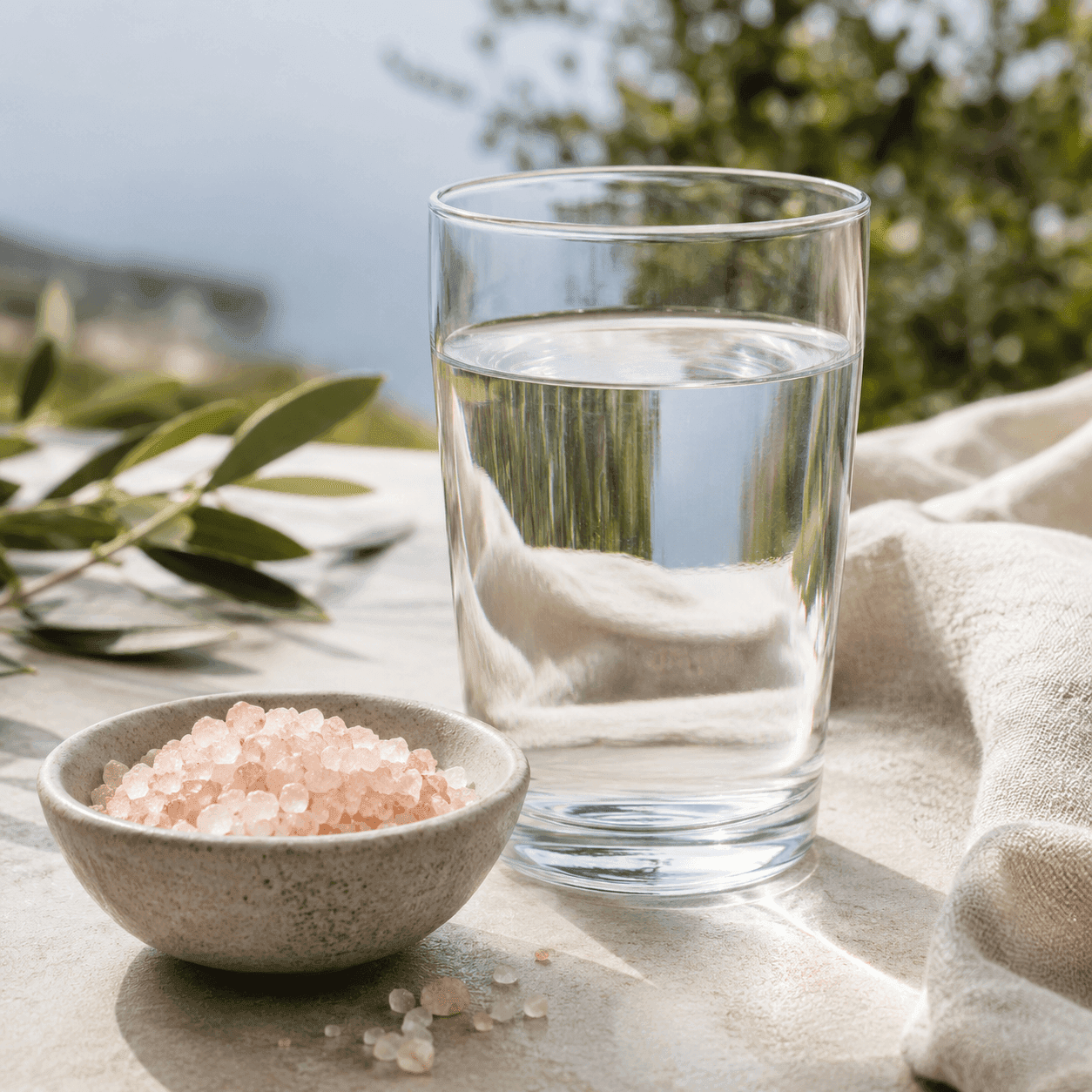
- Salt doesn’t work alone. It’s one leg of the electrolyte tripod with potassium and magnesium. A pinch of real salt in water, paired with potassium-rich food, beats most of the sugary sports drinks sold as “electrolytes.”
This matters most if you eat low-carb or fast. Lower insulin tells the kidneys to shed sodium rather than hold onto it — the mechanism Dr. Jason Fung points to with fasting — so the cleaner your diet gets, the more salt you actually need. It’s why the dreaded “keto flu” — the headaches, fatigue, and cramps of the first low-carb weeks — is mostly a salt-and-electrolyte deficit, and why Thomas DeLauer and others tell keto beginners that a glass of water with a half-teaspoon of real salt fixes it faster than anything else.
Who should still be careful
The case for eating salt freely is a case for healthy people. It isn’t a license for everyone. If you have chronic kidney disease, congestive heart failure, or you’re part of the genuinely salt-sensitive minority whose blood pressure clearly tracks with sodium, then the calculus changes and you should be guided by someone managing your actual case. Honesty about that exception is part of taking the rest of the argument seriously.
Where to start
A sensible approach looks like this: retire the iodized table salt and the “sea salt” that’s been refined white, and replace it with one good unrefined salt for daily cooking and the table. For most people Redmond Real Salt is the easiest place to land — clean ancient-seabed source, good flavor, widely available. Keep a bag of Celtic light grey for the fuller mineral profile and the brine-in-water habit, and try Baja Gold or Himalayan pink if you want options in the rotation.
Then salt your food without guilt, drink to thirst, keep potassium and magnesium in the picture, and get your iodine from a real iodine source rather than from the salt. That’s the whole program.
Closing
Salt is the oldest seasoning and one of the oldest medicines. It was valuable enough to pay soldiers in — the word salary comes from it — and central enough to life that it shows up as an image of worth and preservation in scripture and in nearly every culture that ever wrote anything down. It did not suddenly become dangerous in the twentieth century. What changed is that we replaced the real thing with an industrial imitation and then blamed the name on the box.
Buy real salt. Use it. Give the body back a food it has always known how to use.
Sources & further reading
Authorities cited
- Dr. James DiNicolantonio, PharmD — Cardiovascular research scientist; author of The Salt Fix. The central modern voice arguing salt was the wrong dietary villain.
- Dr. Eric Berg — Popularized the case for sea salt, electrolytes, and adequate sodium on a whole-food, low-carb frame.
- Dr. Mark Sircus — On minerals and unrefined salt as part of restoring the body's mineral base.
- Dr. Jason Fung — Nephrologist; on insulin, fasting, and why low-insulin states make the kidneys excrete sodium — so fasters and low-carb eaters need more salt, not less.
- Thomas DeLauer — On electrolytes and adequate sodium for keto, fasting, and performance.
Books & reading
- The Salt Fix — Dr. James DiNicolantonio — The full argument against the low-salt dogma, with the research behind the U-shaped curve. Start here.
Brands referenced
- Celtic Sea Salt (Selina Naturally) — Hand-harvested light grey salt from Brittany.
- Redmond Real Salt — Ancient-seabed salt mined in Utah — no modern ocean pollution.
- Baja Gold Sea Salt — Mineral-dense salt from a protected Baja estuary.
Related on this site
- Iodine — the mineral modern medicine forgot — Why iodized table salt isn't your iodine strategy.
- Potassium — The other half of the sodium–potassium balance.