
Health · Whole Food · ~11 min read
Eggs — the cheapest near-perfect food on earth.
Demonized for forty years on a cholesterol theory that never held up. If a supplement company could patent the egg, they’d sell it as a miracle and charge you sixty dollars a bottle. Because it’s a dollar a dozen, it got feared instead.
By George Hinestrosa · Personal experience & independent research
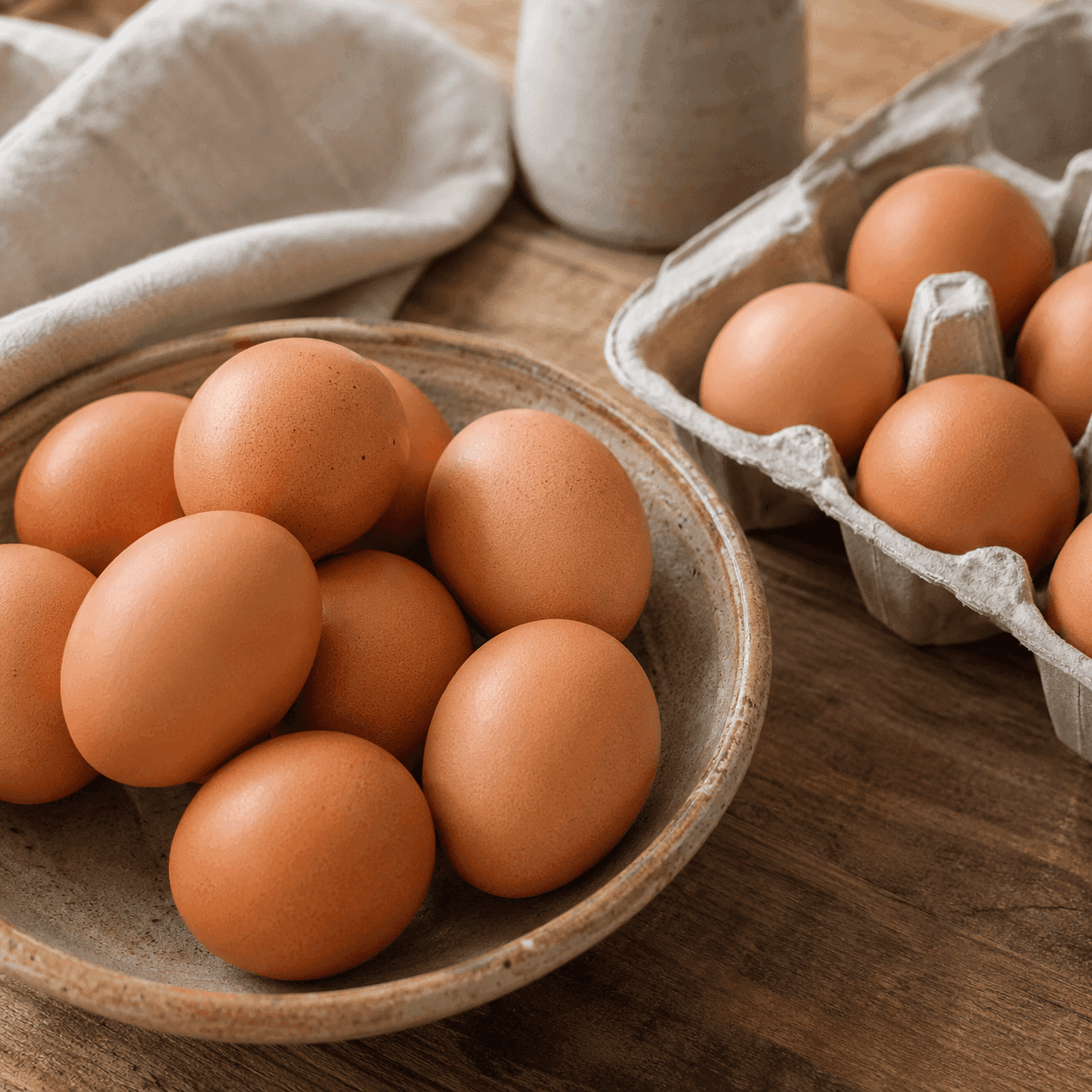
There is no supplement on the shelf that does what an egg does. In one cheap package — a dollar or two a dozen, on every shelf in the country — you get complete protein, nearly every vitamin the body needs, the two carotenoids that protect your eyes, the single best dietary source of a brain nutrient most people are short on, and healthy fat to carry it all. It is about as close to a complete food as anything in nature.
And for forty years we were told to fear it. That is the part worth sitting with. The egg was not demonized because the evidence turned against it; it was demonized because a simple, intuitive, wrong idea about cholesterol took hold, and the fear outlived the science by decades. If a company could patent the egg, they would sell it as a longevity miracle. Because it cannot be patented and costs almost nothing, it got a warning label instead.
The fear was manufactured
An entire era of eating was built on this fear. The egg-white omelet became a badge of discipline. The yolk — the part that holds nearly all the nutrition — was treated as a cholesterol time bomb to be discarded. People who would never touch a yolk poured sugary cereal and seed-oil margarine into the same body without a second thought.
The whole structure rested on one chain of reasoning that sounds airtight until you check it: eggs are high in cholesterol, blood cholesterol is linked to heart disease, therefore eggs cause heart disease. Each link in that chain got weaker the closer anyone looked — and the middle link, the assumption that the cholesterol you eat becomes the cholesterol in your blood, turned out to be mostly false.
The cholesterol myth
Here is the thing almost no one was told. Dietary cholesterol is not the same as blood cholesterol. Your liver manufactures the large majority of the cholesterol in your bloodstream — roughly 80 percent of it — because cholesterol is so essential the body refuses to leave its supply to chance. And the system is self-regulating: eat more cholesterol, and the liver makes less; eat less, and the liver makes more. For most people, dietary cholesterol barely moves the number on the blood test, because the body simply adjusts its own production to compensate.
This is not a fringe claim anymore. It is the official position. In 2015 the United States’ own Dietary Guidelines for Americans quietly dropped the 300-milligram daily cap on cholesterol it had enforced for decades, and stated plainly that cholesterol is “not a nutrient of concern for overconsumption.” The same authority that spent forty years teaching people to fear the yolk admitted the limit had never been justified. That reversal was front-page material in a sane world; most people never heard it.
And there is a deeper error underneath the whole panic: the idea that cholesterol is a poison to be minimized at all. It is the opposite — it is one of the most important raw materials in the body. Cholesterol is the backbone of every steroid hormone you make, testosterone and estrogen and cortisol among them. It is the precursor your skin converts, with sunlight, into vitamin D. It is a structural component of the membrane of every cell you own. And it is the insulation around your nerves. The brain is roughly sixty percent fat and densely dependent on cholesterol; a body told to drive its cholesterol as low as possible is being starved of something it was built to run on.
What is actually in an egg
Set the fear aside and look at what you are actually holding.
- Complete protein. The egg is, almost literally, the reference standard for protein quality — the yardstick other proteins are measured against. All nine essential amino acids, in close to the ideal ratio for a human body, in a form that is highly digestible.
- Choline. One of the most under-known essential nutrients there is, and most people don’t get enough. Choline builds acetylcholine (memory and the nervous system), keeps the liver clearing fat properly, and is so critical to a developing baby’s brain that adequate intake in pregnancy is its own field of study. The egg yolk is one of the richest sources on the table.
- Vitamins A, D, B12, and riboflavin, plus selenium and iodine — a spread of vitamins and minerals that few single foods carry together.
- Lutein and zeaxanthin. The two carotenoids that concentrate in the retina and form the eye’s own protective pigment, tied in the research to lower rates of macular degeneration. The yolk delivers them in an unusually absorbable form, carried on its fat.
- Healthy fat to carry the fat-soluble vitamins and make the whole package usable.
And this is the part the nutrition-label mindset misses: the egg is a complete package, not a sum of isolated nutrients. The choline comes with the fat that carries it; the carotenoids come with the oil that absorbs them; the protein comes with the vitamins that help the body use it. You cannot buy that in a bottle, because the bottle takes everything apart.
The yolk is the point
Almost everything worth eating in an egg lives in the yolk. The choline, the vitamins A and D, the lutein and zeaxanthin, the healthy fat, and a good share of the protein — all of it is in the yellow center. The white is mostly water and a simpler protein.
Which means the egg-white omelet, the supposedly virtuous choice, throws away the single most nutrient-dense part of the food and keeps the watery remainder. It is one of the purest examples of health advice achieving the exact opposite of its aim. Eat the whole egg. The yolk was never the problem; it was always the prize.
Pastured vs. conventional
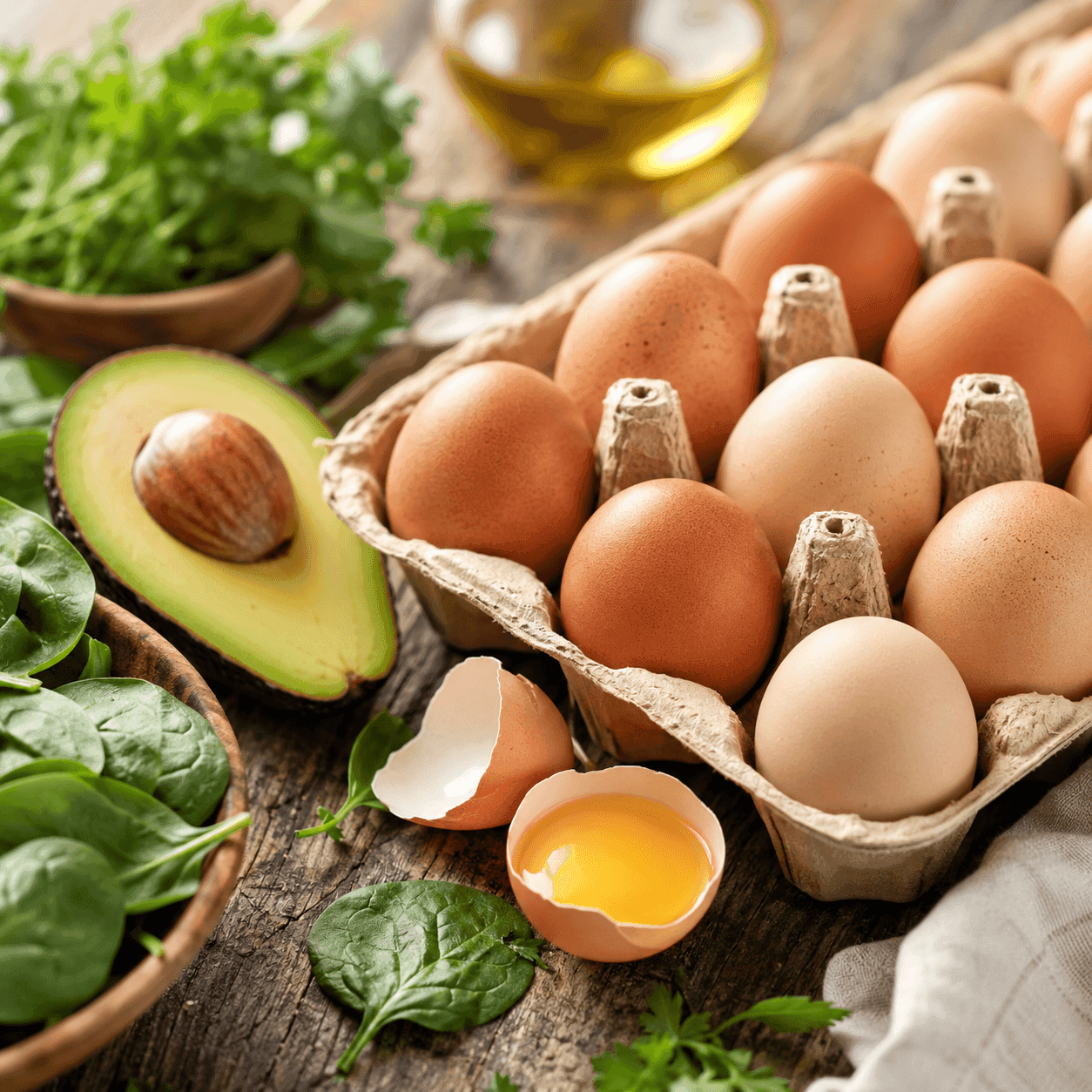
All eggs are good. Some are better, and it comes down to how the hen lived. A hen out on grass, eating insects and greens and standing in real sunlight, lays a different egg than one that never leaves a barn: more omega-3 fat, more vitamin D, more vitamin A and E, and a yolk so deep-orange you can see the difference at a glance. That color is the carotenoids.
The labels are designed to confuse you, so here is the decoder:
- Pasture-raised is the real one — hens genuinely outdoors on pasture. This is what you want.
- Free-range and cage-free sound similar but are far weaker — often nothing more than a crowded barn with a small door most birds never use. Better than battery cages, but not the same thing as pasture.
- Local or backyard eggs — from a neighbor, a farmer’s market, or your own hens — are usually the best of all, and often the cheapest.
But do not let any of this stop you from eating eggs. A plain conventional egg is still one of the best foods on the shelf — it beats nearly everything around it. Buy the best you can find and afford; if that’s the standard carton, eat the standard carton. Perfect sourcing is a bonus, never a barrier.
How to cook them
There is one real rule, and it is about protecting the yolk. The delicate fats and the cholesterol in the yolk can oxidize under high heat — and oxidized cholesterol, not dietary cholesterol, is the form actually implicated in arterial damage. So the gentler the cooking, the better the egg:
- Best: soft-boiled, poached, or over-easy — the yolk stays liquid and protected.
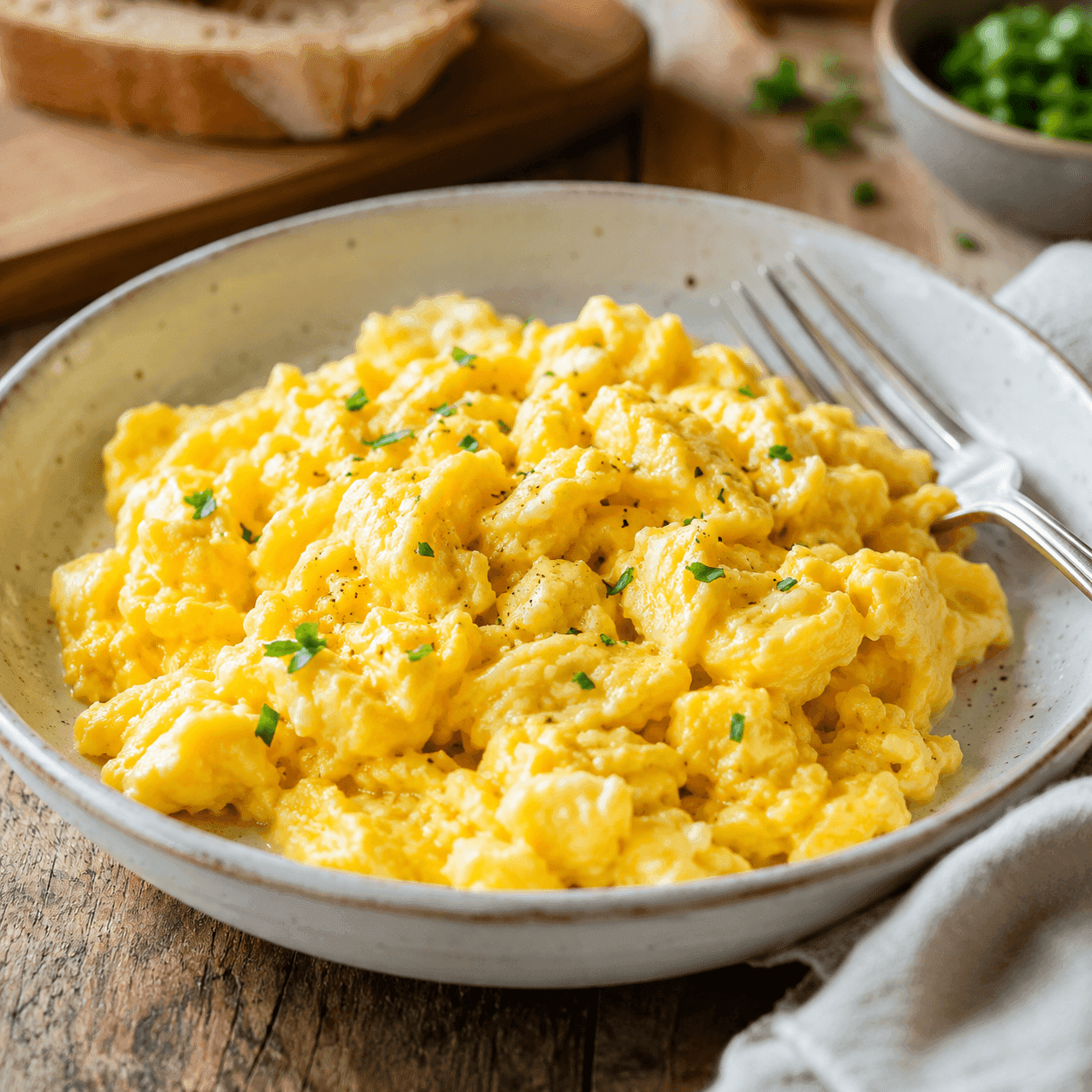
- Good: a low-and-slow soft scramble.
- Avoid: blasting them in a screaming-hot pan until the yolk is hard and the edges are browned and rubbery.
And cook them in a stable fat — butter or ghee, tallow, or coconut oil — never an industrial seed oil, which oxidizes the moment it heats and defeats the entire purpose of cooking a clean food gently. A jar of grass-fed ghee on the counter solves this for most people.
How I eat them
Two or three, every day. Pasture-raised is what I go for — the deeper-orange yolk and the better fat are worth the extra dollar or two — with a plain carton on the days the good ones aren’t around, because skipping eggs is the wrong move either way. Usually boiled or scrambled, and cooked gently — I try not to overcook them, so the yolk stays soft and the most nutrition survives the pan. That’s the entire protocol. There isn’t a more complicated version.
The bottom line
Eat the whole egg. Buy the best ones you can find without letting sourcing stop you. Cook them gently in a stable fat. Two or three a day is one of the cheapest, simplest upgrades a person can make to how they eat — a near-complete food, for the price of almost nothing, that an entire generation was talked out of. The food was never the problem. The theory was. And the theory is gone.
Sources & further reading
The cholesterol reversal
- Dietary Guidelines for Americans, 2015–2020 — dropped the 300 mg/day cholesterol cap; cholesterol 'not a nutrient of concern for overconsumption.'
- Fernandez, M.L. (2006) — 'Dietary cholesterol provided by eggs and plasma lipoproteins in healthy populations,' Current Opinion in Clinical Nutrition & Metabolic Care.
What's in the egg
- Zeisel, S.H. & da Costa, K.A. (2009) — 'Choline: an essential nutrient for public health,' Nutrition Reviews.
- Lutein & zeaxanthin and macular health — the carotenoids that form the eye's protective pigment (AREDS2-related research).
Voices
- Dr. Eric Berg — On eggs, cholesterol, and the whole-food case for the yolk.
- Thomas DeLauer — On eggs as a leading dietary source of choline.